For rainwater harvesting and storage systems, whether for urban stormwater management, agricultural irrigation, or industrial non-potable use, the water quality in the storage reservoir directly determines its usability and longevity. Stagnant storage leads to a rapid decline in quality through oxygen depletion, sediment accumulation, and biological growth. The strategic use of aeration mixing systems transforms these static reservoirs into dynamically maintained water assets, preserving quality from the point of collection to the point of use.
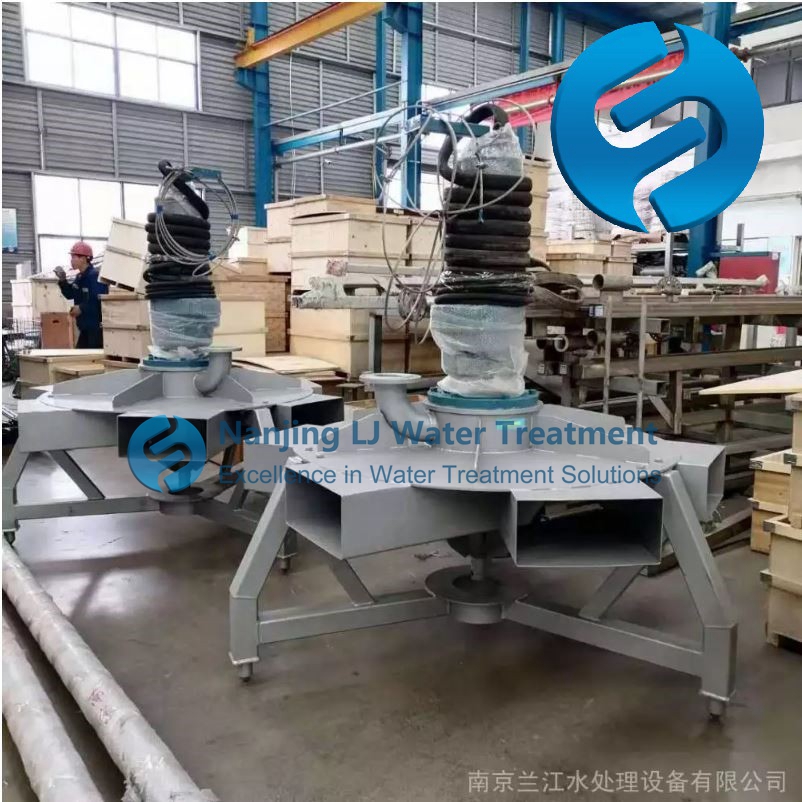
Preventing Stratification and Maintaining Uniform Water Quality
Rainwater, once stored, is susceptible to thermal and chemical stratification, where distinct layers form with different temperatures, oxygen levels, and chemical compositions.
Without intervention, the warmer, oxygenated surface layer becomes isolated from the colder, denser bottom water. This bottom layer quickly becomes anoxic, fostering anaerobic bacteria that produce hydrogen sulfide and methane, leading to foul odors and corrosion. A gentle, continuous mixing action disrupts this stratification by creating a slow vertical circulation. This process pulls oxygen-depleted water from the depths to the surface for re-aeration and pushes oxygen-rich surface water downward. The result is a homogenous water body with consistent temperature, dissolved oxygen, and pH throughout its entire volume. This uniformity is critical for preventing the chemical reduction of settled metals (like iron and manganese) in the anoxic zone, which would otherwise re-dissolve and cause discoloration or staining when the water is pumped for use.
Controlling Sediment Resuspension and Nutrient Cycling
Collected rainwater carries suspended solids, dust, pollen, and organic matter from catchment surfaces, which settle to form a nutrient-rich sediment layer at the bottom of the reservoir.
In a static tank, this layer acts as an internal nutrient source, releasing phosphates and nitrogen compounds that fuel algae and biofilm growth. The controlled mixing strategy in a rainwater reservoir is precisely calibrated to manage this sediment. Instead of intense mixing that would create persistent turbidity, a low-energy bottom water movement is employed. This gentle current prevents the settled particles from consolidating into a dense, anaerobic sludge but avoids keeping them permanently suspended. It facilitates a gradual transport of finer particles toward the outflow or pump intake, where they can be removed via filtration. By keeping the sediment slightly mobile and in contact with oxygenated water, the breakdown of organic matter shifts toward aerobic digestion, which is odorless and reduces the internal nutrient load, thereby suppressing excessive algal productivity.
Inhibiting Pathogen and Nuisance Organism Proliferation
Stagnant, warm, and nutrient-rich water provides an ideal habitat for the proliferation of pathogens like Legionella, as well as nuisance organisms such as mosquito larvae and certain types of algae.
The introduction of dissolved oxygen through aeration and the resulting circulation creates an environment that is less hospitable to many of these organisms. Mosquito larvae, which require still surface water to breathe, cannot survive in a water body with constant surface disturbance. The oxidation of organic matter and ammonia by aerobic bacteria removes the food sources for certain harmful bacteria. Furthermore, the consistent mixing prevents the formation of isolated, warm, stagnant micro-environments—like those in sunlit corners or behind baffles—where pathogens can proliferate. While not a sterilization process, this systemic "activation" of the water body significantly reduces the risk factors associated with biological contamination, making the stored rainwater safer for its intended uses, such as irrigation or industrial cooling, and reducing the need for high doses of chemical biocides.
Post time:2026-07-08
