
Main Application
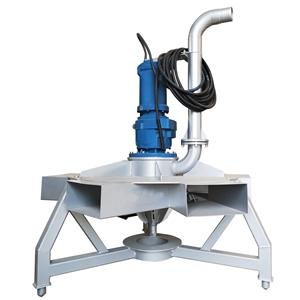
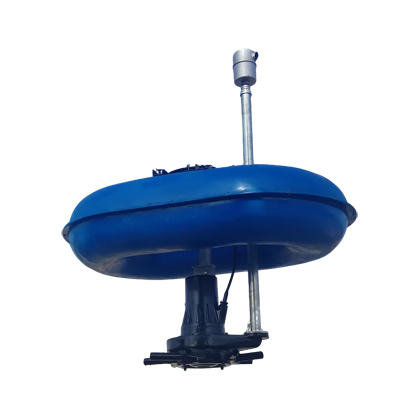
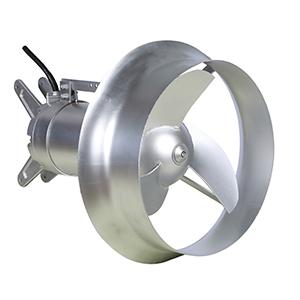
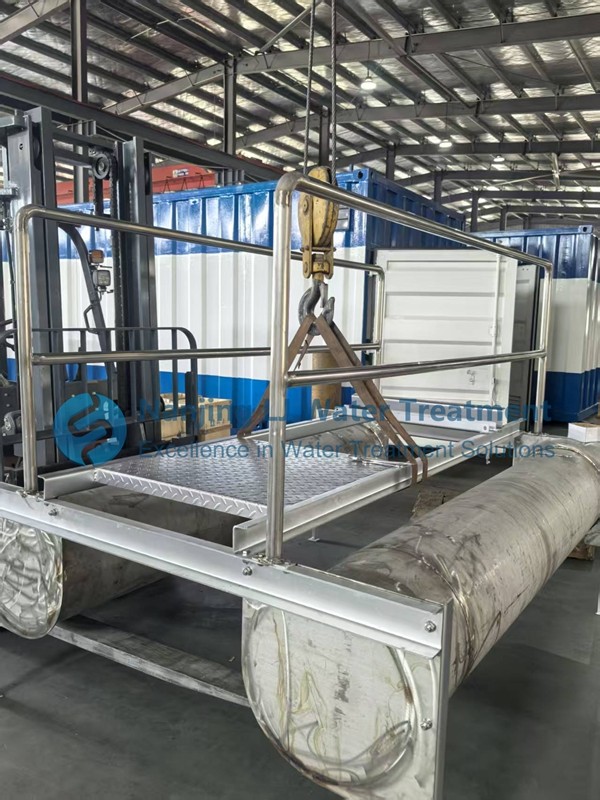
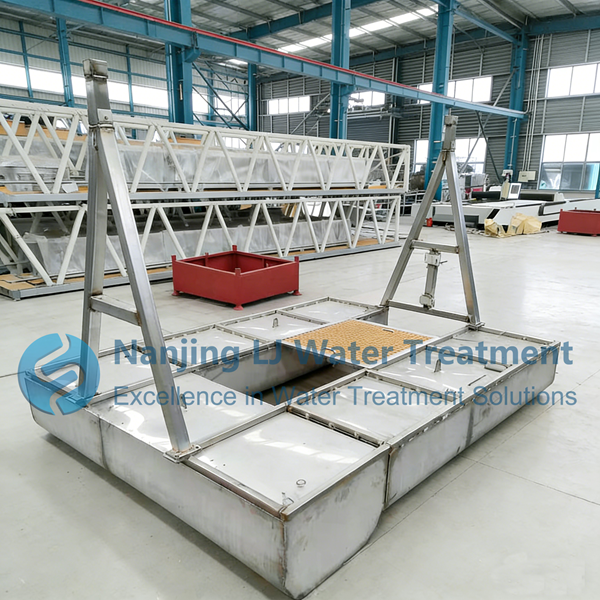
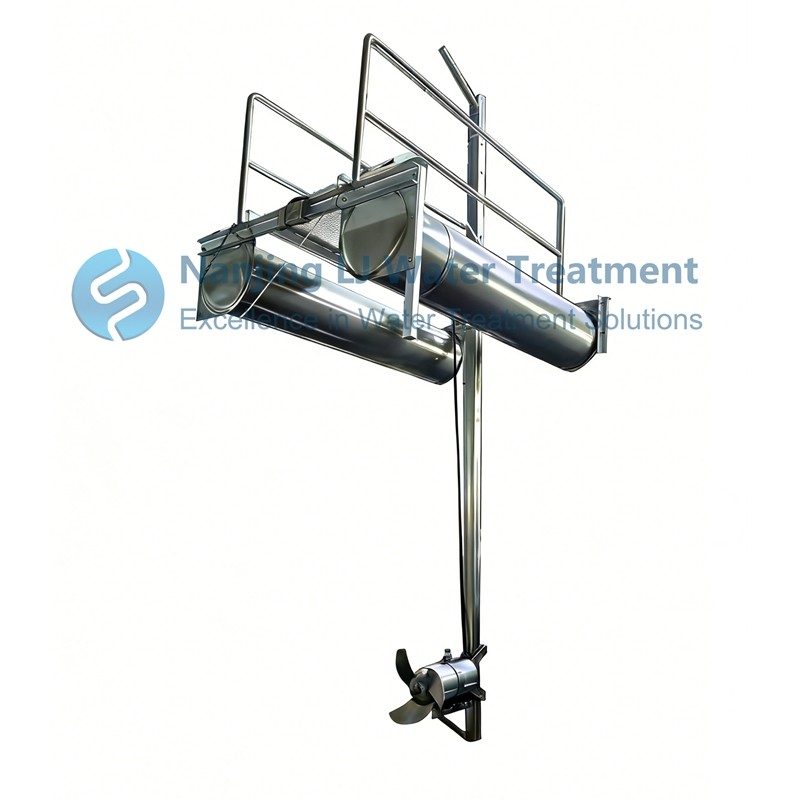
Our pontoon mixers (floating mixers) are designed for wastewater lagoons, oxidation ponds, and open basins where traditional fixed installations are not suitable. The QJB mixer is mounted on a floating pontoon system (available in stainless steel or FRP) and can automatically adapt to water level changes, ensuring stable and reliable mixing performance.
This solution is especially suitable for basins without concrete walls, guide rails, or fixed mounting structures, offering flexible installation, easy maintenance, and efficient circulation performance.
Working Conditions
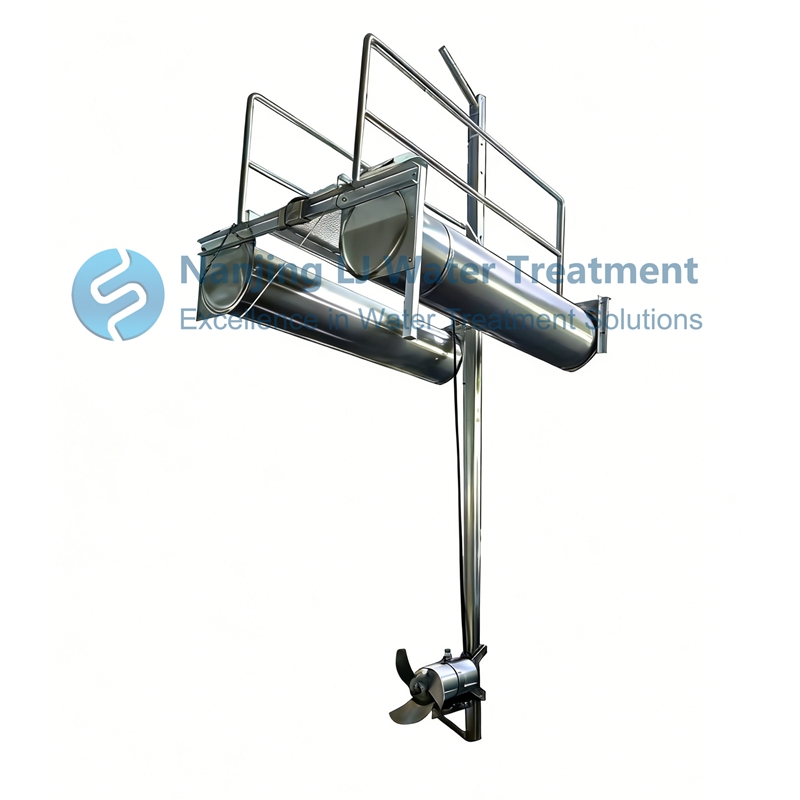
'QJB'Submersible mixers can run continuously in following conditions.
1.Maximum allowable temperature of the medium for continuous operation is 40 °C [104 °F].
2.The pH value of the wastewater is between 5-9.
3.The density of the wastewater does not exceed 1150 kg/m3.
4.During long-term diving operation, the maximum diving depth is 20 meters.
Advantages of Our Floating Pontoon Mixer
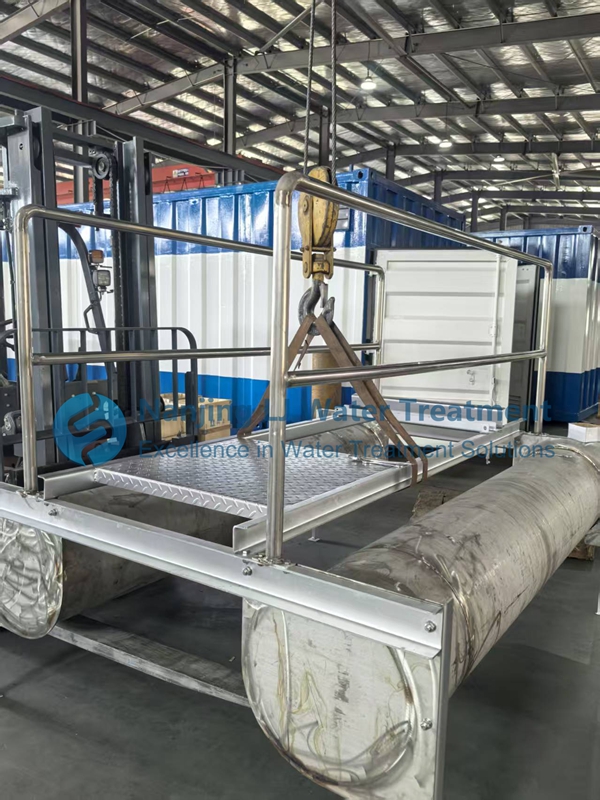
· Material Options: Choose from cast iron, stainless steel 304, or 316 to suit your specific wastewater treatment needs.
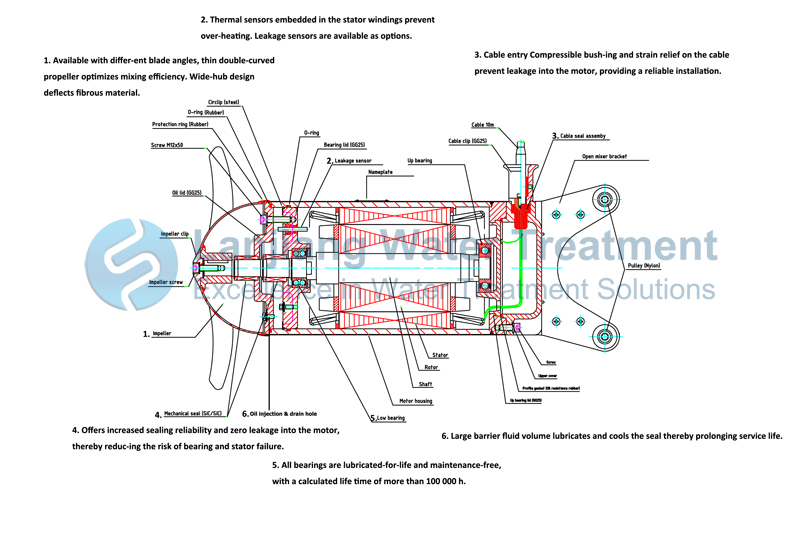
· Durability: High-quality components, including NSK bearings and high-performance SiC mechanical seals, ensure our submersible agitators long operational life.
· Advanced Protection: Equipped with leakage sensors and overload sensors within the submersible agitators motor housing for enhanced reliability.
· Versatile Installations: Multiple installation options available to match diverse site requirements. No concrete walls or bridge required. Designed specifically for earthen ponds and lagoons with sloped embankments where traditional guide rail installation is impossible.
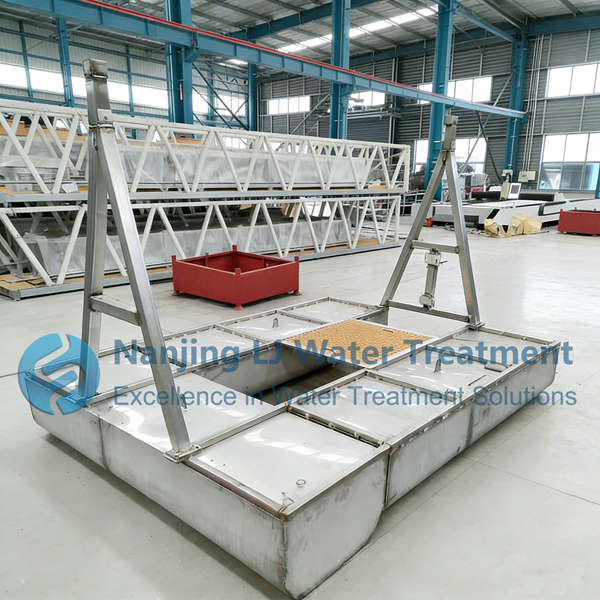
Why choose Floating Pontoon Mixer?
| Comparison | Traditional Submersible Mixer | LJ Pontoon Floating Mixer |
| Installation Requirement | Must be fixed to a vertical concrete wall | Floats freely, anchored to banks via cables |
| Best For | Rectangular concrete tanks | Earthen ponds, lagoons with sloped sidewalls |
| Liner Safety (HDPE) | Risk of scraping the bottom liner | 100% Safe (No bottom/slope contact) |
| Water Level Flexibility | Fixed depth only | Automatically adjusts with water level fluctuations |
Specifications
Model | H1 | H2 | L1 | L2 | L3 | Installation System Type |
QJB 0.85/8-260/3-740 | 100 | 500 | 330 | 650 | 400 | I |
QJB 1.5/6-260/3-980 | 100 | 600 | 330 | 650 | 400 | I |
QJB 2.2/8-320/3-740 | 200 | 600 | 317 | 900 | 550 | II |
QJB 4/6-320/3-960 | 200 | 600 | 317 | 900 | 550 | II |
QJB 1.5/8-400/3-740 | 200 | 700 | 317 | 940 | 550 | II |
QJB 2.5/8-400/3-740 | 200 | 700 | 317 | 940 | 550 | II |
QJB3/8-400/3-740 | 200 | 700 | 317 | 940 | 550 | II |
QJB 4/6-400/3-980 | 200 | 700 | 317 | 940 | 550 | II |
QJB 4/12-620/3-480 | 350 | 1100 | 317 | 1175 | 1050 | III |
QJB 5/12-620/3-480 | 350 | 1100 | 317 | 1175 | 1050 | III |
QJB 7.5/12-620/3-480 | 350 | 1100 | 317 | 1250 | 1050 | III |
QJB10/12-620/3-480 | 350 | 1100 | 317 | 1250 | 1050 | III |
QJB12/12-620/3-480 | 350 | 1100 | 317 | 1250 | 1050 | III |
QJB15/12-620/3-480 | 400 | 1500 | 317 | 1650 | 1350 | III |
QJB18.5/12-620/3-480 | 400 | 1500 | 317 | 1650 | 1350 | III |
QJB22/12-620/3-480 | 400 | 1500 | 317 | 1650 | 1350 | III |
Submersible Mixer Structure
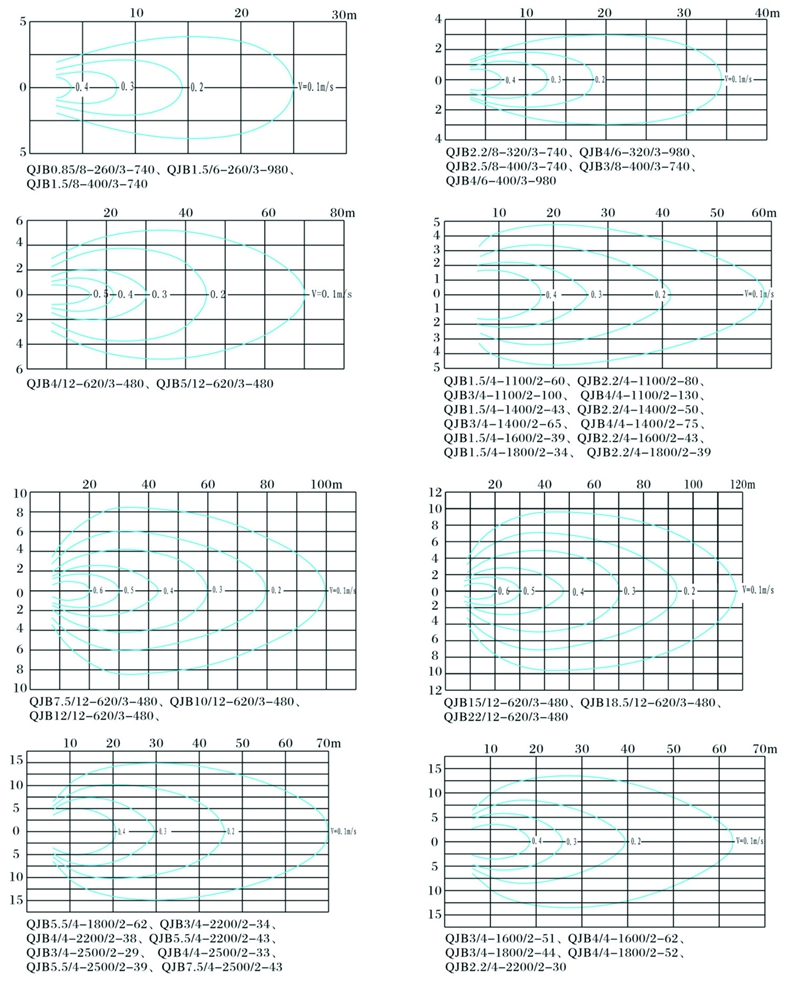
Model Selection and Flow Field
The selection of a pontoon mixer (floating mixer) is a relatively complex engineering task. Proper selection directly affects the mixing performance, operational reliability, and service life of the equipment. The fundamental principle of model selection is to ensure that the mixer can deliver effective circulation and mixing within the required tank or basin volume.
In most wastewater treatment applications, the required mixing performance can be evaluated based on the flow velocity in the basin. According to common process requirements, the recommended average flow velocity generated by the mixer should generally be controlled between 0.15 m/s and 0.30 m/s.
If the flow velocity is lower than 0.15 m/s, effective push-flow mixing cannot be achieved, and solids may settle.
If the flow velocity exceeds 0.30 m/s, it may negatively affect the treatment process and lead to unnecessary energy consumption.
Therefore, before selecting a pontoon mixer, the following key factors should be carefully confirmed:
Application area:Such as wastewater lagoons, oxidation ponds, equalization basins, sludge tanks, or other open basins without concrete walls or fixed installation structures.
Medium parameters:Including suspended solids concentration, viscosity, temperature, and pH value of the liquid.
Tank and installation conditions:Including tank shape and dimensions, liquid depth, water level fluctuation, and the installation arrangement of the floating pontoon system.
At the same time, energy efficiency should also be taken into consideration, as it directly affects the user's long-term operating costs. A properly selected pontoon mixer can achieve the required mixing performance with optimized power consumption.
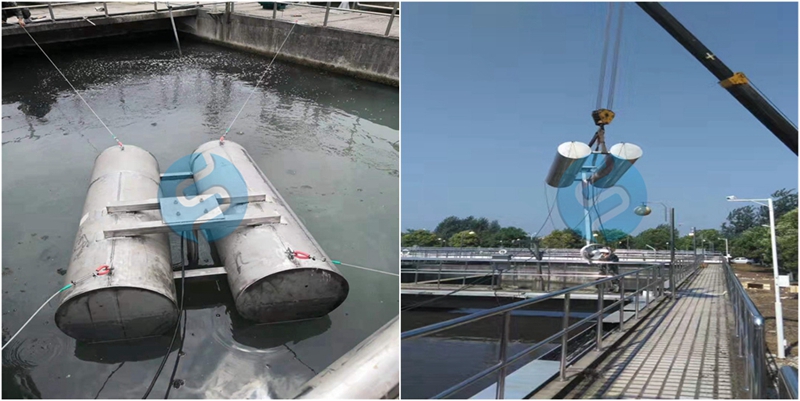
According to the specific project conditions, one or multiple pontoon mixers can be configured to form an effective flow pattern and ensure uniform circulation throughout the basin.
Please refer to the flow field diagram of the pontoon mixers below for typical mixing patterns and circulation effects.