Aeration Performance of High-Speed Aeration Mixers
High-speed aeration mixers are widely used in wastewater treatment systems, industrial reaction tanks, oxidation ditches, and aquaculture environments where strong oxygen transfer and rapid liquid circulation are required. Their operating principle relies on high rotational speed to create intense turbulence, efficient bubble dispersion, and continuous mixing throughout the treatment area. The aeration performance of these systems plays a major role in maintaining dissolved oxygen levels and improving water treatment efficiency.
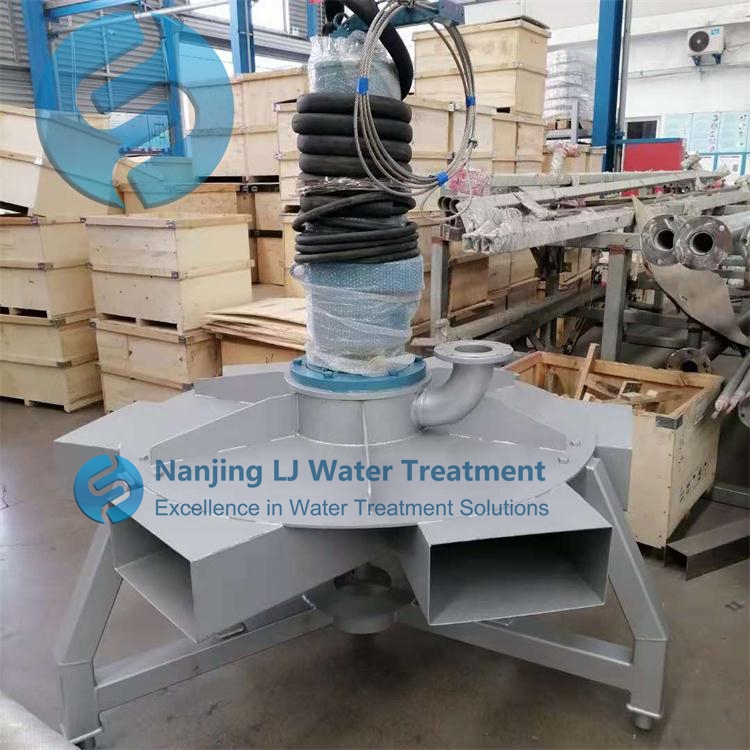
Strong Oxygen Transfer Capability
One of the main advantages of high-speed aeration mixers is their ability to deliver rapid oxygen transfer.
Rapid Bubble Dispersion
High-speed impeller rotation breaks incoming air into fine bubbles. Smaller bubbles create a larger contact surface area between oxygen and water, helping improve oxygen dissolution efficiency.
Increased Air-Water Contact
The strong turbulent flow generated during operation keeps bubbles suspended in the liquid for longer periods. Extended contact time supports more effective oxygen absorption.
Fast Dissolved Oxygen Improvement
Because of the intense mixing action, dissolved oxygen levels can increase rapidly across the treatment system. This is especially useful in applications with high biological oxygen demand.
Powerful Mixing Performance
Aeration efficiency is closely connected to liquid circulation quality.
Strong Liquid Circulation
The high-speed rotating impeller generates powerful water movement that distributes oxygen evenly throughout the tank or basin.
Elimination of Dead Zones
Continuous turbulent circulation reduces stagnant regions where oxygen concentration may otherwise become insufficient.
Improved Suspension of Solids
Strong flow movement helps maintain suspended solids in circulation, preventing sediment accumulation and improving biological treatment conditions.
Fine Bubble Aeration Effect
Bubble size has a direct impact on aeration efficiency.
Formation of Microbubbles
The intense shear force created by high-speed rotation produces smaller oxygen bubbles compared with slower mixing systems.
Enhanced Oxygen Dissolution
Microbubbles remain in water longer and provide more efficient gas exchange with the surrounding liquid.
Stable Oxygen Distribution
Fine bubble diffusion supports more uniform dissolved oxygen concentration throughout the treatment area.
Performance in High-Load Treatment Systems
High-speed aeration mixers are commonly used in systems with demanding operating conditions.
Suitable for High Organic Load Environments
Wastewater containing high concentrations of organic matter often requires rapid oxygen replenishment. Strong aeration performance helps maintain stable biological activity.
Fast Response to Oxygen Demand Changes
High-speed systems can quickly improve oxygen levels when treatment conditions fluctuate or biological demand increases suddenly.
Efficient Operation in Large Tanks
Powerful circulation allows oxygen to reach wider sections of large treatment basins more effectively.
Hydraulic Turbulence Advantages
Controlled turbulence is an important part of the aeration process.
Improved Oxygen Mixing Efficiency
Turbulent flow continuously renews the contact interface between water and air bubbles, supporting higher oxygen transfer rates.
Enhanced Biological Reaction Conditions
Aerobic microorganisms benefit from stable oxygen availability and continuous nutrient circulation created by high-speed mixing.
Reduction of Stratification
Strong circulation prevents layering of water with different oxygen concentrations, helping maintain uniform treatment conditions.
Surface Aeration Characteristics
Many high-speed aeration mixers create significant surface movement during operation.
Increased Surface Oxygen Exchange
Surface turbulence promotes additional oxygen absorption directly from the atmosphere.
Prevention of Surface Film Formation
Continuous agitation helps prevent the formation of floating sludge layers or surface contaminants that could reduce oxygen transfer efficiency.
Improved Water Renewal
Rapid surface circulation supports continuous water exchange between upper and lower liquid layers.
Mechanical Contribution to Aeration Efficiency
The equipment structure also affects overall aeration performance.
Optimized Impeller Design
Impeller geometry is designed to maximize liquid velocity and improve air dispersion efficiency during operation.
Stable Rotational Performance
High-speed motors and balanced rotating assemblies help maintain consistent aeration performance under continuous operating conditions.
Coordinated Air Intake Structure
Efficient air intake pathways support stable oxygen supply during rapid mixing operation.
Operational Adaptability
High-speed aeration mixers can function in a variety of treatment environments.
Compatibility With Industrial Wastewater
Industrial treatment systems often require aggressive aeration performance to handle high oxygen demand and variable water conditions.
Effective in Biological Treatment Tanks
Continuous oxygen replenishment supports aerobic microbial activity in biological wastewater treatment processes.
Application in Aquaculture Systems
Strong aeration performance can also help maintain stable dissolved oxygen levels in high-density aquatic environments.
Post time:2026-05-26
