Shallow Aeration Mixer Applicable Water Depth: What You Need to Know
When it comes to selecting the right aeration mixer for your water body, depth is the single most decisive factor. Get it wrong, and you either waste energy or fail to treat the water effectively. Shallow aeration mixers are purpose-built for environments where the water column simply is not deep enough to justify diffused air systems. Understanding the exact depth boundaries helps you avoid costly mistakes.
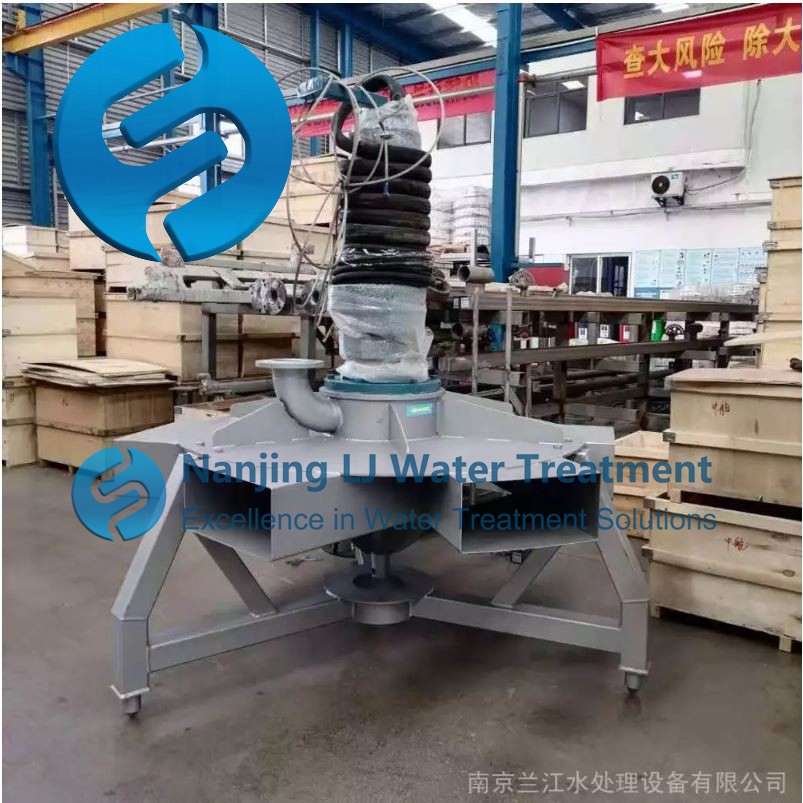
What Counts as Shallow Water for Aeration
The industry generally draws the line at 8 feet (roughly 2.4 meters). Anything below this threshold falls into the shallow category where surface aerators and mechanical mixers outperform fine bubble diffusers. Some sources push the boundary even lower, noting that surface aerators lose effectiveness beyond 4 to 5 meters (13 to 16 feet), and in practice they only mix the top 5 to 6 feet (1.5 to 1.8 meters) of the water column reliably.
For oxidation ditches and extended aeration systems — which rely heavily on horizontal flow velocity to keep sludge suspended — the typical design depth sits between 3.0 and 4.5 meters (10 to 15 feet). Go deeper than that with a surface unit, and you start creating dead zones near the bottom where solids settle and anaerobic conditions develop.
Depth Ranges by Aeration Type
Surface Aerators and Mechanical Mixers
These are the workhorses of shallow water. Brush-type surface aerators max out at about 3 to 4 meters (10 to 13 feet), while vertical shaft units can push to 6 to 7 meters (20 to 23 feet) before performance drops off. However, most engineers agree that beyond 4 to 5 meters (13 to 16 feet), you need draft tubes or lower propellers to maintain any meaningful mixing at depth.
For ponds and lagoons specifically, the sweet spot is even shallower — 1.5 to 3.0 meters (5 to 10 feet). In these environments, shallow pond aerators spread air evenly across the surface without wasting energy trying to reach the bottom. The impeller must sit at least 1 meter above the bottom to avoid digging into the substrate, destroying liners, or kicking up sediment.
Fine Bubble Diffusers in Shallow Settings
Fine bubble aeration systems have a minimum practical water depth of about 4 meters (13 feet). Below that, oxygen transfer efficiency drops sharply because the bubbles do not have enough contact time with the water. In very shallow lagoons under 5 feet, you would need a large number of diffusers to meet oxygen demand — driving up both capital and maintenance costs. Pure fine bubble diffusers typically cover only 20 to 25 feet (6 to 7.5 meters) in diameter per unit, meaning you need many more of them compared to mechanical surface units.
Shallow Gas Flotation Equipment
A related technology worth mentioning is shallow gas flotation, which operates at an effective water depth of just 400 to 950 millimeters (0.4 to 0.95 meters). These systems use micro-bubbles between 5 and 20 microns in diameter to float suspended solids to the surface. The entire process — from dynamic water inlet to static outlet — takes only 3 to 5 minutes of retention time, compared to 40 to 60 minutes for conventional flotation. While not an aeration mixer per se, the depth principle is identical: shallow water demands shallow-optimized equipment.
Why Depth Determines Everything
Oxygen transfer efficiency, mixing adequacy, and energy consumption all hinge on water depth. In deeper lagoons, higher operating pressure is required — roughly 0.43 psi per foot of diffuser submergence — which increases energy use. But deeper water also allows greater bubble contact time, improving overall transfer efficiency. The trade-off usually favors deeper tanks when land is expensive, since a 5.5 to 7.0 meter (18 to 23 foot) deep tank occupies far less footprint than a shallow alternative.
