Deep Aeration Mixer Working Conditions in Deep Water: What Actually Matters
Deep water aeration is a completely different beast from shallow pond mixing. When you drop a mixer into water deeper than 8 meters, the physics change, the engineering gets harder, and the margin for error shrinks fast. Deep aeration mixers are not just bigger versions of surface units — they operate under conditions that demand careful attention to pressure, flow dynamics, and dissolved oxygen targets.
Where Deep Water Actually Starts
Most engineers draw the line at 8 meters (about 26 feet). Below that depth, surface aerators and brush-type mixers lose their grip on the water column. The bubbles they generate simply do not have enough contact time to transfer meaningful oxygen before they escape at the surface. Fine bubble diffusers become the standard, but even they face serious limitations once you go past 10 to 12 meters (33 to 40 feet).
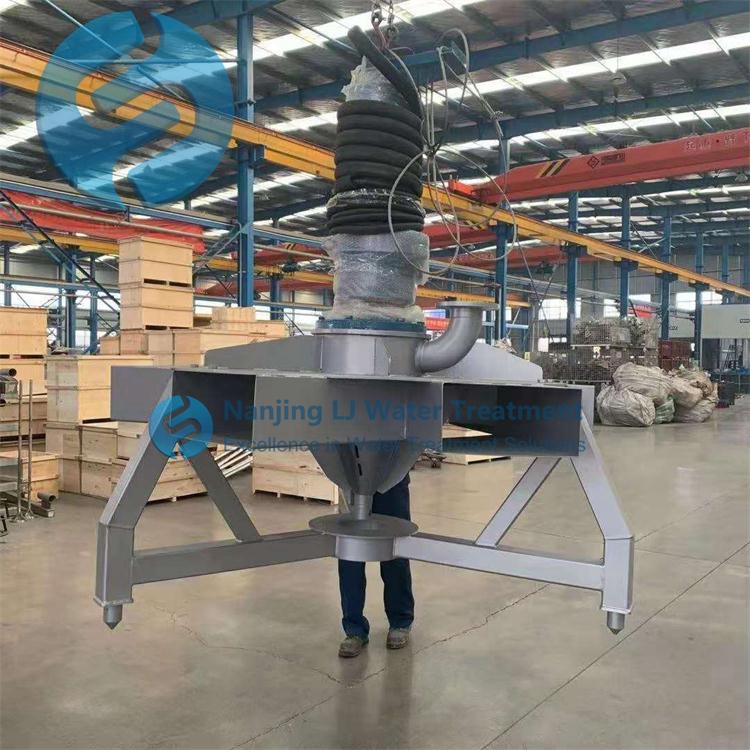
At depths beyond 15 meters, you are looking at specialized deep-shaft aerators or jet mixers that push air down through draft tubes. These systems create vertical circulation patterns that keep solids suspended and maintain oxygen levels near the bottom — something no surface unit could ever achieve.
Why 8 Meters Is the Breaking Point
Below 8 meters, the hydrostatic pressure alone starts working against you. Every meter of depth adds roughly 0.1 bar (1.45 psi) of back pressure on the diffuser. At 10 meters, that is already 1 bar — and at 20 meters, you are dealing with 2 bar just to push air out of the diffuser. This back pressure does not just waste energy; it changes bubble size, reduces oxygen transfer efficiency, and forces equipment to work harder for less result.
Surface mixers generate horizontal flow, which works fine in shallow basins. But in deep water, horizontal velocity drops off quickly with depth. Without vertical mixing, you get stratification — warm oxygen-rich water on top, cold oxygen-starved water on the bottom. Deep aeration mixers exist to break that stratification.
Pressure and Energy Realities at Depth
Running aeration equipment in deep water is expensive. There is no way around it. The deeper you go, the more energy you burn just to overcome static pressure, let alone achieve any useful oxygen transfer.
Back Pressure and Its Impact on Efficiency
At 15 meters depth, diffusers must operate at roughly 1.5 bar gauge pressure just to release air. That energy goes into compressing air, not into mixing water. Standard efficiency numbers — like 4.5 to 5.5 kg O2 per kWh — drop significantly in deep installations. In practice, deep water systems often achieve only 2.5 to 3.5 kg O2 per kWh, depending on diffuser type and water temperature.
This is why deep-shaft mixers use larger compressors and why the capital cost per unit of oxygen transferred climbs steeply with depth. It is also why some operators switch to pure oxygen injection at extreme depths — though that brings its own set of safety and cost complications.
Temperature and Dissolved Oxygen in Deep Water
Deep water tends to be cold. In many temperate climates, water below 10 meters sits between 4 and 10 degrees Celsius (39 to 50 F) year-round. Cold water holds more dissolved oxygen — which sounds good, but it also means the oxygen transfer rate slows down. Gas solubility increases as temperature drops, but the actual transfer across the bubble-water interface becomes less efficient.
This creates a paradox: deep water can hold plenty of oxygen, but getting it there is harder. Mixers must run longer or at higher pressure to maintain target DO levels, typically 2 to 4 mg/L in the lower zones of deep basins. In wastewater treatment, the bottom of an oxidation ditch or deep tank often needs supplemental aeration precisely because natural diffusion cannot keep up.
Stratification Risks You Cannot Ignore
Thermal stratification is the silent killer in deep aeration basins. During summer, the top layer can warm to 25C while the bottom stays at 8C. Density differences prevent mixing, and anaerobic conditions develop at depth. Hydrogen sulfide builds up, phosphorus releases from the sediment, and the whole treatment process falls apart.
Deep aeration mixers combat this by forcing vertical circulation. But the mixer must be positioned correctly — typically 0.5 to 1.0 meter above the tank floor — to avoid dead zones directly beneath the impeller. In tanks deeper than 12 meters, multiple mixers at different elevations are often necessary to cover the full water column.
Design Constraints Unique to Deep Water
Installation in deep water is not just about picking the right mixer. The entire system design shifts. Air supply lines must handle higher pressures, which means thicker piping, stronger fittings, and more robust compressors. Diffuser membranes degrade faster under sustained high pressure, so maintenance intervals shorten.
