Anti-Tangle Aeration Mixer Structural Design: How Engineers Solve the Wrapping Problem
Fiber, debris, plastic strips — any aeration mixer deployed in real-world water bodies eventually faces something that wants to wrap around its moving parts. The result is motor burnout, reduced mixing efficiency, and frequent maintenance trips. Anti-tangle aeration mixers are not a luxury feature. They are a structural necessity when you are dealing with water that carries solids, vegetation, or long-fiber waste.
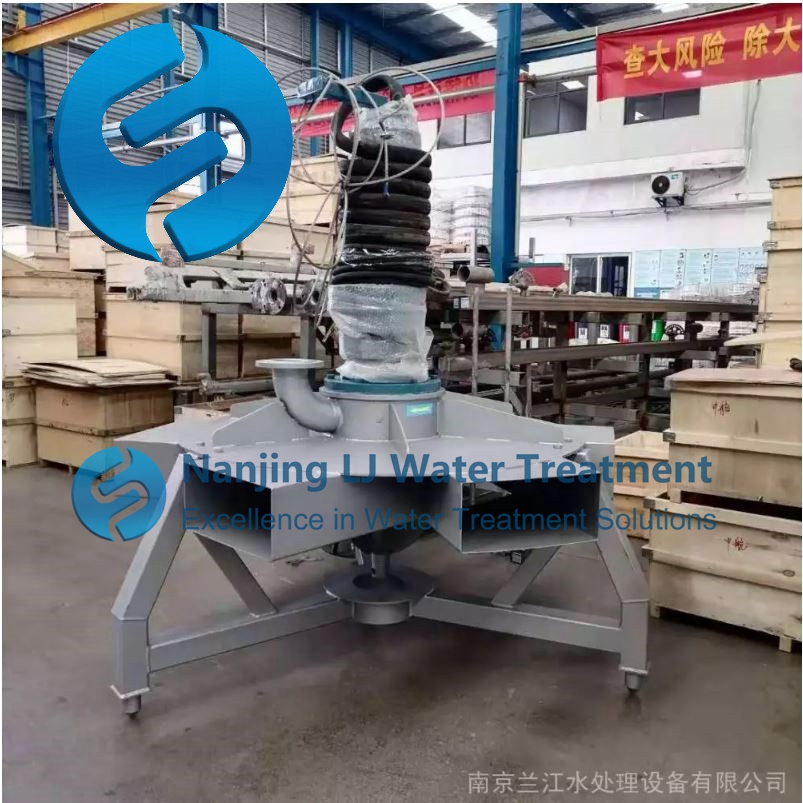
The entire design philosophy shifts when you build for anti-tangle performance. It is not about adding a guard or a screen after the fact. It starts at the impeller geometry and runs through the shaft, the motor housing, and even the mounting system.
Why Standard Mixers Fail in Tangle-Prone Water
Most conventional aeration mixers use open impellers or simple propeller designs. These work fine in clean water. But the moment fiber enters the mix — think wastewater with textile waste, pond water with algae strands, or river water with floating debris — the rotating blades act like a spool. Material winds around the shaft, clogs the impeller hub, and eventually locks the motor.
The problem gets worse at higher RPM. Faster rotation pulls in more material per unit time, and the centrifugal force pushes that material outward against the hub and shaft. Within hours, a standard mixer can go from full performance to complete seizure.
The Role of Fluid Dynamics in Tangle Formation
Tangling is not random. It follows fluid patterns. When water flows past a rotating impeller, it creates low-pressure zones behind each blade. Flexible debris gets sucked into these zones and wraps around the blade root. The tighter the blade spacing, the worse this gets. Open-frame impellers with narrow gaps between blades are especially vulnerable because they create strong vortex traps that hold material in place.
This is why anti-tangle design starts with blade shape and spacing — not with external screens or guards.
Core Structural Features That Prevent Tangling
The most effective anti-tangle mixers share several structural traits. None of them are complicated individually, but together they form a system that keeps debris moving through rather than wrapping around.
Self-Cleaning Impeller Geometry
The impeller is the first line of defense. Anti-tangle designs use wide-blade, low-solidity impellers — meaning fewer blades with more open space between them. Instead of five or six narrow blades packed tightly, you might see two or three broad blades with gaps large enough for fiber to pass through without catching.
Some designs use a single-blade or two-blade configuration with a helical twist. The helix continuously pushes material axially along the shaft rather than letting it accumulate at the hub. This axial flow acts like a conveyor, moving debris up and out of the mixing zone before it can wind around anything.
Blade edges are often beveled or rounded rather than sharp. Sharp edges cut fiber into shorter pieces, which then tangle even more easily. Rounded edges let material slide off the blade surface.
Shaft and Hub Design That Rejects Wrapping
The shaft is where most tangles actually form. In standard mixers, the shaft is a smooth cylinder — perfect for fiber to grip and wind around. Anti-tangle designs replace smooth shafts with splined shafts, keyed shafts, or non-circular cross-sections. A hexagonal or D-shaped shaft gives fiber nothing to grip onto. It slides off instead of wrapping.
The hub area — where the blade meets the shaft — is another critical zone. Anti-tangle mixers use recessed hubs or conical hub covers that eliminate the gap where material typically starts to accumulate. Some designs incorporate a smooth, dome-shaped hub cap with no flat surfaces or recesses where debris can settle and begin wrapping.
Open Frame vs. Enclosed Motor Housings
The motor housing itself can contribute to tangling if it has protrusions, bolts, or brackets that catch material. Clean-housing designs use smooth, rounded covers with no external fasteners in the water flow path. Mounting brackets are positioned above the waterline or recessed into the tank wall.
For submersible units, the cable entry point is a common tangle zone. Anti-tangle designs route the power cable through a smooth, tapered grommet at the top of the motor housing — well above the impeller zone — so that no cable hangs down into the mixing area where it could snag debris.
How Mounting and Positioning Affect Tangle Risk
Even the best impeller design fails if the mixer is installed in the wrong spot. Structural design includes mounting orientation, and this matters more than most people realize.
Vertical vs. Angled Mounting
Vertical mounting is standard for most applications, but in debris-heavy water, a slight angle — typically 10 to 15 degrees off vertical — can dramatically reduce tangle risk. The angle creates a continuous axial flow component that pushes material away from the hub. It also prevents flat debris from settling horizontally across the impeller face.
Angled mounting does require a sturdier support structure. The thrust load shifts laterally, so the mounting bracket must handle both vertical and horizontal forces. This adds to the structural complexity but pays off in reduced downtime.
Submergence Depth and Clearance
Mixers mounted too close to the bottom or too close to the surface tangle more. Near the bottom, sediment and settled solids get pulled into the impeller. Near the surface, floating debris accumulates. The optimal submergence puts the impeller in the mid-water column where flow is cleanest — typically 0.3 to 0.5 meters below the surface and at least 0.5 meters above the floor.
