Structural Features of Submersible Aeration Mixers
Submersible aeration mixers are widely used in wastewater treatment systems, oxidation tanks, aquaculture ponds, and industrial water circulation processes. Their integrated aeration and mixing capabilities help improve oxygen transfer efficiency while maintaining continuous liquid movement. Understanding the structural characteristics of this equipment can help operators select suitable configurations for demanding environments and long-term operation.
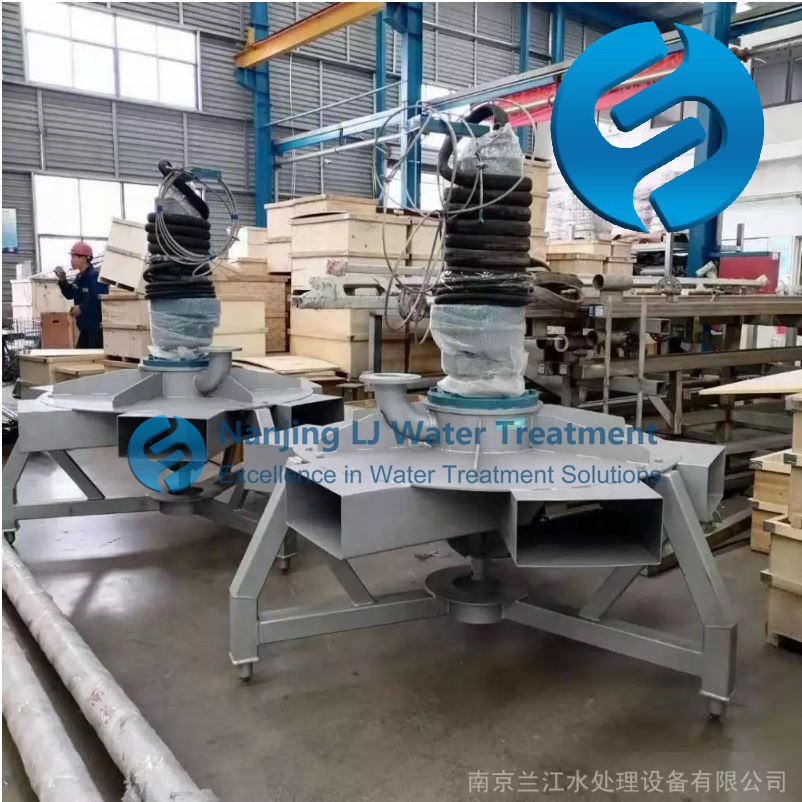
Compact Integrated Design
One of the most noticeable structural features of a submersible aeration mixer is its integrated underwater assembly. The motor, impeller, and aeration components are combined into a compact unit that operates completely below the liquid surface.
Fully Submerged Motor Structure
The motor housing is designed for underwater operation and typically uses a sealed construction to prevent moisture penetration. This arrangement reduces installation space requirements and helps maintain stable operation in deep tanks or confined treatment systems.
Combined Mixing and Aeration Function
Unlike conventional systems that separate mixing equipment and air diffusion devices, submersible aeration mixers combine both functions into one structure. The impeller generates liquid circulation while simultaneously dispersing oxygen into fine bubbles.
Streamlined Equipment Layout
The compact body design minimizes pipeline complexity and reduces the need for additional support structures. This can simplify installation in retrofit projects or facilities with limited tank space.
Durable Corrosion-Resistant Construction
Because the equipment continuously operates in water, sludge, or chemically active liquids, structural durability is essential.
Corrosion-Resistant Housing Materials
The external casing is often manufactured from stainless steel or specially treated alloys. These materials improve resistance to corrosion, oxidation, and chemical erosion in wastewater environments.
Reinforced Mechanical Seals
Mechanical sealing systems play a critical role in protecting internal components. Double-seal structures are commonly used to prevent leakage and extend service life during continuous submerged operation.
Wear-Resistant Impeller Design
The impeller structure is engineered to withstand abrasive particles and high-speed rotation. Reinforced blade geometry helps maintain stable flow patterns while reducing wear caused by suspended solids.
Efficient Hydrodynamic Structure
The hydraulic structure directly affects oxygen transfer efficiency and mixing performance.
Optimized Impeller Geometry
The impeller blades are shaped to create strong axial and radial flow patterns. This improves circulation inside treatment tanks and prevents sludge settling in low-flow areas.
Fine Bubble Generation System
Many submersible aeration mixers incorporate air intake channels or diffusion mechanisms that produce smaller bubbles. Fine bubbles increase the contact area between oxygen and liquid, improving aeration efficiency.
Balanced Flow Distribution
The structural arrangement helps distribute oxygen evenly throughout the tank. Uniform circulation reduces dead zones and improves biological treatment performance.
Stable Underwater Operation Features
Continuous operation in harsh environments requires structural stability and operational reliability.
Low Vibration Assembly
Balanced rotating components help reduce vibration during operation. Stable rotation decreases mechanical stress and contributes to quieter system performance.
Cooling Through Surrounding Liquid
The submerged motor structure allows heat generated during operation to dissipate directly into the surrounding liquid. This cooling method supports stable long-term operation without requiring external cooling systems.
Protective Cable and Connection Design
Power cables and connection points are usually protected with waterproof sealing structures. This helps prevent electrical failures caused by prolonged underwater exposure.
Flexible Installation Structure
Submersible aeration mixers are designed for adaptable installation in different treatment facilities.
Guide Rail Mounting Systems
Many units use guide rail structures that allow the mixer to be lowered or lifted without draining the tank. This simplifies maintenance and inspection procedures.
Adjustable Installation Angles
The structural mounting arrangement often allows angle adjustment to optimize water circulation patterns based on tank dimensions and process requirements.
Compatibility With Different Tank Sizes
The compact structural form enables installation in oxidation ditches, biological reactors, equalization tanks, and industrial wastewater basins with varying depths and layouts.
Structural Design for Energy Efficiency
Modern submersible aeration mixers are increasingly designed with energy-saving considerations.
Reduced Hydraulic Resistance
Smooth external contours and optimized flow channels reduce hydraulic drag during operation. Lower resistance can improve mixing efficiency while reducing energy consumption.
Efficient Air-Liquid Mixing Path
The internal aeration pathway is structured to maximize oxygen dispersion while minimizing unnecessary energy loss. Efficient airflow distribution contributes to improved oxygen transfer rates.
Long-Life Bearing Support Structure
Heavy-duty bearing systems support continuous operation under submerged conditions. Proper structural support reduces friction and helps maintain stable rotational efficiency over extended service periods.
Post time:2026-05-18
