Shore-Mounted Aeration Mixer Installation Tricks: Getting the Setup Right From Day One
Mounting an aeration mixer on the shore or the tank wall seems easier than a floor-mounted unit. No diving, no underwater anchoring, no guide rails. Just bolt it to the wall, hang it over the water, and go. That mindset is exactly why shore-mounted mixers fail faster than they should. The wall is not the floor. It flexes, it vibrates, it corrodes differently. And the way you mount the unit changes everything about how it mixes, how long it lasts, and how much maintenance it demands.
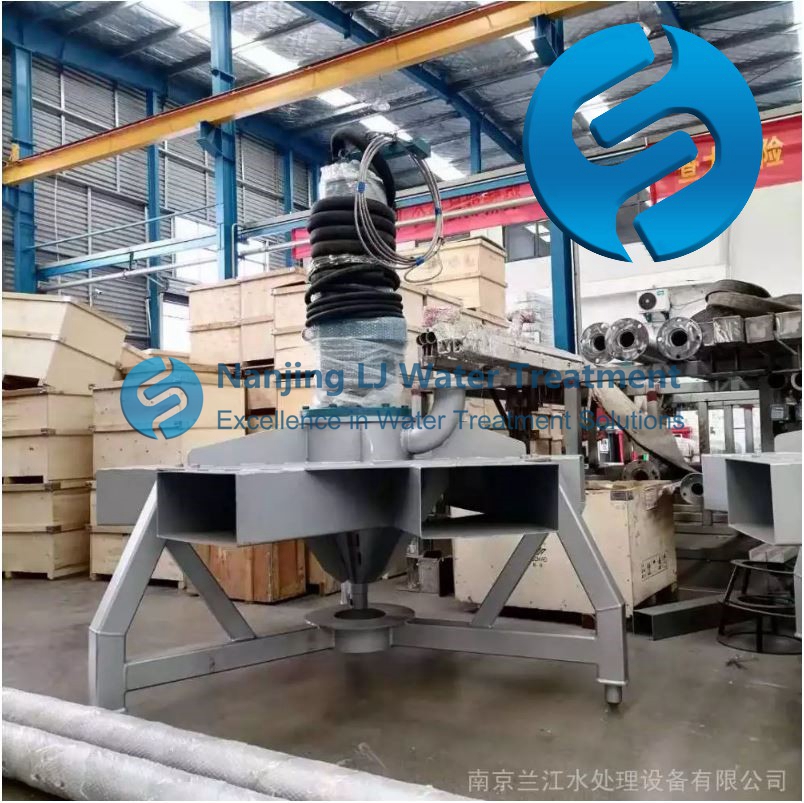
Shore-mounted installation has its own set of rules. Most field guides ignore them because they are written for floor-mounted units. This is what actually matters when the mixer hangs off the edge.
Choosing the Right Mounting Location on the Wall
The first decision — where on the wall to mount — determines the success of everything that follows. A bad location cannot be fixed by good installation.
Wall Thickness and Structural Capacity
Not every wall can hold a mixer. A 100-millimeter concrete wall flexes under the thrust load of even a small mixer. That flex translates into vibration at the mounting point, which loosens bolts within weeks.
The minimum wall thickness for a shore-mounted mixer is 200 millimeters for units under 5 kilowatts and 300 millimeters for anything larger. If the wall is thinner, you need to add a steel backing plate on the interior side — welded or bolted to rebar in the wall — to spread the load over a wider area.
Check for hollow sections behind the wall. Many tank walls are block construction with air gaps inside. An anchor bolt that hits an air gap holds almost nothing. Tap the wall with a hammer before drilling. A solid wall sounds sharp and ringing. A hollow wall sounds dull and thuddy. Drill into the solid spots only.
Height Above Water Level Matters More Than Depth Below
Most operators focus on how deep the impeller sits below the surface. That matters, but the height of the mounting point above the water line matters just as much — and it gets ignored constantly.
If the mixer is mounted too high, the shaft is long and unsupported. A long shaft bends under its own weight, especially when the impeller is loaded with debris. The bend creates imbalance, the imbalance creates vibration, and the vibration destroys the mechanical seal within months.
Keep the mounting point as close to the waterline as possible — ideally within 100 millimeters above the maximum water level. This keeps the shaft short, stiff, and well-supported. A short shaft also means less torque loss in the coupling and better response to variable speed control.
Distance From Corners and Inlet Pipes
Mounting the mixer in a corner saves space but kills performance. The two walls reflect the thrust back into the impeller, creating a turbulent dead zone right where you need flow the most. The mixer pushes water into the corner, the water bounces back, and the net circulation drops by 30 to 40 percent.
Keep the mixer at least 1.5 meters from any corner and 1 meter from any inlet pipe or baffle. The thrust needs open water to develop. If the mixer is too close to an inlet, the incoming flow fights the mixer output and creates chaotic eddies that reduce oxygen transfer efficiency.
Mounting Bracket Design and Hardware Selection
The bracket is not just a piece of steel that holds the mixer to the wall. It is the mechanical interface between the mixer and the structure. Get it wrong and the whole unit vibrates loose.
Welded vs. Bolted Brackets
Welded brackets are stronger but harder to adjust. Once you weld it, the angle is permanent. If you get the tilt wrong, you grind it off and start over. Bolted brackets let you adjust the angle in the field, which is critical for shore-mounted units because the wall is rarely perfectly plumb.
For most applications, a bolted bracket with a sliding slot is the better choice. The slot lets you shift the mixer up or down and tilt it forward or back by a few degrees. Lock it with grade 8 bolts and nylon lock nuts — the nylon resists vibration loosening far better than standard nuts.
The bracket material must match the environment. Carbon steel brackets in a coastal facility will corrode through in two years. Stainless steel 316 is the minimum. For brackets that carry heavy loads, use duplex stainless — it resists stress corrosion cracking that 316 cannot handle in chloride-rich environments.
Using a Pivot Point Instead of a Rigid Mount
A rigid mount transfers every bit of vibration from the mixer into the wall. The wall amplifies some frequencies and absorbs others, creating a resonance condition that shakes the bolts loose.
A pivot mount — a bracket with a spherical bearing or a rubber bushing at the connection point — isolates the mixer from the wall vibration. The mixer can still tilt slightly to adjust the impeller angle, but the vibration does not travel into the structure.
Rubber bushings are cheap and effective for lightweight mixers. Spherical bearings are better for heavy units because they handle the thrust load without compressing. The pivot point must be rated for the full thrust load of the mixer, not just the weight. Thrust and weight are different forces — thrust is horizontal, weight is vertical, and the pivot must handle both simultaneously.
Shaft Alignment When Mounting From the Side
Alignment is harder on shore-mounted units because the motor and the impeller are not on the same vertical axis. The motor sits on the wall. The impeller hangs below. The shaft runs horizontally through a support bearing, then turns 90 degrees down into the water. That L-shaped path introduces alignment challenges that floor-mounted units never face.
