Selecting the right aeration mixer for a small wastewater basin requires careful consideration of site-specific conditions, operational demands, an Shallow basins under 2.5 meters in depth require different flow patterns compared to deeper structures, as vertical bubble rise alone cannot guarantee full water circulation across the entire tank volume. You need to map out the exact water depth, surface area, and internal obstacles such as baffles or pipe connections that could disrupt mixing flow.
When the basin depth falls between 3 and 5 metersd long-term performance expectations. Unlike large municipal treatment facilities, small wastewater basins often have limited space, fluctuating flow rates, and restricted access for regular maintenance, which means a one-size-fits-all approach rarely delivers consistent results. Every design decision made during the selection process will directly influence oxygen transfer efficiency, mixing uniformity, and the overall stability of the biological treatment system.
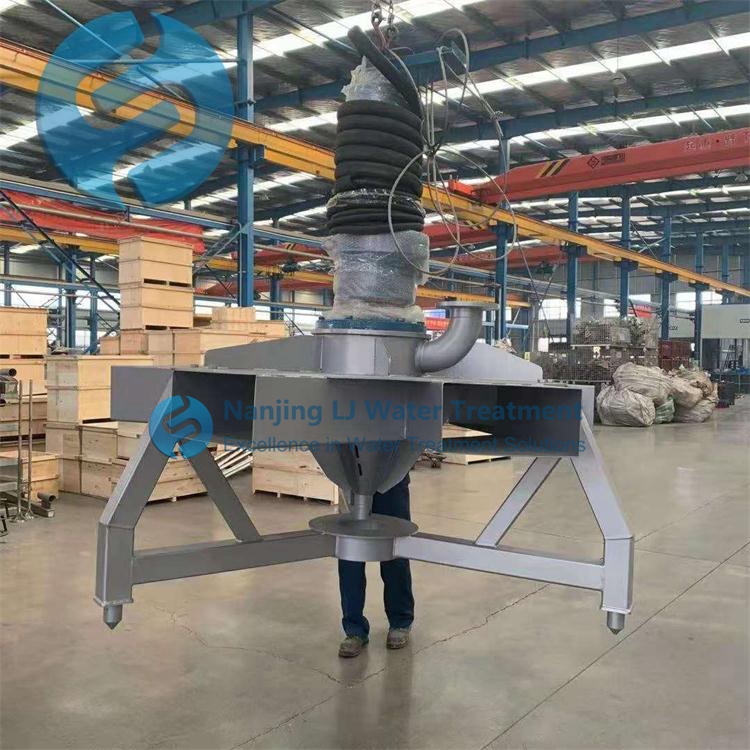
Basin Geometry and Depth Adaptation
The physical dimensions of the basin form the foundation of any reliable aeration mixer selection process., the mixer must be positioned to push dissolved oxygen toward the bottom zone while preventing sludge sedimentation in dead corners. The horizontal plume injection pattern works particularly well here, as it maintains the gas-liquid interface for a longer period than simple vertical bubble release. For irregularly shaped basins, you should arrange multiple mixer units to cover every section of the water body instead of concentrating all aeration power in a single central point.
Rotational Speed and Hydraulic Matching
The operational speed of the aeration mixer directly determines both mixing intensity and energy consumption across the entire treatment cycle. A speed set too low will leave stratified water layers and settled sludge at the bottom, while excessively high speed wastes power and may damage floc structures critical for biological treatment. You need to align the mixer’s output flow with the actual hydraulic retention time of the basin to ensure every volume of wastewater receives consistent contact with dissolved oxygen.
Proper speed calibration also supports stable dissolved oxygen distribution throughout the entire water column. This prevents situations where surface dissolved oxygen readings appear normal but deep zones remain oxygen-deprived, leading to anaerobic decomposition and unexpected odor generation. Many operators overlook this step and end up with systems that run at full power but still fail to meet basic treatment performance targets.
Dissolved Oxygen Efficiency Optimization
The core purpose of any aeration mixer in a small wastewater basin is to deliver reliable, energy-efficient oxygen transfer without unnecessary mechanical complexity. Systems that combine mechanical mixing with air aspiration perform exceptionally well in equalization basins and pre-aeration zones, where complete water circulation matters as much as peak oxygen transfer numbers. You should evaluate how the mixer’s design maintains continuous gas exchange even when water quality conditions shift from normal daily flow to peak loading events.
A practical baseline reference for system sizing accounts for both surface area and actual organic load entering the basin, rather than relying solely on generalized horsepower rules. This ensures the selected unit can handle temporary spikes in contaminant levels without suffering dramatic drops in treatment performance. Keeping all moving mechanical components outside the water whenever possible also simplifies routine inspection and reduces the frequency of submerged part cleaning or replacement.
Post time:2026-09-23
