Selecting the right aeration mixer for large water treatment tanks directly determines how consistently dissolved oxygen levels stay stable, how evenly flow circulates across the entire tank volume, and how much energy the whole system consumes over years of continuous operation. Many facility operators overlook core operational variables during the early selection stage, leading to frequent clogging, uneven mixing in dead zones, or higher than expected power draw that drags down overall treatment performance. A properly matched aeration mixer setup works in sync with tank geometry, wastewater characteristics, and biological process requirements to deliver reliable long term results without unnecessary maintenance burdens.
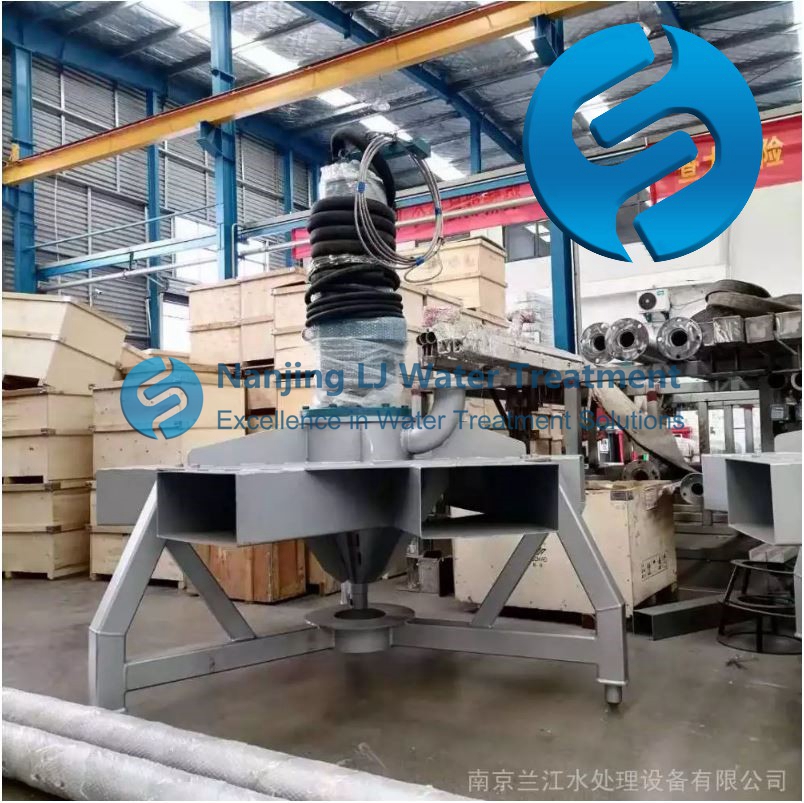
Tank Depth and Submergence Alignment
The first critical factor to evaluate is how the mixer’s working range lines up with the actual depth of the large water treatment tank. For tanks with depth between 3 meters and 6 meters, the mixer needs to produce enough horizontal and vertical thrust to push water from the bottom of the tank all the way to the surface without leaving low flow areas near the tank floor. When tank depth exceeds 6 meters, you need to account for extra pressure drop across the aeration interface, so the mixer’s output must be calibrated to maintain consistent bubble distribution even at maximum submergence. Improper depth matching often leads to sediment buildup in corners, where organic matter decomposes anaerobically and creates unexpected odors or water quality fluctuations.
Rotational Speed and Hydraulic Shear Balance
Operating speed is another key parameter that directly impacts both mixing performance and biological treatment health. Lower rotational speeds between 50 rpm and 150 rpm create gentle, wide coverage flow patterns that avoid damaging fragile microbial flocs in activated sludge systems, while still moving enough water to prevent solid settling. Higher speed designs can generate finer bubble sizes that boost initial oxygen transfer rates, but they also introduce stronger hydraulic shear that may break apart floc structures if not properly calibrated. The ideal speed setting should keep water velocity at the tank bottom above 0.3 meters per second to stop sediment from accumulating, while keeping shear forces low enough to preserve the integrity of the biological community.
Dissolved Oxygen Efficiency Calibration for Variable Loads
Large water treatment facilities almost always face fluctuating organic loads throughout daily and seasonal cycles, so the aeration mixer must support flexible adjustment of oxygen delivery to match real time demand. The system should be able to distribute micro bubbles evenly across the full tank cross section, so dissolved oxygen readings stay within the optimal 2 mg/L to 4 mg/L range across all monitoring points instead of showing wide variations near the air inlet and far corners. Properly calibrated setups can reduce unnecessary air supply volume during low load periods, cutting down overall system energy use significantly without compromising treatment outcomes.
Installation Layout and Flow Circulation Optimization
Even the most well specified mixer will underperform if its placement inside the large tank does not follow basic hydraulic design principles. Units should be positioned to create continuous rolling circulation that eliminates static dead zones, rather than clustered all near one side of the tank wall. For rectangular large scale tanks, staggered arrangement along the long axis helps push flow evenly from inlet to outlet, ensuring every volume of water passes through high efficiency aeration zones multiple times before leaving the basin. For circular tanks, angled mounting positions that create a gentle overall rotating flow prevent short circuiting, so no wastewater slips through the treatment process without receiving sufficient mixing and oxygen exposure.
Long Term Operational Resilience Against Clogging
Large water treatment tanks often carry variable levels of suspended solids, grease, and fibrous material that can accumulate on aeration components over thousands of operating hours. The mixer’s flow path should be designed with smooth, wide opening structures that resist buildup of these materials, so performance does not drop sharply after months of continuous use. Easy access for inspection and routine cleaning without draining the entire tank also reduces operational downtime, ensuring the system maintains its original mixing and aeration efficiency for extended service life. This resilience is especially critical for facilities that run 24 hours a day, where unexpected maintenance shutdowns can disrupt the entire water treatment workflow.
Post time:2026-09-24
