Bubble breakup and diffusion are core processes that define the actual oxygen transfer performance of an aeration mixer in water environments. These mechanisms determine how long bubbles stay in contact with water, how much surface area they create for gas exchange, and how evenly dissolved oxygen spreads across different layers of the water body.
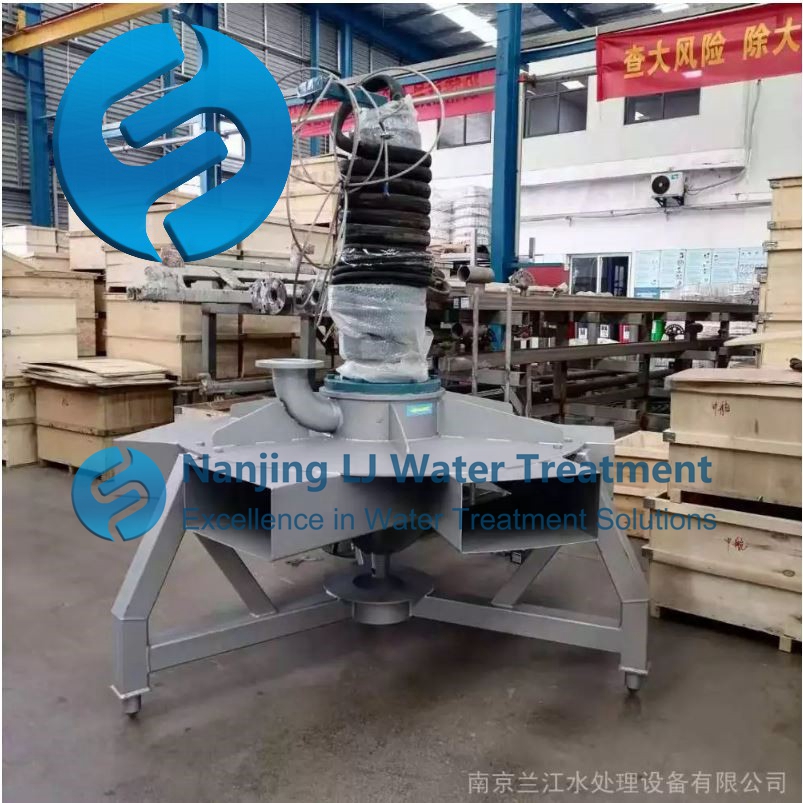
Initial Shear Breakup at the Air Release Point
When pressurized air first exits the submerged outlet, it forms large, uneven air pockets that would rise to the surface in just a few seconds without extra interference. The surrounding high-speed water flow generated by the mixer’s moving components creates strong hydraulic shear forces that hit these newly formed air pockets from multiple directions at the same time. These shear forces stretch and squeeze the air pockets until they split into smaller independent bubbles, most of which are reduced to a diameter range that fits the actual working depth of the water system. The sharp edges of internal flow guiding structures inside the mixer also cut through the rising air streams, further breaking down any remaining large bubble clusters before they move out of the core mixing zone.
Secondary Collision and Turbulence Refinement
After the first round of shear breakup, the newly formed medium-sized bubbles are carried into the high turbulence area around the mixer’s flow path. In this zone, bubbles keep colliding with each other, and some of them get hit by fast-moving water eddies that tear their surfaces apart into even finer units. The random pressure fluctuations in the turbulent flow make bubbles deform constantly, and those with thinner outer liquid layers eventually split into much smaller micro-bubbles that have far larger total surface area per unit of air volume. This stage also prevents a large number of bubbles from merging back into bigger ones, as the continuous water movement keeps individual bubbles separated from each other long enough to maintain their small size.
Long-Distance Diffusion and Uniform Distribution
Once the bubbles leave the high shear and turbulence zone, they are pulled into the large-scale horizontal and vertical water flow generated by the mixer’s circulation effect. Instead of rising straight up along a short vertical path, these bubbles are carried to different corners of the water body by the moving water, which greatly extends their retention time in the water. Even bubbles with slightly different sizes get distributed to different water layers at different speeds, so no single area gets too many concentrated bubbles while other areas receive almost no air contact. The slow, steady movement of the surrounding water also pushes tiny bubbles to spread out in all directions naturally, forming a uniform bubble distribution that supports consistent gas exchange across the entire working volume.
Post time:2026-07-13
