The continuous upward movement of bottom water driven by aeration mixers plays a critical role in reshaping aquatic ecosystem dynamics across lakes, reservoirs, and slow-moving water bodies. This natural-like water circulation process does not rely on external mechanical pumping to pull deep water upward, but uses the energy released by rising air bubbles to create a steady vertical flow that connects the benthic zone with upper water layers.
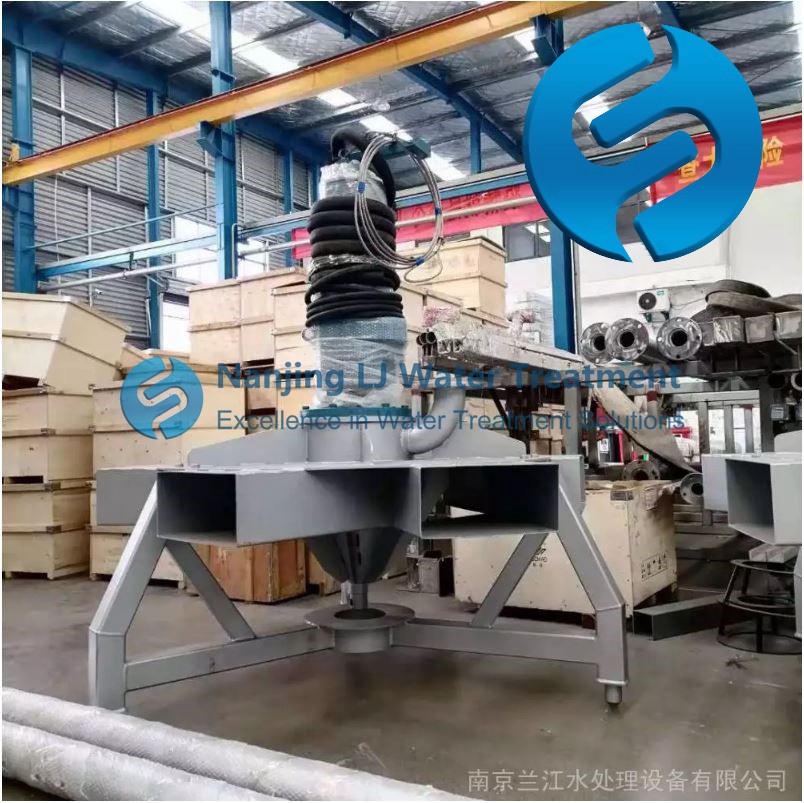
Core Mechanisms Behind Bottom Water Lifting
Bubbles released from submerged aeration units create a low-pressure zone around their rising path, dragging surrounding water to move upward along the same trajectory. As more bubbles enter the water column, this small-scale dragging effect gradually expands into a large, continuous water flow that stretches from the sediment surface all the way to the middle layer of the water body. The velocity of this upward flow stays gentle enough to avoid disturbing sediment particles excessively, while remaining strong enough to break the long-term static state of bottom water that has been trapped below the thermocline for weeks or even months.
Several subtle physical effects work together to support this sustained water lifting process. The difference in density between oxygen-poor bottom water and the slightly aerated water around the bubble stream creates an additional driving force that amplifies the upward movement without extra energy input. Even in water bodies with significant depth, this layered upward flow can maintain a stable trajectory instead of dispersing randomly in different directions.
Ecological Impacts on Deep Water Zones
When bottom water is carried upward to mix with upper water layers, it brings along dissolved substances that have accumulated near the sediment for a long time, including nutrients, reduced compounds, and trace elements that were previously locked away from surface exchange. This gradual transport prevents the sudden release of large amounts of harmful substances that often happens during unexpected natural water turnover events. The lifted bottom water also carries a small portion of cold benthic water to the middle layers, reducing the sharp temperature difference that forms the thermocline and making vertical water exchange easier over time.
This steady upward movement also creates more habitable space for aquatic organisms that cannot survive in stagnant, oxygen-free bottom zones. Benthic microbes that once only existed in low-oxygen environments get access to micro-oxygen conditions as they are carried upward, supporting more balanced biological decomposition processes across the entire water column. Fish and other mobile aquatic species can then move through more vertical zones without encountering sudden oxygen drops that force them to stay in narrow surface layers.
How Flow Patterns Shape Long-Term Water Quality
The direction and coverage of the upward water flow determine how evenly the entire water body gets reconnected after long periods of stratification. A well-distributed lifting pattern can avoid leaving dead zones where bottom water remains completely isolated from surface gas exchange for months. As the lifted bottom water mixes with upper layers and eventually flows back down in surrounding areas, it forms a large-scale, slow circulation loop that covers the entire water body instead of only acting on a small local area near the aeration point.
Over extended operation periods, this continuous bottom water lifting reduces the frequency of extreme anoxic events that damage benthic habitats. It also helps maintain a more consistent distribution of dissolved oxygen across different depths, preventing the buildup of toxic byproducts that form when organic matter decomposes in environments with no oxygen access. This natural-like circulation pattern supports a more stable aquatic environment that resists sudden quality shifts caused by seasonal temperature changes or external nutrient inputs.
Post time:2026-07-14
