Lightweight Aeration Mixer Handling and Installation: What Makes It Different From Heavy Units
Moving and installing a lightweight aeration mixer sounds simple on paper. Lift it, lower it in, bolt it down. Done. In practice, lightweight does not mean carefree. These mixers have their own set of handling quirks that catch people off guard — especially when the installation site is a muddy pond, a narrow tank, or a rooftop basin with no crane access. The reduced weight changes how you think about rigging, alignment, and anchoring. Ignoring those differences leads to bent shafts, cracked housings, and motors that vibrate themselves to death within weeks.
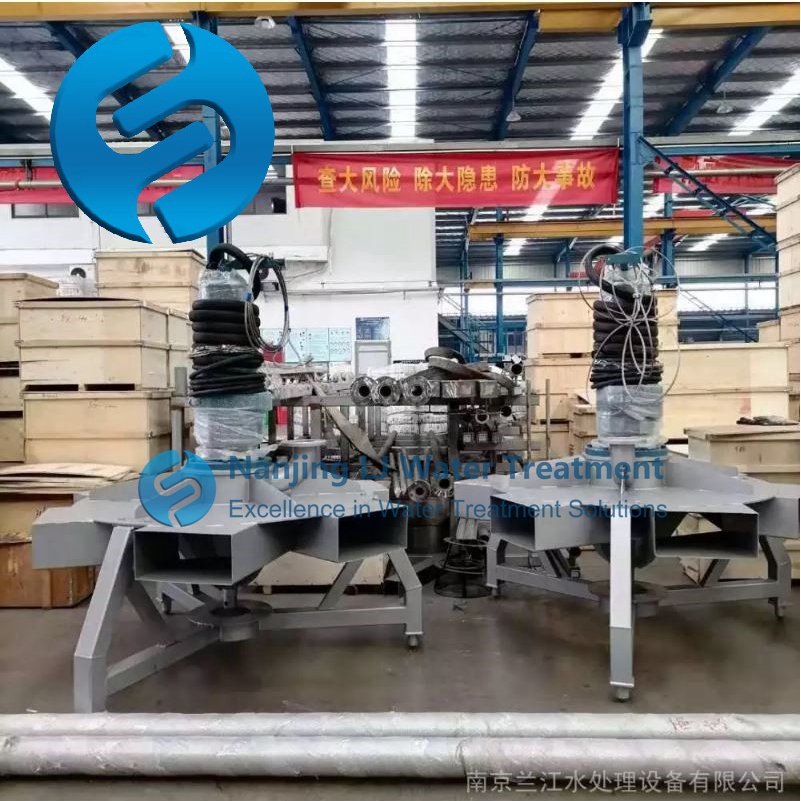
Why Lightweight Changes the Installation Game
Most operators assume lighter equipment is easier to install. That is true up to a point. But lightweight mixers often use thinner housings, smaller flanges, and more compact mounting hardware. Those design choices save weight — but they also reduce the margin for handling abuse. A heavy mixer can take a rough drop and survive. A lightweight unit with a thin aluminum housing will dent or crack from the same treatment.
The installation process itself shifts too. Heavy mixers need cranes, spreader bars, and multiple riggers. Lightweight mixers can often be handled by two people with a chain hoist. But that convenience creates a different risk — people get complacent. They skip the rigging plan, skip the alignment check, and skip the torque specs. Then the mixer runs crooked and fails early.
Material Choices That Affect Handling
Lightweight aeration mixers typically use aluminum alloys, glass-fiber reinforced plastic, or high-density polyethylene for the housing and impeller. These materials resist corrosion beautifully — but they behave differently under load. Aluminum flexes under point loads. Plastic can crack if dropped on a hard edge. Fiberglass delaminates if struck with a steel tool.
This means you cannot treat a lightweight mixer the same way you treat a cast iron unit. Lifting points must match the material. Sling angles must be wider to avoid crushing thin walls. And you never, ever drag the unit across concrete — even a short drag can gouge the housing or crack the impeller.
Getting the Mixer to the Site Without Damage
Transport is where most damage happens — not during installation, but before it even reaches the basin. Lightweight mixers get tossed around in trucks, stacked under heavy pallets, and handled by forklift tines that puncture the housing.
Packaging and Transport Protection
The mixer should ship in a rigid crate with foam or molded pulp inserts that hold the impeller and motor in place. The shaft must be locked to prevent rotation during transit — even a few turns on a bumpy road can twist the coupling or damage the bearing seals.
If you are shipping by truck, the unit sits on its base, not on its side. Laying a lightweight mixer on its side puts the full weight of the motor on the impeller shaft, which can bend it permanently. Even a slight bend creates imbalance that shows up as vibration once the mixer starts running.
For sites without road access — think remote ponds or mountaintop reservoirs — the mixer may need to be carried in by hand or on a small utility vehicle. In those cases, the carrying frame or lifting bracket becomes critical. Many lightweight mixers have built-in lifting eyes rated for a specific load. Exceeding that rating — even by a little — pulls the eye out of the housing.
Installation Steps That Matter More Than You Think
Once the mixer is at the site, the actual installation is faster than with heavy units. But speed should not replace precision. Lightweight mixers are more sensitive to misalignment, and misalignment is the number one killer of bearings and seals.
Alignment and Leveling
The mounting surface must be level within 2 millimeters over the full footprint. This sounds strict, but lightweight mixers amplify any tilt. A 1-degree lean on a heavy mixer is barely noticeable. On a lightweight unit, that same lean shifts the impeller off-center, creates uneven loading on the bearings, and generates vibration that destroys the mechanical seal within months.
Use a machinist's level or a laser level to check the mounting flange before bolting anything down. Shim the base with stainless steel shims — not wood, not plastic. Wood rots. Plastic compresses over time. Stainless shims hold their shape and resist corrosion.
The coupling between the motor and the impeller shaft must be aligned to within 0.05 millimeters of offset and 0.1 degrees of angular misalignment. This is tighter than most people expect. A dial indicator on the coupling face is the only reliable way to check it. Eyeballing it does not work — not on lightweight units, where the tolerances are smaller and the consequences of misalignment are faster.
Anchoring Without Over-Tightening
Lightweight mixers often mount to thin tank walls, floating platforms, or flexible supports. The anchoring method must match the substrate. For concrete walls, use chemical anchors rated for the pull-out load — not just expansion bolts. Expansion bolts in thin concrete can pull out under the cyclic loading from a running mixer.
Do not over-torque the mounting bolts. Aluminum housings strip easily. The torque spec for a lightweight mixer is typically 40 to 60 percent of what you would use on a steel unit. Use a calibrated torque wrench. Guesswork here means cracked housings or stripped threads, both of which are expensive to fix in the field.
Electrical Connections and Commissioning Gotchas
The electrical side of installation is where lightweight mixers cause the most headaches — not because the wiring is different, but because the control panels and junction boxes are smaller and more exposed to the environment.
Cable Routing and Strain Relief
The power cable must enter the motor housing through a proper strain relief gland. On lightweight mixers, the gland is smaller and easier to damage. If the cable gets pulled during installation — even slightly — it can tear the gland seal and let water into the motor. Once water reaches the windings, the motor is done.
Route the cable so it does not hang across the impeller zone. A dangling cable acts like a flag in the water — it catches debris, wraps around the shaft, and eventually pulls the cable out of the gland. Secure the cable to the mounting bracket with sta
Post time:2026-06-01
