Heavy-Duty Aeration Mixer Stable Operation: What Keeps These Units Running for Years
Heavy-duty aeration mixers are built to take punishment. Thick walls, oversized bearings, cast iron housings — they look like they can survive anything. And they can, but only if you run them right. A heavy mixer that is poorly maintained will fail just as fast as a cheap one. The difference is that when a heavy unit fails, the collateral damage is worse. Broken shafts can tear up impellers. Seized bearings can destroy motor windings. A failed seal on a 500-kilogram mixer does not just stop mixing — it takes out the whole basin.
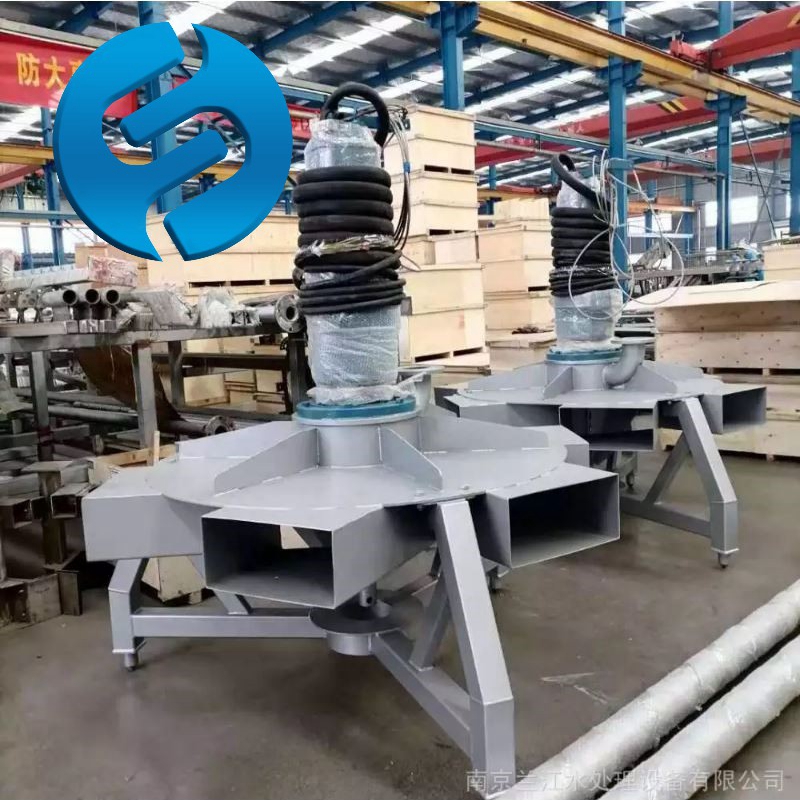
Stable operation is not about luck. It is about understanding the mechanical loads, monitoring the right parameters, and catching small problems before they become expensive ones.
The Real Enemies of Stable Operation
Most people blame the mixer when things go wrong. In reality, the operating environment is usually the culprit. Heavy-duty mixers are designed for tough conditions — but even they have limits.
Vibration Is the First Warning Sign
Vibration does not appear out of nowhere. It builds up slowly. A slightly worn bearing generates more vibration each week. A marginally misaligned coupling adds harmonic frequencies that stress the shaft. Loose mounting bolts let the whole unit rock back and forth under load.
The problem is that heavy mixers mask vibration longer than lightweight units. Their mass absorbs energy that a smaller mixer would transmit immediately. By the time you feel or hear the vibration on a heavy unit, the damage is already significant. That is why vibration monitoring is not optional — it is the single most reliable early warning system you have.
Install accelerometers on the bearing housings. Set alarm thresholds at 4.5 millimeters per second RMS for continuous operation. Anything above that means you have a developing problem — imbalance, misalignment, bearing wear, or cavitation. Do not wait for the noise to get bad. By then, you are already replacing parts.
Cavitation Destroys Impellers Silently
Cavitation happens when the pressure at the impeller tip drops below the vapor pressure of the water. Bubbles form and then collapse violently against the blade surface. Each collapse removes a tiny piece of metal. Over months, the impeller looks like it was eaten by acid.
Heavy-duty mixers are not immune — they are just slower to show the damage. The thicker blades take longer to thin out, but once the erosion reaches a critical point, the impeller loses balance and vibration spikes. Then the bearings take the hit, then the shaft, then the motor.
Cavitation is caused by running the mixer too deep, too fast, or with the wrong impeller for the application. Check the submergence depth against the design spec. If the mixer is running near the surface, air gets pulled into the impeller and cavitation starts immediately. Drop it deeper or switch to a different impeller geometry.
Foundation and Mounting: Where Stability Starts
You can have the best mixer in the world, but if it is mounted on a weak foundation, it will shake itself apart. Heavy-duty units generate significant thrust loads — sometimes several thousand newtons — and those forces must go somewhere.
Concrete Foundations Must Match the Load
The foundation is not just a slab. It must be sized for the dynamic loads, not just the static weight of the mixer. A typical heavy-duty mixer can generate lateral forces of 2 to 4 times its own weight during startup and under uneven loading conditions.
The concrete pad should be at least 300 millimeters thick with reinforced rebar mesh. Anchor bolts must be embedded deep enough — typically 15 to 20 times the bolt diameter — and grouted with non-shrink epoxy grout. Standard cement grout cracks under cyclic loading and the bolts loosen over time.
For mixers mounted on tank walls or floors, the substrate thickness matters. A 150-millimeter concrete wall is not enough for a heavy mixer generating 3,000 newtons of thrust. The wall will crack, the bolts will pull out, and the mixer will shift — taking the alignment with it.
Flexible Couplings Absorb Shock Loads
Rigid couplings transfer every shock load directly from the motor to the impeller shaft. On a heavy mixer, those shock loads come from debris strikes, sudden flow changes, and startup surges. A flexible coupling — either a jaw type or a disc type — acts as a shock absorber between the motor and the impeller.
This does not just protect the shaft. It also reduces the vibration transmitted to the bearings and the foundation. Heavy mixers without flexible couplings fail bearing seats within a year in most real-world installations. The cost of a coupling is a fraction of the cost of replacing a bearing housing on a 400-kilogram unit.
Bearing and Seal Management Under Continuous Load
Bearings and seals are the two components that determine how long a heavy-duty mixer actually runs. Everything else — the motor, the impeller, the housing — can last decades if the bearings and seals stay healthy.
Bearing Life Depends on Load and Alignment
The rated life of a bearing assumes perfect alignment, clean lubrication, and steady loads. None of those conditions exist in a real aeration basin. The actual bearing life is usually 30 to 50 percent of the catalog rating.
Overloading is the fastest way to kill a bearing. This happens when the impeller is clogged with debris or when the mixer runs dry for even a few seconds. The bearings are designed for hydrodynamic lubrication — a thin film of water separates the rolling elements from the races. Run dry, and that film disappears. Metal hits metal. The bearing seizes in seconds.
Check bearing temperature weekly. A healthy bearing runs between 60 and 80 degrees Celsius. Above 90, you have a problem. Above 100, shut it down immediately. Temperature spikes usually mean lubrication failure, contamination, or overload — in that order of likelihood.
