Direct-Drive Aeration Mixer Transmission: Why Eliminating the Belt Changes Everything
Most aeration mixers you see in the field use a belt-and-pulley setup. Motor spins a pulley, the pulley drives a belt, the belt turns the impeller shaft. It works. But it also adds failure points, loses energy, and demands constant adjustment. Direct-drive mixers cut all of that out. The motor couples straight to the impeller shaft — no belts, no pulleys, no tensioning. What sounds like a simple mechanical change actually reshapes how the whole system behaves under load.
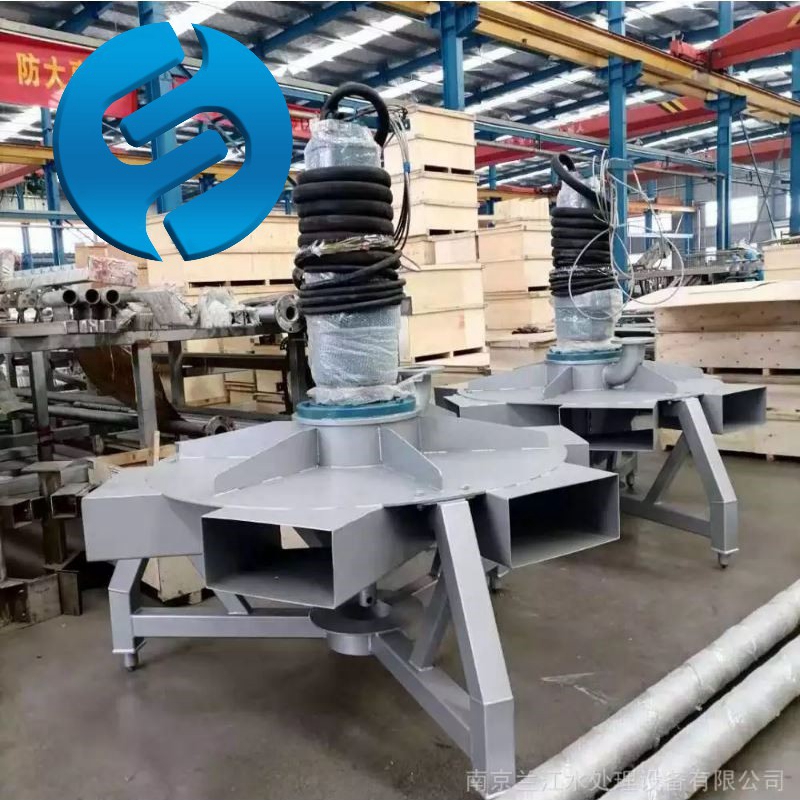
Understanding direct-drive transmission means understanding where the old ways fall short and why the shift to direct coupling matters more than most operators realize.
How Direct-Drive Differs From Conventional Transmission
In a conventional setup, the motor sits above the waterline and connects to the impeller through a V-belt or a toothed belt running over pulleys. The belt acts as a buffer — it absorbs shock loads and allows some misalignment. But that buffer comes at a cost. Belts slip under heavy load. They stretch over time. They need replacement every six to twelve months depending on the environment. And every time you replace a belt, you lose alignment and the mixer vibrates until you retension it.
Direct-drive removes the belt entirely. The motor rotor connects to the impeller shaft through a rigid coupling or, in some designs, the motor shaft extends directly into the impeller hub. There is nothing between the motor and the water except the seal.
Torque Transfer Without Loss
Belts typically lose 3 to 5 percent of transmitted torque to friction and slip. In a high-load aeration application, that loss adds up. The motor has to work harder to deliver the same mixing energy, which means higher electricity bills and more heat in the motor windings.
Direct-drive transfers torque at nearly 100 percent efficiency. What the motor produces, the impeller receives. This sounds obvious, but the practical effect is significant. A direct-drive mixer can use a smaller motor to achieve the same mixing output as a belt-driven unit. Smaller motor means less heat, less current draw, and a longer electrical life.
The rigidity of the connection also means the impeller responds instantly to speed changes. With a belt, there is always a slight lag — the belt stretches and snaps back. With direct-drive, the impeller accelerates and decelerates with the motor in real time. This matters when you are using variable frequency drives to modulate mixing intensity based on dissolved oxygen demand.
Zero Belt Maintenance Changes the Cost Equation
Belt replacement is not just about the cost of the belt itself. It is about the labor. Someone has to climb up, loosen the motor mount, slide the old belt off, tension the new one, and realign everything. In a remote pond or a tank with no walkway access, that job can take half a day with two technicians.
Direct-drive eliminates that entire maintenance task. No belts means no tension checks, no pulley inspections, no slip adjustments. The only wear items in the transmission path are the coupling and the bearings — both of which last years, not months.
The Coupling: The Heart of Direct-Drive Transmission
Since there is no belt to absorb shock, the coupling becomes the critical component. It has to handle full torque, absorb minor misalignments, and survive the constant vibration of an aeration environment. Getting the coupling wrong kills the whole advantage of direct-drive.
Rigid vs. Flexible Couplings in Aeration Service
Rigid couplings — like flanged or clamped hub types — offer zero backlash and perfect torque transfer. They work well when the motor and impeller are perfectly aligned, which is achievable in a factory setting but rare in the field. A rigid coupling on a misaligned shaft transfers every bit of that misalignment into the bearings. Within weeks, the bearings are shot.
Flexible couplings — disc types, jaw types, or Oldham couplings — allow a few degrees of angular misalignment and a millimeter or two of axial play. They absorb the shock from debris strikes and startup surges. For most aeration applications, a flexible coupling is the right call. The small amount of backlash it introduces is negligible compared to the protection it gives the bearings and the shaft.
The key is matching the coupling to the load. A jaw coupling handles high torque but wears faster. A disc coupling lasts longer but costs more. An Oldham coupling handles misalignment beautifully but has lower torque capacity. Choose based on the actual operating conditions, not the catalog spec sheet.
How Coupling Failure Kills the Whole Unit
When a coupling fails in a direct-drive mixer, the consequences are immediate and severe. Without a belt to slip and protect the system, a broken coupling means the motor spins freely while the impeller stops. Or worse, the coupling shears and the motor shaft slams into the impeller hub, destroying both.
Coupling failure usually starts with wear. Check the coupling every six months. Look for cracked elastomer elements, worn jaw inserts, or loosened clamping screws. A coupling that is past its service life will fail suddenly — not gradually. There is no warning vibration, no slow degradation. It just breaks.
Bearing Loads Are Higher Without a Belt Buffer
This is the trade-off nobody talks about. Belts absorb shock. Without one, every impact from debris, every surge at startup, every cavitation event goes straight into the bearings. Direct-drive mixers need beefier bearings than belt-driven units — and they need them to be maintained more carefully.
Thrust Loads and Bearing Selection
Aeration mixers generate axial thrust — the impeller pushes water in one direction and the reaction force pushes back on the shaft. In a belt-driven unit, the belt tension helps counteract some of that thrust. In a direct-drive unit, the bearings carry the full thrust load alone.
This means you need angular contact bearings or tapered roller bearings — not simple deep groove ball bearings. The bearing preload must be set correctly. Too loose, and the shaft wanders under thrust. Too tight, and the bearings overheat and fail in weeks. The preload spec is usually in the range of 15 to 30 micrometers — tight tolerances that require proper installation tools.
Radial Loads From Misalignment
<p style="box-sizing: border-box; --univer-tw-border-spacing-x: 0; --u
Post time:2026-06-02
