Aeration Mixer Installation in Wastewater Treatment Tanks: What Actually Works on Site
Getting an aeration mixer installed in a wastewater treatment tank sounds straightforward until you are standing next to a ten-foot-deep basin trying to figure out where to drop the equipment. The placement, the mounting depth, the air supply routing, and the anchor point all affect performance. A mixer installed in the wrong spot does not just underperform. It creates dead zones, wastes energy, and can damage the tank floor. This guide covers what installers and operators need to know before the equipment ever touches the water.
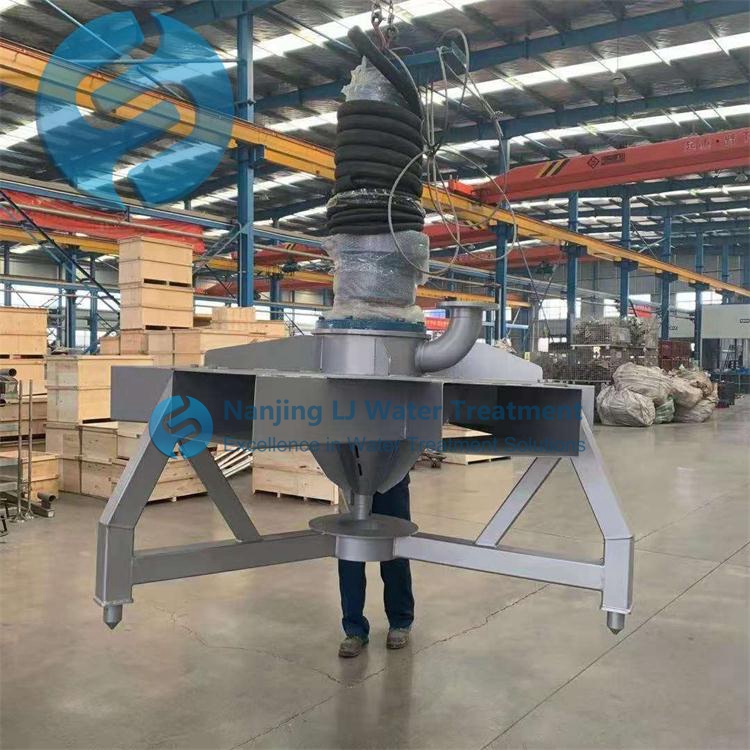
Why Placement Determines Everything
Most people focus on the mixer specs and ignore where it goes inside the tank. That is a mistake. An aeration mixer creates a flow pattern. The shape of that pattern depends entirely on the distance from the tank floor, the distance from the tank walls, and the depth of the water column above it.
If the mixer sits too close to the bottom, the air stream hits the floor and spreads sideways instead of upward. You get good mixing near the floor but dead water at the surface. If it sits too high, the bubbles rise too far before breaking up, and the mixing energy dissipates before reaching the sludge layer. The sweet spot is usually one-third to one-half of the total water depth from the bottom. This gives the air plume enough room to expand and create a full circulation loop without wasting energy on surface agitation.
Distance from the walls matters just as much. A mixer placed within one meter of a wall pushes air against a solid surface. The flow bounces back and creates a turbulent pocket that does not reach the center of the tank. Keep at least one meter of clearance from every wall. For rectangular tanks, offset the mixer from the centerline slightly toward the inlet side. This pushes the flow toward the outlet and helps sweep sludge along the bottom without creating stagnant corners.
Mounting the Mixer: Brackets, Rails, and Anchor Points
How to Secure It Without Drilling into the Tank
Most wastewater tanks are concrete or fiberglass. Drilling into the floor or walls weakens the structure and creates leak points. The standard approach is to use a surface-mounted bracket or a weighted base that sits on the tank floor.
For concrete tanks, a cross-arm bracket bolted to the wall above the waterline works well. The mixer hangs from the bracket on a pipe or cable. The bracket takes the load, not the tank floor. Make sure the bracket is rated for the full weight of the mixer plus the dynamic load from the air pulse. A mixer that vibrates loose mid-operation can crack a concrete floor.
For fiberglass tanks, use a weighted base with rubber grommets. The weight keeps the mixer stable, and the rubber absorbs vibration so it does not crack the tank. Never use metal-to-fiberglass contact without a rubber buffer. The vibration will cause hairline cracks within weeks.
Guide Rails for Adjustable Depth
Some installations use a vertical guide rail system. The mixer slides up and down the rail and locks at the desired depth. This is useful in tanks where the water level fluctuates. Instead of repositioning the entire mixer every time the level changes, you slide it up or down and relock.
The rail should be stainless steel or coated carbon steel. Uncoated steel will rust within months in a wastewater environment. Mount the rail to the tank wall with expansion anchors rated for the load. Check the anchor pull-out strength before hanging the mixer. A failed anchor means the mixer drops into the slurry and you are pulling it out with a crane.
Routing the Air Supply Line
Keeping the Air Line Away from the Mixer Exhaust
The air supply line runs from the blower to the mixer. This line should never cross through the mixer's discharge zone. When the mixer pushes air outward, it creates a high-velocity stream. If the supply line sits in that stream, it vibrates, chafes, and eventually fails.
Route the air line along the tank wall, secured with clamps every meter. Use flexible rubber hose for the last two meters where it connects to the mixer. Rigid pipe at the connection point transfers vibration directly into the mixer housing and shortens its lifespan. The flexible section absorbs the vibration and protects both the hose and the mixer.
Sizing the Air Line for the Tank Volume
Undersized air lines create backpressure that starves the mixer of airflow. Oversized lines waste money and add unnecessary weight. The general rule is to size the air line for 1.5 times the mixer's rated air demand. This gives you headroom for friction loss in the pipe and any minor blockages.
For tanks deeper than four meters, add a check valve at the mixer connection. Without it, water can siphon back into the air line when the blower shuts down. That water sits in the line, rusts the internal components, and can cause a water hammer when the blower restarts. A simple swing check valve costs almost nothing and prevents a very expensive repair.
Common Installation Mistakes That Kill Performance
Installing Too Many Mixers Too Close Together
It is tempting to add extra mixers for safety. But mixers create overlapping flow patterns. When two mixers are closer than two meters apart, their air plumes collide and cancel each other out. You get turbulence without circulation. The sludge does not move. The oxygen does not transfer. You are just burning electricity.
<p style="box-sizing: border-box; --univer-tw-border-spacing-x: 0; --univer-tw-border-spacing-y: 0; --univer-tw-translate-x: 0; --univer-tw-translate-y: 0; --univer-tw-rotate: 0; --univer-tw-skew-x: 0; --univer-tw-skew-y: 0; --univer-tw-scale-x: 1; --univer-tw-scale-y: 1; --univer-tw-pan-x: ; --univer-tw-pan-y: ; --univer-tw-pinch-zoom: ; --univer-tw-scroll-snap-strictness: proximity; --univer-tw-gradient-from-position: ; --univer-tw-gradient-via-position: ; --univer-tw-gradient-to-position: ; --univer-tw-ordinal: ; --univer-tw-slashed-zero: ; --univer-tw-numeric-figure: ; --univer-tw-numeric-spacing: ; --univer-tw-numeric-fractio
Post time:2026-06-12
