Propeller mixing heads are among the most widely used mechanical components in aeration mixer systems, valued for their straightforward construction, reliable flow generation, and proven performance across thousands of water treatment and aquaculture installations around the world. Unlike fine bubble diffusers or high-shear emulsifying impellers that prioritize gas transfer over bulk movement, these specialized propellers are engineered to push large volumes of water horizontally, vertically, or in combined spiral patterns, while also creating the controlled turbulence needed to keep dissolved oxygen, suspended solids, and microbial communities evenly distributed throughout the entire tank or pond.
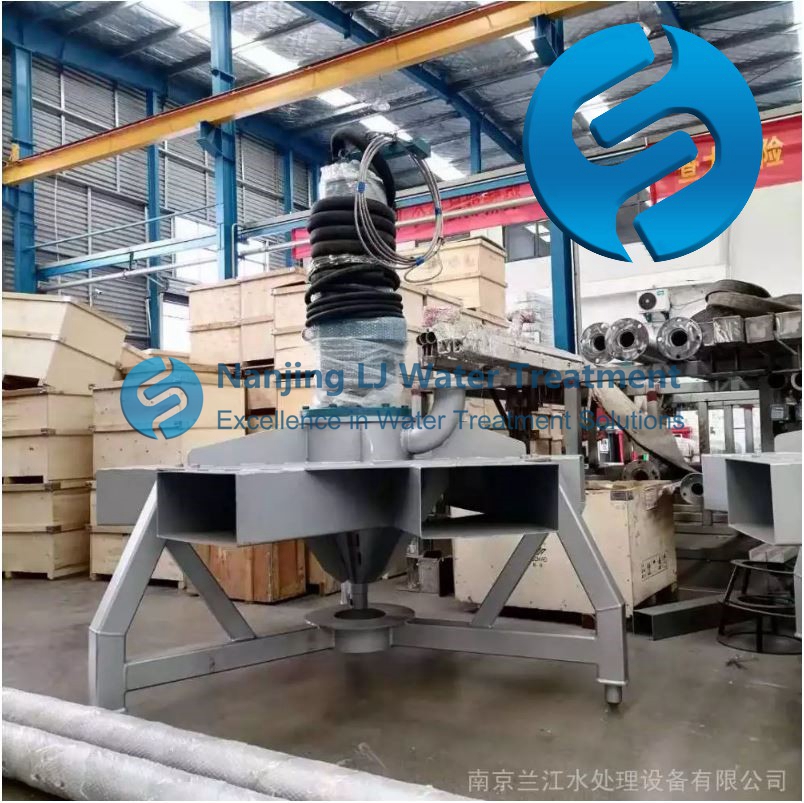
Many system designers and plant operators favor this configuration because it strikes a careful balance between energy efficiency and mixing coverage that is hard to match with more specialized impeller designs. A single correctly sized unit can circulate thousands of cubic meters of water per hour, moving flow in wide, gentle patterns that do not tear delicate microbial flocs or damage the gill structures of farmed aquatic species. This makes the design versatile enough to work in everything from small industrial batch treatment tanks to 10,000 cubic meter municipal aeration basins, and from shallow nursery ponds to deep commercial aquaculture raceways.
Hydrodynamic design and flow dynamics
Every detail of a propeller mixing head, from blade pitch and tip shape to the number of blades and the surface finish of the leading edges, is carefully tuned to produce specific flow characteristics that match the demands of aeration-intensive environments. Most modern designs use a three-blade or four-blade configuration with a twisted, airfoil-shaped profile, similar to the blades on a low-speed aircraft propeller. This shape reduces drag as the blade moves through the water, minimizing wasted energy that would otherwise be converted into unnecessary noise and destructive shear forces, while maximizing the volume of water that is displaced with every full rotation.
The most common flow pattern generated by these units is a strong, directional jet that extends outwards from the propeller face, gradually expanding in diameter as it travels across the tank. This jet drags surrounding stationary water along with it, creating a wide, rolling circulation loop that pulls water from the surface down toward the tank floor, pushes it horizontally across the bottom, and then lifts it back up toward the surface again. This continuous, large-scale movement prevents the formation of stagnant dead zones where heavy organic solids could settle and turn anaerobic, a problem that plagues many poorly designed aeration systems that rely solely on fine bubbles without sufficient bulk mixing.
Many propeller mixing heads are also shaped to create controlled micro-turbulence right at the point where bubbles are introduced into the flow. The trailing edges of the blades are often slightly tapered to create localized shear zones that break incoming air streams into a cloud of small, uniform bubbles, rather than allowing large, fast-rising air pockets to escape straight to the surface without transferring their oxygen. This means the same unit can deliver both the broad, basin-wide circulation needed for uniform water quality and the targeted gas-liquid contact that drives efficient oxygen transfer, eliminating the need for separate mixers and aeration equipment in many mid-sized facilities.
Performance in activated sludge and industrial biological treatment
In municipal and industrial wastewater treatment plants operating with activated sludge processes, consistent, non-destructive mixing is one of the most important prerequisites for maintaining stable sludge settling properties and high-quality effluent. When mixing forces are too high, fragile activated sludge flocs are broken apart into tiny, dispersed particles that cannot settle properly in the secondary clarifier, leading to elevated suspended solids levels in the plant discharge. When mixing is too weak, heavy flocs settle into thick sludge banks on the tank floor, turning anaerobic and releasing unwanted gases that create floating sludge clumps and upset the entire biological treatment balance.
Propeller mixing heads are uniquely suited to navigate this narrow operational window, because they can generate the high bulk flow velocities needed to keep all flocs in full suspension without applying the extreme shear forces that come with small, high-speed impeller designs. Many plants that have retrofitted older aeration systems report that after switching to this mixing configuration, their sludge volume index values stabilize within a much narrower, more predictable range, making it far easier for operators to adjust return activated sludge rates and maintain consistent biological performance through seasonal temperature shifts and variable incoming loading rates.
These systems also perform exceptionally well in anoxic and anaerobic zones that are part of modern biological nutrient removal processes. In these sections of the treatment train, no artificial aeration is added at all, and the only function of the mixer is to keep the mixed liquor suspended while creating the hydraulic conditions that allow denitrifying bacteria and phosphorus-accumulating organisms to carry out their metabolic work. The gentle, consistent circulation generated by propeller mixing heads ensures that every part of the anoxic basin stays completely mixed, with no pockets of low flow that could accidentally pull in dissolved oxygen from adjacent aerated zones and disrupt the carefully controlled biochemical conditions required for efficient nutrient removal.
Practical deployment in aquaculture and recirculating systems
In commercial fish and shrimp farming operations, uneven flow distribution and thermal stratification are two of the most common hidden sources of poor growth performance and unexpected disease outbreaks. In deep outdoor ponds, warm surface water heated by sunlight forms a distinct, low-density layer that sits on top of much cooler, denser water near the pond bottom, creating a physical barrier that prevents oxygen from reaching the benthic zone where most farmed shrimp spend nearly all their time. Even in indoor recirculating aquaculture systems, poor flow design can leave dead corners where uneaten feed and fish feces settle and decompose, releasing ammonia and nitrite that gradually degrade water quality and stress the cultured animals.
Propeller mixing heads break down these stratification layers by moving large volumes of water vertically as well as horizontally, creating a uniform water column where temperature, dissolved oxygen, and water quality parameters stay consistent from the surface all the way down to the pond or tank floor. This stable, homogeneous environment eliminates the need for farmed animals to expend extra energy swimming between different water layers to find acceptable living conditions, allowing them to direct more of their feed intake toward growth rather than unnecessary movement. Many long-term aquaculture studies have shown that farms with well-designed full-volume circulation systems can achieve 10 to 15 percent higher feed conversion ratios than farms that rely only on localized paddlewheel aerators.
One of the most underappreciated advantages of this propeller design in aquaculture settings is its ability to handle variable water levels and changing organic loading conditions without significant drops in performance. Unlike many other mixer designs that are highly sensitive to precise submergence depth, propeller mixing heads can operate effectively across a wide range of water levels, making them ideal for outdoor ponds that are regularly drained down and refilled between production cycles. The robust, open blade geometry also resists clogging from floating debris, stringy algae, and accumulated organic waste, reducing the frequency of unscheduled maintenance stops that can disrupt circulation and put high-density stock at risk of oxygen depletion.
Long-term operational best practices and maintenance guidance
To keep a propeller mixing head system operating reliably for years, one of the most important initial design choices is selecting the correct mounting position and submergence depth for each unit. If the propeller is placed too close to the water surface, it will pull in large volumes of air directly from the atmosphere, creating excessive surface spray and unnecessary air entrainment that can disrupt the carefully calibrated flow patterns. If it is placed too close to the tank or pond floor, the high-velocity jet it produces can scour away protective sediment layers, stir up large clouds of inert grit, and erode concrete or liner surfaces over thousands of hours of continuous operation.
Operators also need to pay close attention to the alignment and rotational balance of the entire shaft and propeller assembly. Even a small amount of imbalance caused by a bent shaft, a chipped blade tip, or a heavy buildup of biofouling on one side of the propeller can create strong, cyclic vibration forces that travel all the way up the drive shaft to the motor and gearbox. Over months of continuous operation, this persistent vibration will wear out bearing surfaces far ahead of their expected service life, leading to premature mechanical failures that could have been easily avoided with simple, regular inspection routines. A quick visual check once a week, combined with a routine vibration measurement once every few months, can catch small alignment problems long before they develop into costly unplanned shutdowns.
For installations operating in water with high levels of sand, grit, or abrasive suspended solids, selecting the right surface treatment for the propeller blades will drastically extend the working life of the mixing head. Even minor abrasive wear on the carefully shaped airfoil blade profiles will gradually degrade hydrodynamic performance, reducing total flow output and increasing energy consumption even before any visible structural damage appears. Many experienced operators schedule a routine inspection and refinishing of propeller surfaces once every one to two years, restoring the original smooth, aerodynamic blade shape and bringing mixing performance back up to its original design specifications.
Post time:2026-11-12
