Aeration Mixer Anti Corrosion Treatment for Long Service Life in Harsh Water Environments
Aeration mixers operate continuously in submerged or splash zones where process water, dissolved oxygen, suspended solids, and chemical additives combine to create aggressive conditions that quickly degrade unprotected metal surfaces. Proper anti-corrosion treatment applied at the right stages prevents unexpected failures, cuts unplanned maintenance, and keeps mixing and oxygen transfer performance consistent across wastewater, aquaculture, and bioreactor applications.
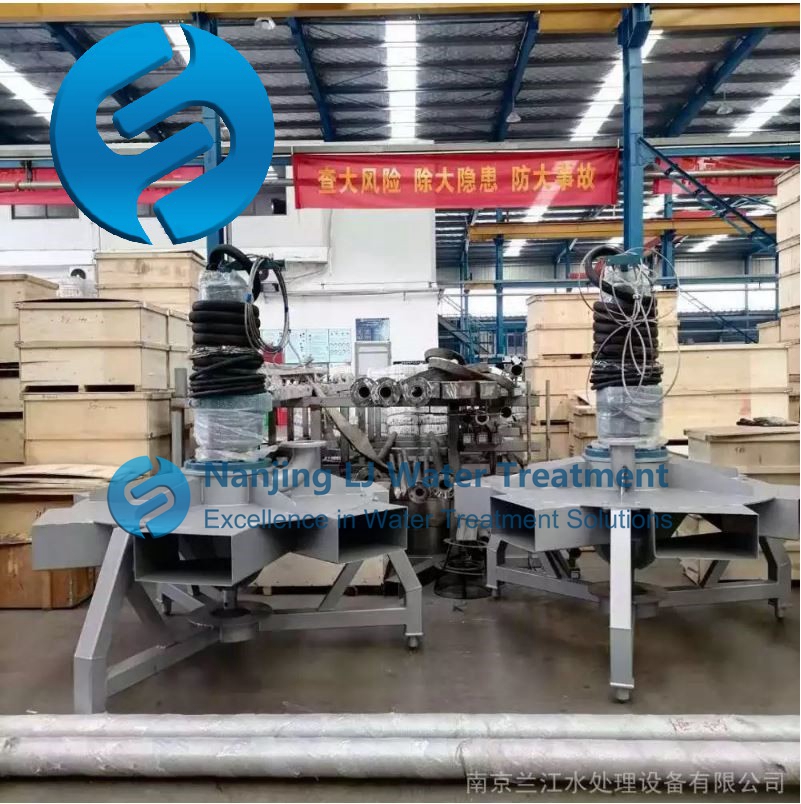
Surface Preparation Before Anti Corrosion Coating Application
The effectiveness of any anti-corrosion treatment depends entirely on how thoroughly you prepare the base metal surface before applying any protective layer. Start by removing all loose rust, mill scale, old coating residue, and oily contamination from every exposed surface including impeller edges, weld seams, mounting flanges, and the full length of the drive shaft. Power wire brushing followed by abrasive blasting creates a uniform, slightly rough surface profile that gives coating materials a strong mechanical anchor instead of sitting loosely over a contaminated layer that will peel off after a few weeks of operation.
After blasting, wipe all surfaces with a suitable solvent to remove fine dust particles and residual grease that could interfere with coating adhesion. Inspect every weld joint carefully, and grind down sharp edges, spatter, and uneven weld ripples. Sharp corners create thin spots in applied coatings that become the first points of corrosion penetration once the unit goes into service.
Do not leave the cleaned metal exposed to open air for too long before applying the first protective layer. Even a few hours of high humidity can allow flash rust to form on the prepared surface, which will break the bond between the base metal and the anti-corrosion coating and create hidden failure points under the finished treatment.
Targeted Treatment for High-Risk Corrosion Zones
Certain parts of an aeration mixer face far more aggressive corrosion than general surfaces, and these locations require extra targeted anti-corrosion measures beyond standard full-coat coverage. The impeller leading edges experience constant high-velocity flow loaded with suspended sand, organic debris, and abrasive particles. This flow continuously scours away any passive oxide layer on the metal, creating a combined erosion-corrosion effect that wears down unprotected components much faster than simple static immersion. Apply an extra layer of wear-resistant anti-corrosion treatment to these edges, extending coverage a few centimeters back from the leading face to create a reinforced buffer zone.
Weld seams and heat-affected zones are naturally more vulnerable to corrosion because welding alters the metal grain structure and creates residual internal stress. These areas often develop localized pitting that spreads quickly even when the surrounding base material remains intact. After full surface coating, apply a secondary stripe coat along every weld seam, flange face, and bolt hole edge to make sure no thin spots or uncovered gaps remain.
The cable entry point, shaft seal housing, and fastener threads are other high-risk locations that many operators overlook. Small gaps around these points trap moisture, dissolved salts, and biological sludge that stagnates and accelerates crevice corrosion. Seal these gaps with a compatible corrosion-resistant sealant that cures to a flexible, water-tight barrier, preventing corrosive media from working its way into narrow spaces where standard coatings cannot fully penetrate.
Field Touch-Up and In-Service Anti Corrosion Maintenance
Even the best factory anti-corrosion treatment will develop small chips, scratches, and worn spots during transport, installation, and normal operation. Inspect every inch of the unit after installation in the tank, and mark every small coating defect you find before filling the tank with process water. Touch up these exposed spots with the same coating material used in the original treatment, feathering the edges of the new material into the existing coating to create a smooth, continuous protective layer that prevents underfilm corrosion from spreading.
During routine scheduled inspections, pull the mixer out of the water at least once every few months to check the condition of all anti-corrosion surfaces. Run a thin feeler gauge along the base of the impeller, weld seams, and shaft surface to catch any early pitting that breaks through the protective layer. If you find small areas of coating loss, clean the spot thoroughly with a wire brush, remove all loose corrosion byproducts, and reapply fresh anti-corrosion material before returning the unit to service.
Pay extra attention to areas that sit at the water line or splash zone, where the mixer cycles through repeated wet and dry exposure. This zone sees constant alternation between high dissolved oxygen during wet periods and atmospheric oxygen during dry periods, which creates far faster corrosion than fully submerged areas. Add an extra thick layer of anti-corrosion treatment across this transition band, and check it more frequently during routine maintenance than fully submerged sections of the mixer.
Operational Practices That Support Long-Term Anti Corrosion Performance
Avoid leaving the mixer sitting idle in corrosive process water for extended periods without periodic slow rotation. When the unit stays completely stationary for weeks, stagnant water against the metal surface creates localized differential aeration cells that trigger unexpected pitting even on well-protected components. Rotate the shaft by hand for a few turns once every three to five days during long idle periods to disrupt these stagnant water layers and prevent uneven corrosion buildup.
If your process water experiences periodic spikes in pH, chloride concentration, or chemical contaminant levels, adjust your anti-corrosion inspection frequency accordingly. Sudden changes in water chemistry can break down passive protective layers far faster than normal operating conditions, and early detection of coating damage will let you perform targeted touch-ups before widespread corrosion develops.
Keep a clear record of every anti-corrosion treatment date, the type of material used, and the locations where touch-ups were applied. This log helps you identify which sections of the mixer show the highest rate of coating degradation over time, so you can adjust your treatment approach for those specific high-wear zones in future maintenance cycles.
Post time:2026-11-18
