In anaerobic biological treatment systems, proper mixing of the tank contents is a foundational requirement that directly determines whether the whole process can run stably and achieve the expected organic pollutant removal performance. The mixing function carried out inside the anaerobic tank works in a completely different operating logic from the mixing in aerobic biochemical units, as it needs to maintain strict oxygen-free conditions while ensuring full contact between anaerobic microorganisms and incoming wastewater.
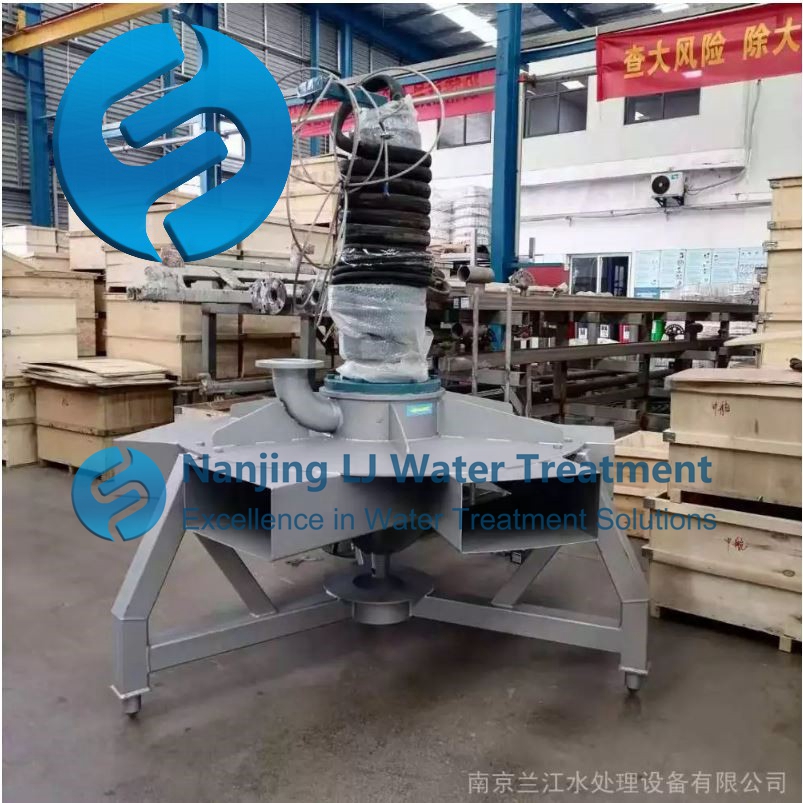
Uniform Distribution of Substrates and Anaerobic Sludge Flocs
The core working goal of the mixing action in the anaerobic tank is to eliminate all static dead zones where raw wastewater and anaerobic granular sludge cannot make effective contact.
When new wastewater flows into the tank, the continuous mixing force pushes the incoming organic substrates to spread evenly across the entire tank volume in a very short time, instead of forming short flow paths that rush out of the tank directly without being processed. This even distribution ensures that every anaerobic sludge floc, no matter where it is located inside the tank, can get access to enough dissolved organic matter as its food source, rather than being trapped in low-nutrient areas that make microbial activity drop gradually over time. Without this sustained and gentle mixing, the inlet area of the anaerobic tank would accumulate high concentrations of organic substances rapidly, leading to local acidification that breaks the pH balance needed for methanogens to survive, and eventually causes the whole anaerobic system to fail.
Prevention of Sludge Sedimentation and Floating Scum Accumulation
Proper mixing in the anaerobic tank keeps all suspended sludge particles in a stable flowing state, avoiding two common operational problems that often happen in poorly mixed anaerobic treatment units.
For high-solids wastewater with a large amount of suspended organic matter, the mixing force stops heavy sludge particles from settling at the bottom of the tank, which would otherwise form thick sediment layers that block the pipeline outlets and reduce the effective working volume of the tank step by step. At the same time, the mild circulating flow also prevents light floating scum and long-chain fatty acid byproducts from gathering on the top water surface to form a thick hard crust, which would block the normal release of biogas and create pressure buildup risks inside the closed tank structure. This balanced flow state also helps the anaerobic system maintain a consistent sludge concentration across all sections of the tank, avoiding the situation where some areas have too little microbial biomass to handle the incoming pollutant load.
Promotion of Synergistic Reaction Between Different Anaerobic Bacteria Groups
The well-controlled mixing environment creates perfect conditions for the three stages of anaerobic degradation to work in coordination, without interfering with the metabolic characteristics of different functional bacteria groups.
Hydrolytic acidifying bacteria, fermentative bacteria and methanogens have different requirements for their surrounding environment, and the steady mixing action helps transfer the intermediate byproducts produced in the previous reaction stage to the next group of bacteria smoothly, without letting toxic intermediate substances accumulate to a concentration that inhibits microbial activity. The continuous flow also helps distribute the tiny biogas bubbles produced by methanogens evenly inside the mixed liquid, preventing large gas pockets from forming that would disrupt the stability of the sludge bed and cause massive sludge loss with the effluent. This coordinated mixing effect also helps keep the temperature uniform across the whole tank, avoiding local temperature differences that would slow down the metabolic rate of anaerobic microorganisms and reduce the overall treatment efficiency of the system.
Post time:2026-06-30
