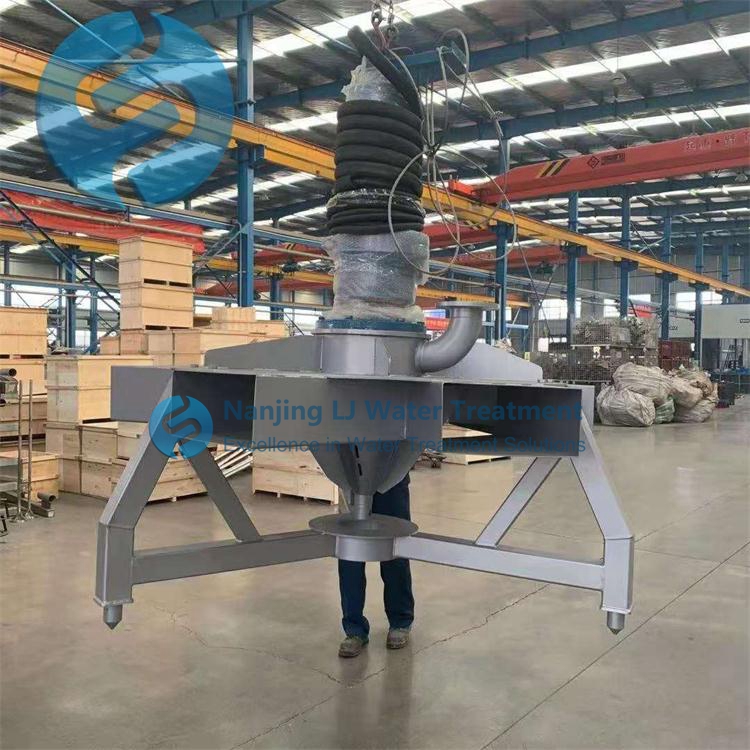
When it comes to biological wastewater treatment systems, the aeration mixer stands as a core functional component that works closely with the biochemical tank to support stable and efficient operation of the whole treatment process. Unlike single-purpose aeration equipment that only focuses on oxygen supply, this integrated device combines gas-liquid mass transfer and hydraulic mixing functions in one working cycle, making it a practical solution tailored for the unique operational needs of biochemical treatment units.
Core Functions in Maintaining Activated Sludge Suspension State
One of the most basic yet critical roles of the aeration mixer in the biochemical tank is to keep all suspended activated sludge particles in a uniform flowing state, instead of settling at the bottom of the tank during long-term operation.
The continuous stirring force generated by the rotating impeller pushes the mixed liquid to form a full-range circulating flow across every corner of the biochemical tank, eliminating dead zones where sludge could accumulate and rot over time. This uniform suspension state ensures that every single floc of activated sludge can fully contact with incoming organic pollutants, rather than being trapped in static areas with no access to sufficient nutrients for microbial metabolism. Without this sustained mixing effect, settled sludge would undergo anaerobic fermentation quickly, producing unwanted byproducts that break the balance of the aerobic biochemical environment and reduce the overall treatment capacity of the system.
Synergistic Oxygen Transfer for Aerobic Microbial Metabolism
Beyond basic mixing, the aeration mixer creates far more favorable conditions for oxygen dissolution than traditional separate aeration setups, directly supporting the high oxygen demand of aerobic microorganisms in the biochemical tank.
The high-speed rotating structure of the mixer continuously cuts the rising air bubbles into much finer micro-sized bubbles, greatly extending their residence time in the mixed liquid and expanding the total contact area between gas and liquid phases. This optimized gas-liquid contact pattern effectively reduces the mass transfer resistance on the liquid side, allowing more oxygen molecules to penetrate into the mixed liquid and be fully utilized by heterotrophic bacteria that break down BOD and COD pollutants. The coordinated movement of stirring and aeration also prevents local dissolved oxygen concentration gradients that are too large, ensuring that dissolved oxygen levels stay within the optimal range of 2-3mg/L across the entire tank volume, which avoids both the energy waste caused by excessive aeration and the microbial activity inhibition caused by insufficient oxygen supply.
Hydraulic Flow Regulation for Different Biochemical Process Stages
The adjustable working parameters of the aeration mixer make it highly adaptable to the diverse flow field requirements of different biochemical treatment stages in the same tank structure.
In the nitrification stage where autotrophic nitrifying bacteria need long enough retention time to convert ammonia nitrogen into nitrate, the mixer can create a gentle and stable low-tangential-force water flow that avoids excessive shear force which would break the fragile structure of nitrifying bacteria flocs. In the subsequent denitrification and phosphorus removal stages, the mixer can adjust its output power to form a larger circulating flow, helping to quickly mix returned sludge with incoming raw sewage and create the anoxic hydraulic conditions required for denitrifying bacteria to work efficiently. For sequencing batch reactor systems that switch between different operating modes within a single tank, the aeration mixer can quickly adjust its mixing intensity and aeration volume to meet the needs of water feeding, aerobic reaction, anoxic stirring and settling separation in sequence, without requiring extra auxiliary mixing equipment to complete the whole process flow.
In actual long-term operation, this coordinated aeration and mixing function also helps reduce unnecessary energy consumption of the whole biochemical system, making the treatment process run more stably even when the incoming water quality and flow load fluctuate within a certain range.
Post time:2026-06-30
