Aeration Mixer Usage in Rural Wastewater Treatment: What Works and What Does Not
Rural wastewater treatment is not a smaller version of a municipal plant. It is a completely different animal. The flows are lower, the loads spike unpredictably, the operators are not full-time engineers, and the equipment has to run for months without anyone looking at it. An aeration mixer in a rural setting faces conditions that would make a city plant operator wince. Get the selection wrong and the basin goes septic within weeks. Get it right and the system runs for years with almost zero attention.
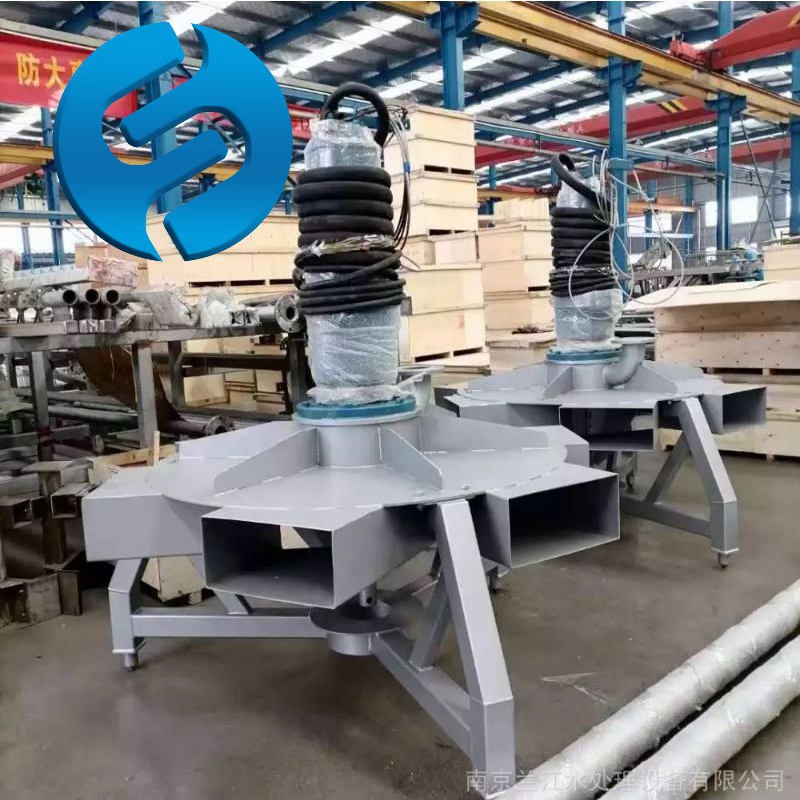
What Makes Rural Wastewater Different From Municipal
Flow Rates That Change Every Day
A municipal plant sees relatively steady flow. A rural system sees a trickle on Monday and a flood on Friday after everyone uses the washing machine at the same time. The aeration mixer has to handle wild swings in volume without stalling or cavitating.
When the flow drops to almost nothing, the mixer is pushing air into an empty basin. The impeller spins freely, draws almost no current, and the oxygen transfer rate plummets. When the flow spikes, the basin fills fast, the solids concentration jumps, and the mixer has to work three times harder than it was designed for. Most rural mixers fail not because of poor equipment but because they were sized for average flow instead of peak flow.
The operating condition that kills rural mixers is the low-flow idle period. The mixer sits there running at full speed with no water to move. The motor overheats. The bearings dry out. The seal degrades from heat. If the rural basin does not have a way to shut the mixer off during dry periods, it will not last two years.
Solids Loads That Do Not Follow Any Rule
Rural wastewater carries everything from kitchen grease to animal waste to septic tank overflow. The BOD spikes are enormous. The solids concentration can jump from 1,500 mg/L to 8,000 mg/L overnight when a hog farm flushes or a restaurant dumps grease down the drain.
A mixer designed for steady municipal sludge cannot handle that kind of shock. The impeller clogs. The thrust drops. The motor draws excessive current trying to push through the thickened sludge. In rural basins, the mixer has to be oversized for the average load and capable of handling the peak load without stalling.
Installing Aeration Mixers in Rural Basins
Shallow Lagoons and Stabilization Ponds
Most rural systems use lagoons or stabilization ponds because they are cheap to build and easy to maintain. These basins are shallow, usually between 0.8 and 2 meters deep, and they rely on mechanical mixers to supplement natural aeration.
The mixer in a lagoon does not need to push much oxygen. It needs to cover a wide area and prevent the sludge from settling in one corner. A single mixer can cover a radius of 8 to 12 meters depending on the impeller size. For larger lagoons, use two or three units spaced evenly so their cones of influence overlap without creating dead zones.
The mounting is simpler than in a municipal plant. Most rural lagoons use floating mixers with a simple anchor system. A concrete block on the bottom and a nylon rope to the mixer is enough. Do not use chain in a lagoon. Chain sinks and drags on the bottom, collecting sludge and creating drag that pulls the anchor loose.
Packaged Plants and Containerized Systems
Many rural installations use packaged treatment plants. These are factory-built units that arrive on a truck and get bolted to a concrete pad. The aeration mixer is part of the package, and it has to fit into a basin that was not designed around it.
The basin in a packaged plant is usually narrow and deep relative to its volume. The mixer has to generate enough horizontal flow to reach the far wall, but the narrow width means the flow bounces back and creates interference patterns. Tilt the mixer 10 to 15 degrees toward the far wall. This pushes the flow in one direction instead of letting it slosh back and forth.
The cable routing in a packaged plant is also different. There is no basin rim to run cable along. The cable has to drop straight down from the mixer to the junction box on the side of the unit. Use a drip loop at the gland to prevent water from running into the cable entry point. In a packaged plant, that drip loop is not optional. It is the only thing keeping the motor dry.
Operating Challenges Unique to Rural Sites
Power Supply Issues
Rural plants often run on single-phase power or share a transformer with nearby farms. Voltage drops are common, especially during thunderstorms or when heavy equipment starts up nearby. A mixer motor that sees repeated voltage sags will overheat and fail within a year.
Install a voltage regulator or a soft starter at every rural mixer location. The soft starter ramps the motor up slowly, reducing inrush current and protecting the windings from voltage spikes. It also reduces the mechanical shock on the impeller, which extends bearing life significantly.
If the site has frequent power outages, the mixer has to restart on its own when power comes back. A mixer that does not auto-restart will let the basin go septic within hours. Program the controller to restart the mixer automatically after a power loss. Do not rely on someone driving out to the site at 3 AM to press a button.
Lack of On-Site Technical Staff
Most rural plants are checked once a week, sometimes once a month. The operator is not a wastewater engineer. The operator is the person who also runs the pump station and mows the grass.
This means the mixer has to be simple, rugged, and tolerant of abuse. No delicate sensors. No complicated controls. No adjustment bolts that need torquing every month. The equipment has to work or it has to be easy enough that a non-specialist can fix it with a wrench and a phone call.
Choose mixers with minimal moving parts. Fewer parts mean fewer failures. Fewer failures mean fewer trips to the site. Fewer trips mean lower operating costs. In a rural setting, reliability is not a luxury. It is the entire business case.
