How Aeration Mixers Transform Black-Odorous Water Bodies
Nobody wants to walk past a river that reeks of rotten eggs. Black-odorous water bodies — those urban waterways choked with organic waste, depleted oxygen, and foul-smelling hydrogen sulfide — are among the most visible scars of rapid urbanization. The good news? Aeration mixers have become the backbone of modern black-odorous water remediation, and their role keeps growing.
Why Black-Odorous Water Needs More Than Just Dredging
You can scrape the bottom sediment all you want, but if the water column stays anaerobic, the stench and black color will crawl right back. That's the trap many cities fell into years ago. Without dissolved oxygen, bacteria switch to septic metabolism — a sluggish, smelly process that converts organic carbon into methane, hydrogen sulfide, and organic acids. The pH drops, the water turns acidic, and the whole system becomes a breeding ground for putrefaction.
Aeration mixers break this cycle dead in its tracks. By continuously injecting oxygen — or micro-bubbles — into the water, they fuel aerobic microorganisms that decompose organic pollutants into carbon dioxide and water. Clean. Fast. No rotten egg smell.
The Science Behind Aeration Mixers in Odor Control
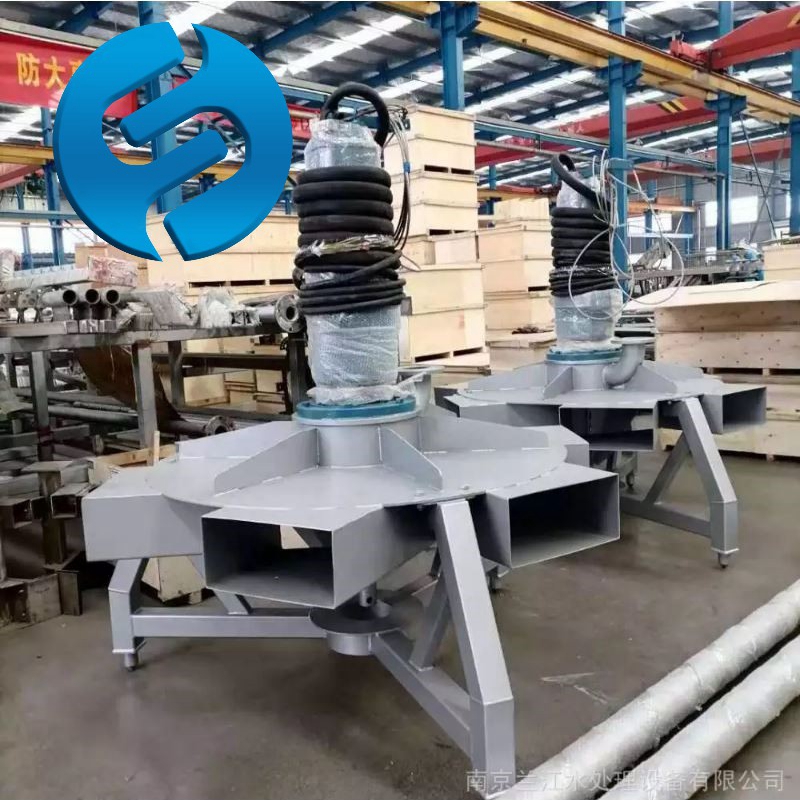
An aeration mixer is not just a blower with a diffuser. It is a precisely engineered system that does three things simultaneously: it dissolves oxygen, it keeps solids suspended so they don't settle and rot, and it ensures uniform contact between the air, the water, and the microbial community doing the heavy lifting.
This matters enormously in black-odorous water treatment. Research on constructed wetlands treating piggery biogas slurry — a notoriously smelly waste stream — showed that adding oxygen-enhancing biological agents boosted total nitrogen removal to 70.24% and nitrate nitrogen removal to 93.45%. The microbial diversity spiked, with denitrifying Proteobacteria and nitrifying Nitrosomonas becoming dominant. That is exactly what happens when you get aeration right: the right bacteria thrive, the wrong ones die off, and the water clears.
In sand trap applications at municipal plants, aeration mixers keep wastewater in constant circulation. Organic matter, oils, and grease stay suspended instead of forming sludge layers. Sand drops to the bottom for removal, while floatables rise to the surface. The Danish town of Kerteminde has run an aerated sand trap since 1993 — proof that this technology holds up for decades.
Where Aeration Mixers Shine in Black-Odorous Water Projects
Urban rivers, stagnant lakes, and polluted canals all share one problem: stratification. A warm epilimnion sits on top of a cold, oxygen-starved hypolimnion, and nothing mixes. Aeration mixers destroy that stratification. They push oxygen downward, circulate the entire water column, and prevent the anaerobic conditions that produce hydrogen sulfide and methane.
For large-scale projects, diffused aeration using micro-bubble systems delivers high dissolved oxygen transfer efficiency with surprisingly low energy consumption. These systems can run for over ten years with minimal maintenance, and they work perfectly in remote locations — even paired with solar-powered compressors.
In smaller water bodies or retention ponds, surface aeration mixers create enough turbulence to keep the water moving and oxygenated. The result is visible within weeks: the black color fades, the smell vanishes, and fish start coming back.
What Makes an Aeration Mixer Different From Simple Agitation
People often confuse aeration with agitation, but they are fundamentally different beasts. Agitation is mechanical stirring — impellers, paddles, turbines — designed to mix components uniformly. It has nothing to do with oxygen. Aeration, on the other hand, is specifically about dissolving air or pure oxygen into liquid to supercharge aerobic biological activity.
The equipment tells the story. Aeration systems rely on compressors, blowers, and diffusers engineered to maximize oxygen transfer rates. Agitation systems use mixers with various blade designs optimized for homogeneity. In black-odorous water treatment, you need aeration — not agitation. You need oxygen in that water, not just movement.
Getting the Design Right Is Everything
The aeration tank — whether in a full-scale wastewater plant or a floating unit on a polluted urban river — typically consists of three parts: the tank body, the aeration system, and the inlet-outlet configuration. The quality of that design directly determines treatment performance.
Sufficient and evenly distributed oxygen supply is the single most critical factor. Uneven aeration creates dead zones where anaerobic conditions persist, and those dead zones will keep generating odors no matter how much you treat the rest of the water body. That is why modern projects use Glass-Fused-to-Steel tanks for corrosion resistance — injecting large volumes of air accelerates oxidation, and the tank material must survive it.
For black-odorous water bodies specifically, the goal is not just meeting regulatory discharge standards. It is restoring a waterway to a state where it can support aquatic life, where people can walk along the bank without holding their nose, and where the ecosystem begins to heal itself. Aeration mixers make that possible — not as a temporary fix, but as the engine of genuine ecological recovery.
Post time:2026-06-25
