Aeration Mixers Driving River Ecological Restoration Projects
Rivers used to be alive. Fish swam, birds nested, and kids played along the banks. Then decades of industrial discharge, agricultural runoff, and untreated sewage turned many urban waterways into biological dead zones. Restoring these rivers is no longer optional — it is a priority for cities worldwide. And at the center of most successful ecological restoration projects sits one piece of equipment: the aeration mixer.
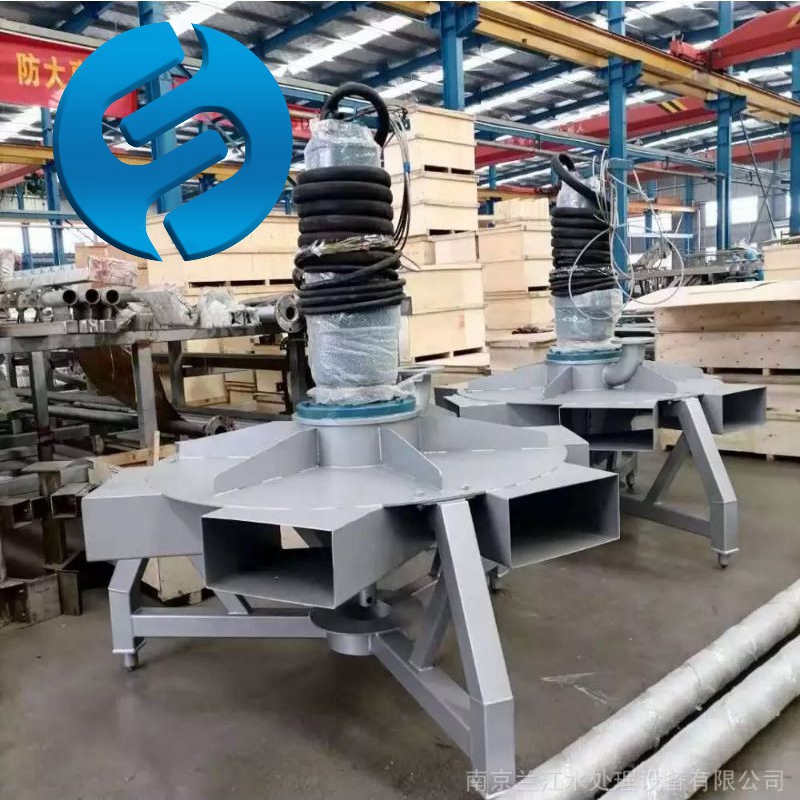
This is not about dumping chemicals or slapping on a temporary cover. Real river restoration means rebuilding the ecosystem from the bottom up, and oxygen is the fuel that makes it all work.
What Actually Happens When a River Dies
Before talking about solutions, you need to understand the problem. A healthy river has dissolved oxygen levels typically above 5 mg/L. That oxygen supports fish, macroinvertebrates, and aerobic bacteria that break down organic waste naturally.
When pollution loads exceed the river's self-purification capacity, everything collapses. Organic matter sinks to the bottom. Bacteria consume the available oxygen decomposing that matter. Once oxygen hits zero, anaerobic bacteria take over. They produce hydrogen sulfide, methane, and ammonia — the stuff that makes rivers stink and turn black.
The sediment itself becomes a toxic reservoir. Phosphorus and nitrogen get locked in the mud under anaerobic conditions. Even if you stop the pollution source today, that sediment will keep leaching nutrients back into the water for years. This internal loading is why so many rivers fail to recover after the obvious pollution sources are removed.
How Aeration Mixers Kickstart Ecological Recovery
An aeration mixer does something deceptively simple: it pushes oxygen into the water column and keeps it moving. But that simplicity hides a cascading chain of ecological benefits.
Breaking the Anaerobic Sediment Trap
When oxygen reaches the riverbed, it changes the chemistry of the sediment. Iron and manganese that were locked in reduced forms get oxidized. Phosphorus that was bound to iron under anaerobic conditions gets released — but here is the key — it gets released in a form that can be managed. Flocculants or constructed wetland buffers downstream can capture that phosphorus before it fuels algal blooms.
Studies on urban river restoration in China have shown that continuous aeration reduced total phosphorus concentrations by over 40% within months. The sediment stopped being a nutrient bomb and started behaving like natural riverbed material again.
Rebuilding the Microbial Community
This is where things get really interesting. A dead river has almost no microbial diversity. A living river teems with it. Aeration mixers create the oxygen gradient that allows different microbial communities to establish themselves at different depths.
Nitrifying bacteria like Nitrosomonas and Nitrobacter colonize the oxygen-rich zones near the diffusers. Denitrifiers thrive in the low-oxygen pockets further away. Together, they complete the nitrogen cycle — converting toxic ammonia into harmless nitrogen gas that escapes into the atmosphere. This biological nitrogen removal is far more sustainable than any chemical treatment.
The microbial biofilm that forms on submerged surfaces also becomes a food source for grazers like snails and insect larvae. Those grazers feed fish. The fish attract birds. The whole food web starts rebuilding from the bottom.
Restoring Fish Habitat and Biodiversity
Fish cannot survive in water with dissolved oxygen below 2 mg/L. Most species need at least 4 to 5 mg/L to spawn and grow. Aeration mixers maintain those levels consistently, even during hot summer months when thermal stratification would otherwise create hypoxic zones.
In restored urban rivers across Southeast Asia and Europe, fish populations returned within one to two years of installing aeration systems. Native species like carp, catfish, and various minnows recolonized sections that had been lifeless for a decade. The presence of fish then attracted herons, kingfishers, and other predators — visible proof that the ecosystem was healing.
Choosing the Right Aeration Approach for River Restoration
Not every river is the same, and the aeration strategy must match the site conditions.
Diffused Aeration for Deep or Wide Rivers
For rivers deeper than three meters or wider than twenty meters, diffused aeration using micro-bubble diffusers is usually the best bet. Micro-bubbles have a much higher oxygen transfer efficiency than coarse bubbles because they stay in the water longer and have greater surface area per unit volume. The result is more dissolved oxygen per kilowatt of energy consumed.
These systems can be installed on the riverbed using weighted tubing or mounted on floating platforms. They work quietly, have no moving parts in the water, and can run unattended for years.
Surface Aeration for Shallow or Narrow Waterways
In canals, small tributaries, or shallow sections of a river, surface aeration mixers are often more practical. They splash and churn the water surface, creating turbulence that pulls atmospheric oxygen into the water column. They also disrupt thermal stratification, which is critical in shallow systems that heat up quickly in summer.
Solar-powered surface aerators have become increasingly popular for remote river sections where grid electricity is unavailable. A small solar panel drives a floating impeller that keeps the water oxygenated around the clock.
The Bigger Picture: Aeration as Part of an Integrated Strategy
Aeration mixers alone will not save a river. They work best when combined with other restoration measures — riparian buffer planting, sediment capping, upstream pollution interception, and hydrodynamic flow management.
But aeration is usually the first step. You cannot plant buffers or reintroduce species into water that has zero dissolved oxygen. You cannot expect sediment to stabilize when anaerobic conditions keep releasing phosphorus. Aeration creates the basic chemical conditions that allow every other restoration measure to actually work.
River ecological restoration is a long game. It takes years, sometimes decades, for a full ecosystem to recover. But the trajectory is clear: add oxygen, the microbes come back. The microbes come back, the water clears. The water clears, the plants establish. The plants establish, the animals return. And somewhere along that chain, the river starts feeling alive again.
That is what aeration mixers do. They do not just treat water — they restart life.
Post time:2026-06-25
