Low energy consumption has become one of the most critical performance indicators for aeration mixers across industrial and environmental applications, as operators look to cut long-term operational costs while maintaining consistent process outcomes. These systems combine two core functions — uniform mixing and targeted oxygen transfer — into a single submerged unit, eliminating the need for separate equipment and reducing overall power draw across the entire treatment cycle. Unlike traditional setups that rely on independent blowers and surface agitators, modern low-energy aeration mixers are engineered to move large volumes of water with minimal input, creating continuous flow patterns that keep suspended particles in motion without unnecessary turbulence.
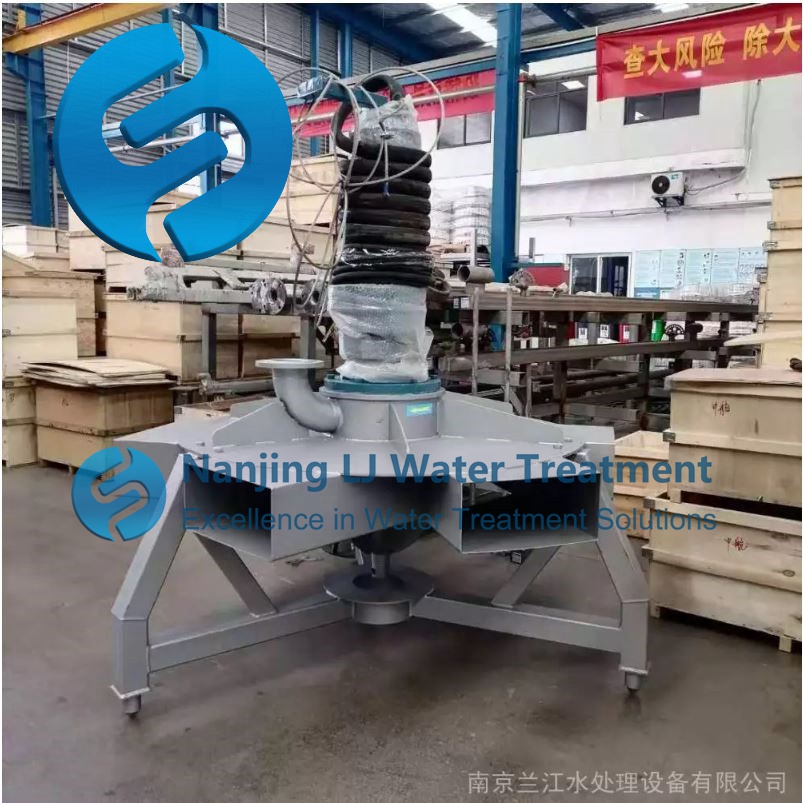
How Low Energy Consumption Aeration Mixers Optimize Water Flow and Oxygen Transfer
The design of energy-efficient aeration mixers centers on refined hydraulic geometry that turns motor power directly into usable water movement and bubble dispersion, rather than wasting it on heat, vibration, or unnecessary mechanical resistance. The rotating elements are shaped to draw water from multiple directions, shear incoming air streams into fine microbubbles, and push the resulting air-water mixture outward in wide, even patterns that reach every corner of the tank. This means bubbles stay suspended longer, oxygen dissolves more completely, and the entire water volume circulates steadily without dead zones where solids can settle over time. Many installations report that these optimized flow patterns reduce the total power required to maintain full mixing by 30 percent or more compared to older systems, even when handling high volumes of suspended organic material.
Application in Industrial Wastewater and Activated Sludge Processes
In industrial wastewater treatment facilities, low energy aeration mixers play a central role in supporting stable activated sludge performance by ensuring consistent contact between microbes, dissolved oxygen, and organic contaminants. They operate continuously in deep basins, preventing sludge sedimentation at the bottom and creating the controlled flow conditions needed for nitrification, denitrification, and biological phosphorus removal stages. Because these units run fully submerged, they avoid the energy losses common with above-surface aerators that spray water into the air, and they can be positioned at precise depths to target areas where mixing and oxygenation are most needed. This level of control helps treatment plants meet strict effluent quality standards while keeping daily electricity consumption low, which is especially important for facilities that run 24 hours a day with large basin volumes.
Use in Aquaculture Ponds and Recirculating Aquaculture Systems
Beyond industrial wastewater, low energy consumption aeration mixers have gained widespread adoption in shrimp ponds, fish farming operations, and recirculating aquaculture systems where consistent water movement and dissolved oxygen levels directly impact stock health and growth rates. They create gentle, continuous circulation that prevents thermal stratification, pushes oxygen-rich surface water down toward the pond bottom, and carries waste particles toward collection points instead of allowing them to accumulate in stagnant areas. The low-power operation means farms can run these systems for extended periods without facing excessive utility bills, even across large pond networks. Many operators find that maintaining uniform flow with an aeration mixer reduces the risk of low-oxygen events during hot weather or high stocking density periods, supporting more stable production outcomes throughout the growing cycle.
Every component of these systems, from the motor insulation class to the mechanical seal materials, is selected to support long, continuous runtime under demanding submerged conditions. This means operators do not need to stop processes frequently for maintenance, and the equipment can sustain its low-energy performance over years of regular use without rapid efficiency degradation. The ability to install these units without draining large volumes of water also reduces downtime during system upgrades, allowing facilities to keep their treatment or aquaculture operations running while improving overall energy efficiency.
Post time:2026-11-08
