Seasonal shifts create major changes in water temperature, influent characteristics, and biological activity, all of which directly alter the performance requirements of aeration mixing systems. Many facilities continue running the same configuration across all months, leading to unnecessary energy waste in low-demand periods and insufficient mixing or oxygen supply during extreme weather conditions. Proper seasonal tuning of aeration mixer operation and layout adjustments can keep treatment performance stable while avoiding unnecessary power draw.
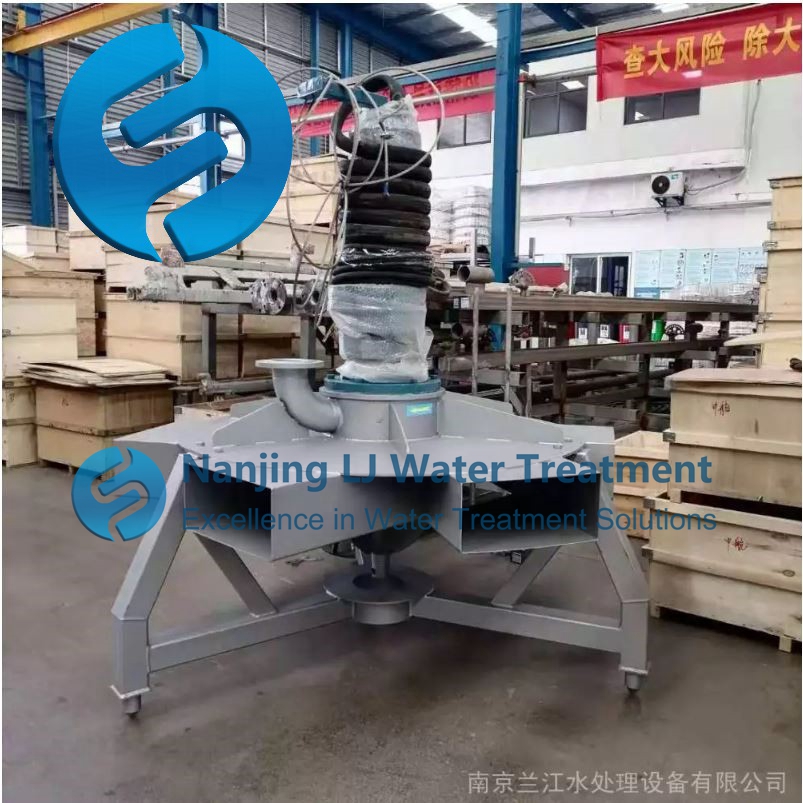
Winter Low-Temperature Adaptation for Aeration Mixing
Cold water holds higher dissolved oxygen saturation, but microbial activity slows down significantly, extending the required sludge retention time and changing the way solids behave in the tank. Under low-temperature conditions, mixing becomes more critical than peak oxygen supply, as sludge particles tend to settle more easily and biological flocs take longer to form stable suspension.
Operators should adjust flow patterns to maintain consistent horizontal and vertical circulation, preventing dead zones where accumulated solids can undergo anaerobic decomposition. The reduced biological oxygen demand means total aeration intensity can be lowered appropriately, but mixing output must be calibrated to ensure every part of the basin receives continuous gentle movement.
It is also important to account for higher fluid viscosity in cold conditions, which changes the resistance that mixer impellers encounter when moving through water. Without minor output adjustments, the actual flow coverage can shrink, even if the equipment is running at the same setting used during summer months. Small incremental increases in mixing intensity, targeted at preventing sedimentation rather than boosting aeration, can prevent large-scale process failures that would otherwise require much higher energy to correct later.
Summer High-Load and High-Temperature Configuration Adjustment
When water temperature rises, microbial metabolic rate increases sharply, raising oxygen demand per unit of active biomass. At the same time, dissolved oxygen saturation in warm water drops, making it harder to maintain target DO levels even with the same volume of air being delivered.
During this period, aeration mixers need to be adjusted to maximize bubble contact time and distribution uniformity, rather than simply increasing total airflow input. Optimizing the angle of flow discharge can push smaller bubbles to travel longer paths through the water column, improving oxygen transfer efficiency so that the required DO setpoint can be reached without excessive power consumption.
High summer temperatures also often come with higher organic loading from seasonal industrial or domestic discharge patterns. Operators should focus on distributing mixing force evenly across the entire tank, ensuring that no localized high-demand area is left under-aerated. This prevents the system from developing partial anaerobic zones that would force a much larger overall increase in aeration output to compensate.
Transition Season Tuning for Unstable Load Conditions
Spring and autumn bring frequent shifts between cold and warm periods, creating highly inconsistent influent conditions that do not fit steady winter or summer configurations. Biological communities in the aeration basin are also in a transitional state, with population ratios shifting between different groups of microorganisms as temperature changes.
During these periods, regular short-cycle field observations become especially valuable. Checking floc characteristics, observing sedimentation speed in settled sludge samples, and mapping DO distribution across different points in the tank can reveal small imbalances before they develop into larger operational problems. Minor adjustments to individual mixer output levels, instead of a uniform system-wide change, can smooth out uneven performance across different sections of the basin.
Transition seasons are also the best time to perform minor maintenance checks that restore original equipment efficiency. Removing accumulated biological growth from flow passages and clearing any partial blockages that developed during previous months ensures that the system can respond accurately to small control adjustments, rather than requiring large power increases to produce the same mixing effect.
Post time:2026-10-12
