When designing and operating wastewater treatment systems, aeration and mixing processes often represent one of the largest shares of total energy consumption across the entire facility. Many operators tend to set airflow and mixing speed far above theoretical requirements, aiming to avoid process failures and maintain stable effluent quality. This over-cautious approach usually leads to continuous unnecessary power draw, which accumulates into substantial operational costs over months and years. Proper selection and configuration of aeration mixers can significantly cut this waste without compromising treatment performance.
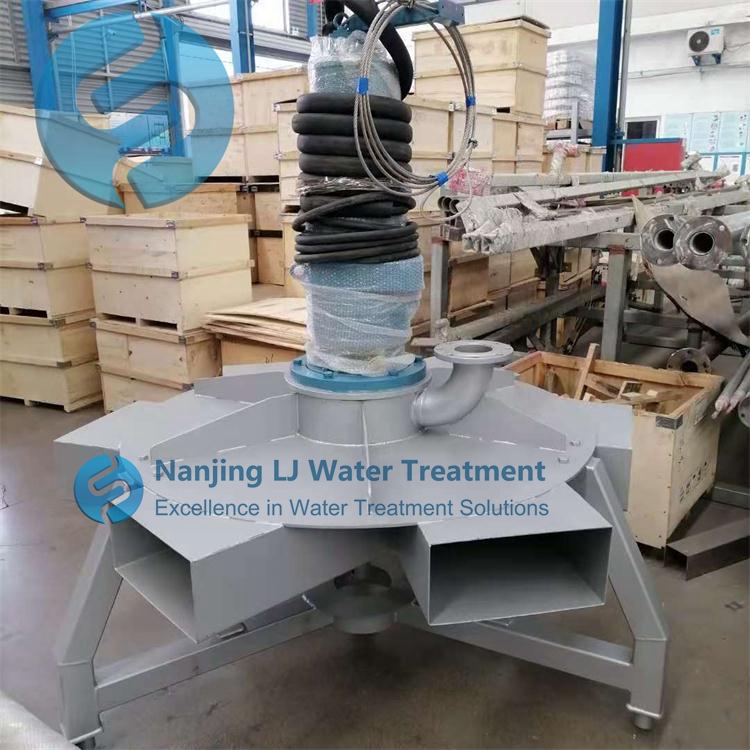
Understand Actual Oxygen and Mixing Demand Before Equipment Selection
The first step to low-energy configuration is mapping real-time process requirements instead of relying on generic design values. Operators need to identify the exact oxygen uptake rate of active biomass under different load conditions, rather than applying a fixed safety margin that remains active 24 hours a day. Many systems run at full aeration intensity even during low-inflow periods, when organic loading drops and microbial oxygen demand decreases sharply.
Mixing demand should also be calculated independently from oxygen supply demand. In many tanks, complete suspension of activated sludge can be achieved at much lower power input than what is required to meet peak oxygen transfer targets. Separating these two parameters allows operators to avoid running the system at maximum output when only gentle flow circulation is needed to prevent sedimentation.
Field testing with portable dissolved oxygen meters and flow observation can reveal hidden over-aeration zones where oxygen levels stay far above saturation for extended periods. These areas often correspond to locations where mixers are arranged too densely or operated at unnecessarily high output, creating no additional treatment benefit but wasting large volumes of electricity.
Optimize Hydraulic Matching Between Aeration and Mixing Flow Patterns
Even well-selected aeration mixers can perform poorly if their installation layout does not align with tank geometry and existing hydraulic conditions. Improper positioning often creates dead zones where sludge settles, forcing operators to increase overall power just to compensate for uneven flow distribution.
The key is to align the discharge direction of each unit with the natural circulation path inside the basin. This creates a continuous rolling flow that carries bubbles evenly across the entire water column, extending the contact time between air and wastewater and improving oxygen transfer efficiency. When bubble residence time increases, operators can achieve the same dissolved oxygen concentration with lower total airflow, directly reducing energy consumption.
Depth of submergence also plays a critical role in overall efficiency. Adjusting installation height to match tank water levels ensures that the generated flow reaches every corner without unnecessary friction loss against the bottom or side walls. Small adjustments in mounting position can often reduce the required rotational speed by a noticeable margin, while still maintaining full mixing coverage across the entire tank volume.
Adaptive Operation Tuning for Variable Load Conditions
Static operation at fixed speed and airflow almost always wastes energy, because wastewater treatment load changes significantly between day and night, weekdays and weekends, and different seasons. The most effective optimization after proper selection is building a dynamic control logic that adjusts aeration and mixing output according to real-time process data.
By linking operation parameters to continuous readings of dissolved oxygen, water temperature, and inlet organic concentration, the system can automatically reduce output during low-load periods and increase intensity only when actual treatment demand rises. This avoids the common practice of running at maximum design output around the clock, which was originally intended only for rare peak load scenarios.
Regular performance verification through periodic off-line testing also prevents efficiency drift caused by long-term operation wear. Over time, minor changes in component condition can reduce hydraulic performance, and early detection allows small adjustments to restore original efficiency before operators unconsciously compensate by raising power input to maintain the same mixing effect.
Post time:2026-10-12
