In secondary sedimentation tanks and preliminary settling units for wastewater treatment, controlled water disturbance from aeration mixing systems serves a very specific, targeted role that differs completely from the continuous full-volume mixing in biochemical reaction tanks. This carefully calibrated disturbance does not break the basic settling separation function of the sedimentation tank, but instead fixes many common operational pain points that traditional static settling processes cannot solve on their own.
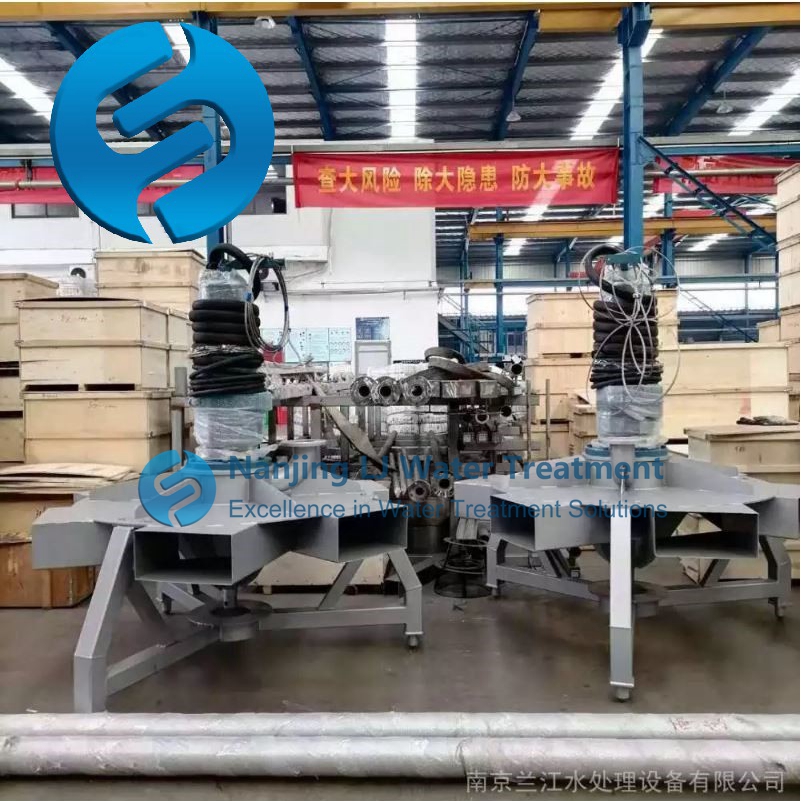
Eliminating Sediment Accumulation in Tank Dead Zones
The most direct application of mild, targeted disturbance in sedimentation tanks is to stop heavy sludge and grit from building up in areas that static water flow cannot reach during normal operation.
Along the inner walls of the tank, around the support structures of effluent weirs, and in the corners far from the main inlet flow, settled inorganic particles and thick sludge layers tend to pile up gradually over weeks of continuous operation. Slow, low-intensity water disturbance creates a gentle directional flow that pushes these accumulated settled particles toward the central sludge collection hopper, so they can be discharged through the sludge discharge pipeline in time before they go anaerobic and release black floating sludge back into the clarified water. This controlled disturbance also prevents long-term static sludge layers from compacting into hard, dense deposits that are almost impossible to remove with regular sludge discharge procedures, which would otherwise take up the effective volume of the sedimentation tank and reduce its actual settling capacity over time.
Washing Organic Matter Off Inorganic Grit Surfaces
For preliminary grit removal tanks that operate before the primary sedimentation stage, properly adjusted disturbance creates a soft scouring effect that cleans the surface of heavy grit particles during the settling process.
When raw wastewater carries a large amount of suspended grit mixed with sticky organic flocs, the mild swirling flow generated by the disturbance makes the grit particles rub against each other gently as they settle, peeling off the organic substances that stick to their outer surfaces. This process ensures that the grit collected in the bottom hopper stays clean and carries very little biodegradable organic matter, which avoids the unpleasant odor and anaerobic decomposition issues that often happen when organic-rich grit is stored for subsequent treatment. This kind of disturbance also helps separate light organic flocs from heavy inorganic particles, so the organic matter can stay in the water flow and move on to the subsequent biochemical treatment units, instead of being trapped in the grit disposal system and wasting the carbon source that aerobic microorganisms need for normal metabolism.
Optimizing Floc Aggregation Before Final Settling
In the transition zone right between the outlet of the biochemical tank and the inlet of the secondary sedimentation tank, carefully calibrated disturbance creates perfect hydraulic conditions for small activated sludge flocs to collide and combine into larger, denser aggregates.
The low shear force generated by the mild water movement does not break the existing fragile sludge flocs, but instead creates just enough relative velocity between different floc particles to make them bump into each other and stick together, forming larger flocs that settle much faster in the static settling zone of the sedimentation tank. This optimized floc aggregation effect reduces the amount of tiny, light flocs that would otherwise escape with the effluent over the overflow weir, which directly lowers the total suspended solids concentration in the final discharged water. This gentle disturbance also helps release the tiny micro air bubbles that get trapped inside newly formed activated sludge flocs during the aeration process, stopping these attached bubbles from carrying small flocs to the water surface and forming unwanted floating sludge layers that ruin the clarity of the effluent.
Post time:2026-07-01
