An aeration mixer with adjustable mixing angle gives operators far more control over water flow, oxygen dispersion, and overall system performance than traditional fixed-position units, making it a flexible solution for environments where water conditions, depth, or processing goals change over time. This level of adjustability lets teams fine-tune mixing patterns to match specific operational needs, rather than being locked into a single flow configuration that may not work well across all stages of a treatment or cultivation cycle.
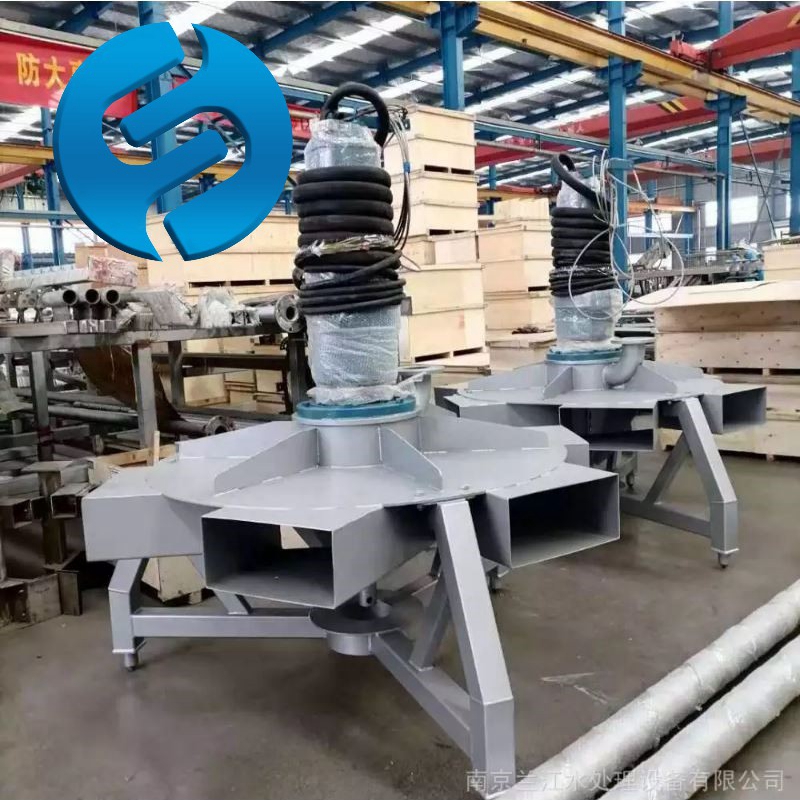
Core functional principles of adjustable angle operation
The adjustable angle mechanism on this type of aeration mixer lets users tilt the discharge and mixing axis along a controlled range, shifting the direction of the water flow from nearly horizontal to steeply downward, or anywhere in between. This adjustment is usually achieved through a set of precision-locking joints, calibrated scale markers, and reinforced connection points that hold the selected angle firmly in place even under strong continuous water pressure. Unlike fixed-angle designs that push flow along one unchanging path, the adjustable setup can redirect mixing energy to target different layers of the water column, so operators can address stratified zones that would otherwise be left untouched.
Many systems also support incremental, small-degree adjustments rather than only a handful of preset positions, which means teams can test subtle changes to find the exact flow pattern that delivers the best results for their unique tank or pond layout. This fine control eliminates the common problem where a generic fixed angle creates strong surface turbulence in one area while leaving deep, stagnant layers completely undisturbed.
Performance advantages across different water depth and water quality scenarios
In deep industrial wastewater basins that often develop stratified layers of different temperature, density, and contaminant concentration, an adjustable mixing angle lets operators direct flow downward to break up settled sludge layers that accumulate near the basin floor. Instead of wasting energy pushing all flow along the surface, the tilted mixer can drive oxygen-rich water deep into the lower zones, preventing the formation of anaerobic pockets that release unwanted odors and disrupt biological treatment processes. When water conditions shift after a large incoming batch of high-strength wastewater, teams can quickly reposition the angle to boost vertical circulation and restore uniform water quality across the entire basin in far less time than a fixed-angle system would require.
For biological reactor systems that run through different treatment phases, the adjustable angle supports targeted flow patterns that match each stage of the process. During the initial biomass acclimation phase, a slightly upward angle creates gentle, widespread surface agitation that encourages maximum gas exchange without disturbing fragile newly forming microbial colonies. Later, during high-load processing phases, a steeper downward angle pushes strong, thorough circulation that keeps all active sludge particles in full suspension, eliminating dead zones where biomass could settle and spoil. This adaptability means the same aeration setup can support completely different process requirements without requiring equipment modification or major system overhauls.
Field adjustment tips and long-term operational best practices
Before making any angle changes while the system is running, operators should first map out the current flow patterns across the entire water body, noting where stagnant zones, surface foam buildup, or uneven oxygen readings appear. These visible and measurable signs are the most reliable guide to which angle adjustment will deliver the biggest improvement, rather than relying purely on theoretical settings from a manual. After making a small angle shift, it is best to let the system run for one to two full water circulation cycles before taking new dissolved oxygen and flow measurements, so you can see the full effect of the change rather than reacting to temporary transitional turbulence.
When locking the mixer into a new adjusted angle, always confirm that all locking pins and fasteners are fully seated and tightened, to prevent the unit from drifting back to a neutral position after hours of continuous vibration. For seasonal applications such as outdoor aquaculture ponds, operators can adjust the angle to push flow toward the bottom during hot summer months to break up thermal stratification, then shift to a more horizontal, wide-coverage angle in cooler months to spread oxygen evenly across the full surface area. Routine maintenance checks should include verifying that the angle adjustment mechanism moves smoothly without sticking, and that all calibrated position markers remain aligned, so every operator on the team can consistently return the mixer to proven effective settings after any inspection or service work.
This level of targeted, adaptable control has made angle-adjustable aeration mixers increasingly popular for facilities that handle variable water volumes, shifting process requirements, or multi-use water systems that need to perform well across many different operating conditions.
Post time:2026-11-10
