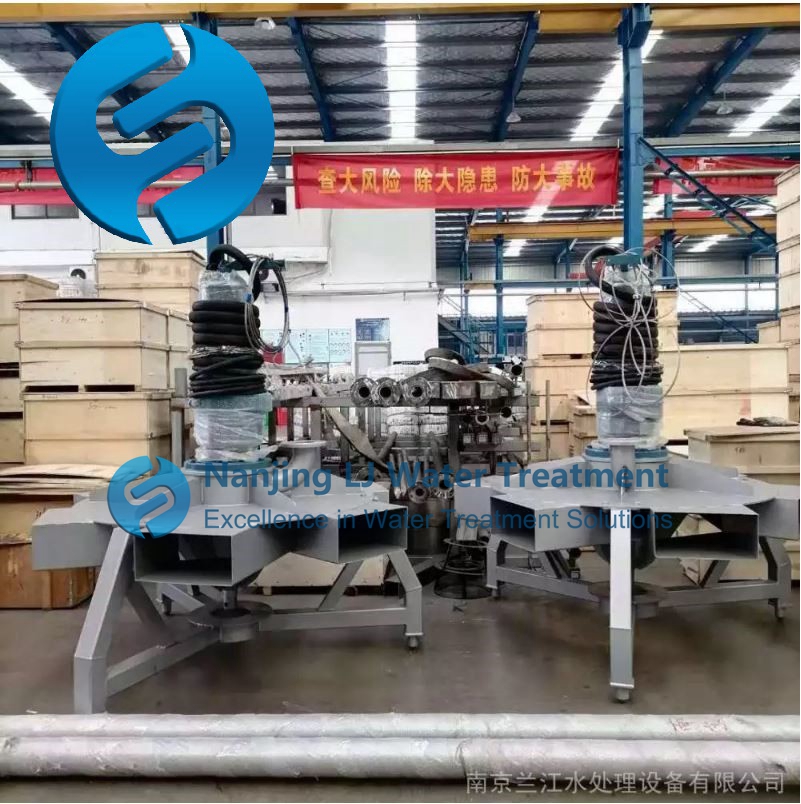
Aeration mixer gas-water mixing ratio parameters are core operational values that directly define the mass transfer efficiency and mixing uniformity in water and air two-phase flow systems. These parameters are widely applied across municipal wastewater treatment, industrial aeration tank design, and advanced water purification processes, with each scenario requiring precise adjustment to match specific water quality and operational goals.
Basic Calculation Logic for Mixing Ratio
The fundamental calculation of gas-water mixing ratio follows the standard definition of volume ratio between gas and water under normal temperature and pressure conditions. For general municipal domestic sewage systems, the reference empirical ratio is set at 8:1, which means 8 cubic meters of air is introduced for every 1 cubic meter of water being treated. This baseline value can be adjusted according to actual water quality indicators, such as BOD load, suspended solid concentration, and targeted dissolved oxygen level in the mixed liquid.
Parameter Adjustment for Different Process Scenarios
Different aeration processes have their own optimized gas-water ratio ranges to achieve the best treatment performance. For activated sludge tanks, the typical ratio falls between 5:1 and 10:1, which maintains stable dissolved oxygen levels between 2 mg/L and 4 mg/L to support the metabolic activity of aerobic microorganisms. For biological contact oxidation tanks, the recommended ratio is around 15:1, ensuring sufficient oxygen supply for the attached biofilm on the filler surface. For biological aerated filter systems, a 15:1 ratio can keep dissolved oxygen in the range of 2.41 mg/L to 4.22 mg/L, supporting over 90% ammonia nitrogen removal efficiency while reducing nitrous oxide release factors to a very low level. For micro-nano bubble ozone aeration systems, the optimized ratio is 4:1, which helps 90% of the generated bubbles stay below 50 micrometers in diameter, lifting ozone utilization rate to 1.8 times that of traditional processes, increasing turbidity removal rate by 40% and shortening hydraulic retention time by 30%. For biological ceramsite filters used for eutrophic reservoir water pretreatment, the suitable ratio is controlled between 0.75:1 and 1:1, matching the hydraulic load range of 4 m/h to 6 m/h to achieve stable pollutant removal effects.
Key Factors That Influence Mixing Ratio Performance
Several critical operational parameters will affect the actual performance of the set gas-water mixing ratio. The pore size of the aeration membrane plays a vital role: smaller membrane pore size can improve the homogeneity of air and water mixing, especially when the air mass flow rate is at a relatively high level. The diameter of the diffuser also matters, with the practical effective range usually kept between 4 and 12 to form stable vortex flow patterns inside the aeration tank, which further enhances oxygen transfer efficiency. The air mass flow rate needs to be adjusted in sync with the water inflow volume to avoid over-aeration that may cause sludge aging and disintegration, or insufficient aeration that leads to dissolved oxygen shortage and poor microbial activity. All these factors need to be taken into full consideration during on-site operation to maintain long-term stable and efficient system performance.
Post time:2026-08-12
