Split Structure Design of Separate-Type Aeration Mixers
Separate-type aeration mixers are widely used in wastewater treatment plants, industrial reaction systems, oxidation tanks, and environmental engineering projects. Unlike integrated units, these systems divide the motor, aeration mechanism, transmission assembly, and support structure into independent sections. This split structural design improves installation flexibility, simplifies maintenance, and supports operation in large or complex treatment environments.
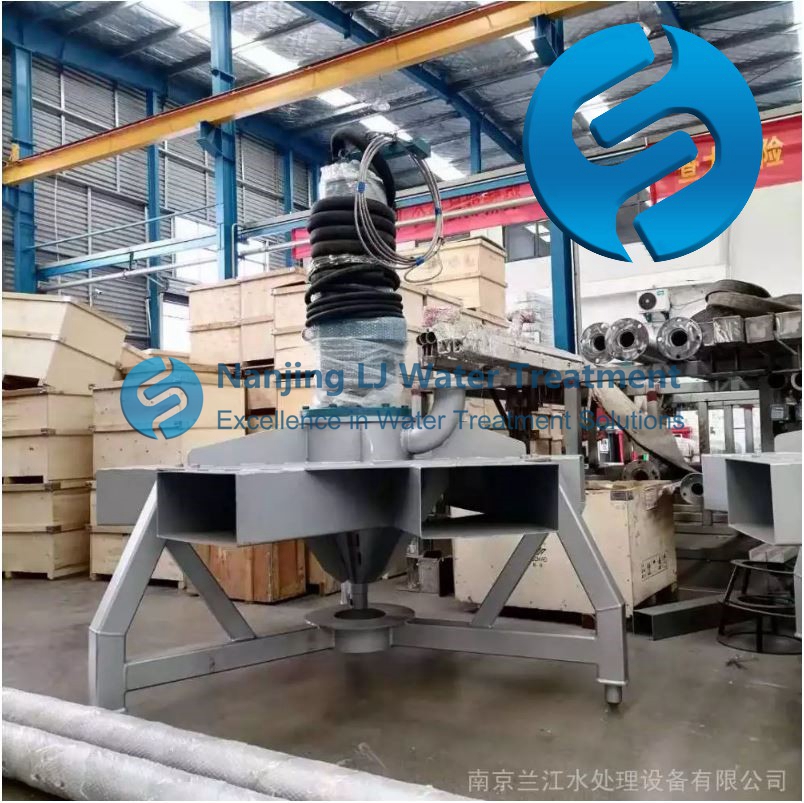
Main Structural Composition
The overall structure of a separate-type aeration mixer is divided into multiple coordinated sections.
Independent Motor Unit
The motor is usually installed separately from the underwater mixing components. This arrangement protects the power system from direct liquid exposure and simplifies maintenance access.
External Transmission Assembly
Rotational power is transferred from the motor to the impeller through shafts, couplings, or transmission structures. The separated transmission design allows flexible equipment positioning.
Detached Aeration Section
The aeration mechanism is often installed independently within the treatment tank. This structure supports optimized oxygen transfer and adaptable liquid circulation patterns.
Motor Separation Structure
Separating the motor from the liquid treatment area provides several operational advantages.
Dry Installation Environment
The motor is commonly positioned above the liquid surface or outside the treatment basin. A dry operating environment helps reduce moisture-related electrical risks.
Easier Maintenance Access
Technicians can inspect and service the motor without removing submerged mixing components or draining the tank.
Reduced Corrosion Exposure
Because the motor remains isolated from direct wastewater contact, the risk of corrosion and internal moisture damage is reduced.
Transmission System Structure
The transmission assembly connects the power source with the submerged mixing components.
Extended Drive Shaft Design
Long transmission shafts allow the motor and impeller to remain physically separated while maintaining stable rotational power transfer.
Coupling Connection Arrangement
Flexible couplings compensate for slight alignment variations and help reduce vibration transmission between structural sections.
Bearing Support Components
Intermediate bearing supports stabilize the shaft during operation and help maintain smooth rotational movement over long distances.
Aeration and Mixing Structural Layout
The underwater aeration section is designed for efficient liquid circulation and oxygen distribution.
Submerged Impeller Assembly
The impeller is positioned inside the liquid to generate circulation flow and support oxygen transfer throughout the treatment area.
Independent Air Supply Structure
Separate-type systems often use dedicated air pipelines or external blowers connected to the aeration assembly.
Bubble Diffusion Components
Air diffusion outlets are designed to create fine oxygen bubbles, improving dissolved oxygen efficiency within the treatment tank.
Support and Mounting Structure
Stable structural support is important for maintaining operational reliability.
Reinforced Support Frame
The support frame secures the motor, transmission system, and submerged components in stable operating positions.
Adjustable Installation Structure
Some separate-type aeration mixers include adjustable mounting systems that allow operators to modify immersion depth and mixing direction.
Vibration Isolation Design
Shock-absorbing components help reduce vibration transfer between the motor, shaft system, and support structure.
Maintenance Advantages of Split Structures
The separated arrangement improves inspection and servicing efficiency.
Simplified Component Replacement
Individual sections can be removed or replaced independently without disassembling the entire system.
Convenient Inspection Access
Critical parts such as bearings, couplings, and seals remain more accessible compared with fully integrated underwater units.
Reduced Downtime During Servicing
Maintenance work can often be completed more quickly because the motor and electrical systems remain outside the liquid treatment area.
Electrical and Safety Structural Features
The split structure also improves electrical safety in demanding environments.
Protected Electrical Positioning
Electrical components remain isolated from direct wastewater exposure, reducing the risk of moisture intrusion and short circuits.
Organized Cable Routing Structure
Separated installation allows cleaner cable arrangement and improved protection against mechanical damage.
Reliable Grounding Arrangement
Independent grounding systems can be integrated more effectively into separated structural layouts.
Operational Flexibility of Split Designs
Separate-type aeration mixers can adapt to a wide range of treatment environments.
Suitable for Large Treatment Tanks
The separated structure allows flexible positioning in large oxidation basins and industrial wastewater systems.
Adaptability to Different Liquid Depths
Transmission shaft length and aeration section placement can be adjusted according to tank depth and operating conditions.
Compatibility With Complex Installations
Separate-type designs work well in facilities with limited installation space, irregular tank geometry, or specialized treatment requirements.
Durability and Long-Term Structural Stability
The split arrangement contributes to long-term operational reliability.
Reduced Thermal Stress on Motors
Because the motor operates outside the liquid environment, heat dissipation conditions are often more stable.
Lower Moisture Exposure Risk
External motor positioning reduces continuous exposure to humidity and corrosive wastewater gases.
Stable Mechanical Performance
Separated structural sections help distribute operational stress more evenly across the system, supporting long-term mechanical durability.
Post time:2026-05-27
