Water Flow Mechanism of Swirl Aeration Mixers
Swirl aeration mixers are widely used in wastewater treatment plants, oxidation ditches, industrial reaction tanks, ecological restoration systems, and aquaculture environments. Their operating principle combines rotational water circulation with oxygen diffusion to improve liquid mixing efficiency and dissolved oxygen distribution. The unique swirl flow pattern created during operation plays an important role in maintaining stable circulation and enhancing biological treatment performance.
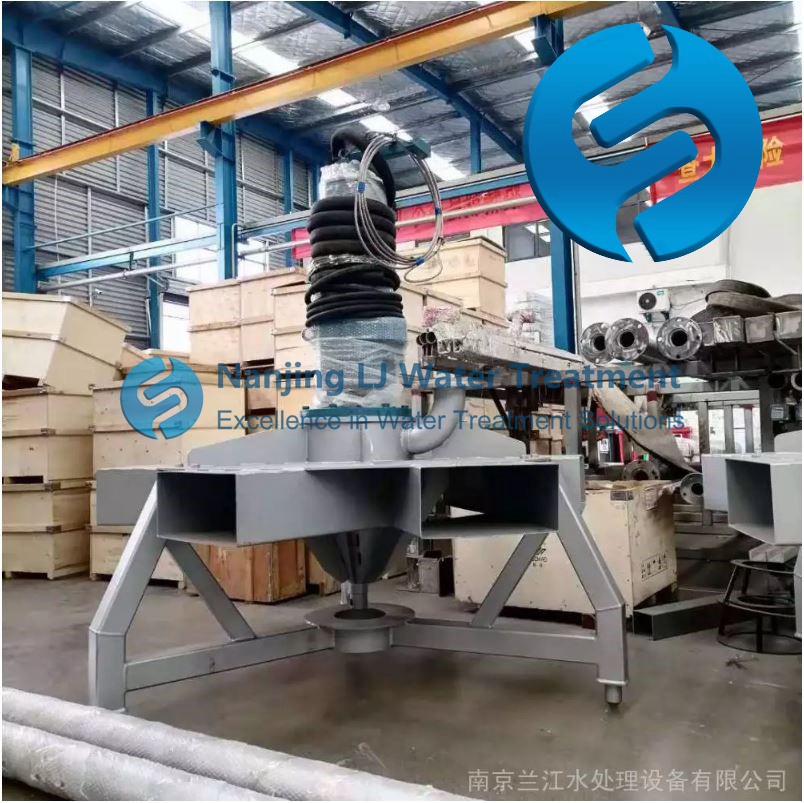
Basic Swirl Flow Principle
The core operating feature of a swirl aeration mixer is the generation of rotating water movement inside the treatment system.
Rotational Liquid Movement
During operation, the impeller rotates at high speed and forces surrounding liquid into a circular motion. This rotational movement forms a vortex-like flow structure inside the tank or basin.
Formation of Swirling Circulation
The rotating water current spreads outward while simultaneously drawing surrounding liquid into the center of the flow field. This continuous circulation improves overall liquid movement efficiency.
Combined Mixing and Aeration Effect
As the liquid rotates, air is introduced into the flow system and dispersed throughout the swirling water stream. This process combines oxygen transfer with strong liquid mixing.
Vertical and Horizontal Flow Interaction
Swirl aeration mixers create both vertical and horizontal circulation patterns.
Upward Water Movement
Part of the rotating liquid rises toward the water surface due to vortex action. Upward circulation helps transport oxygen-rich water throughout the treatment system.
Downward Return Flow
After reaching the upper liquid layers, water gradually returns downward along the outer flow path. This creates continuous circulation between upper and lower liquid zones.
Horizontal Expansion of Flow
The rotating current also spreads horizontally across the treatment area, helping oxygen distribute more evenly throughout the tank.
Oxygen Transfer Through Swirling Action
The swirl flow structure directly improves aeration performance.
Bubble Dispersion in Rotating Water
Air bubbles entering the rotating liquid are continuously broken into smaller particles by turbulent swirl movement.
Increased Oxygen Contact Area
Smaller bubbles generated within the vortex structure provide a larger gas-liquid contact surface, improving oxygen dissolution efficiency.
Extended Bubble Retention Time
Swirling circulation keeps oxygen bubbles suspended longer inside the liquid, allowing more time for oxygen transfer into the water.
Turbulence Generation Mechanism
Controlled turbulence is essential for maintaining efficient mixing performance.
High-Speed Flow Interaction
The rotating impeller generates strong shear forces between different liquid layers. This interaction creates turbulence throughout the flow field.
Elimination of Dead Zones
Continuous swirl circulation helps maintain liquid movement in difficult-to-reach areas, reducing stagnant zones inside the treatment tank.
Prevention of Sediment Accumulation
The turbulent water flow helps keep suspended solids in motion and minimizes sludge deposition at the bottom of the basin.
Hydraulic Characteristics of Swirl Flow
The hydraulic behavior of swirl aeration mixers supports stable treatment conditions.
Uniform Flow Distribution
The circular flow pattern distributes liquid movement more evenly across the treatment system compared with isolated directional flow.
Stable Dissolved Oxygen Levels
Continuous mixing helps maintain consistent oxygen concentration throughout the liquid volume.
Balanced Hydraulic Pressure
The rotating flow field spreads hydraulic force across the tank, helping reduce localized stress and unstable circulation areas.
Influence on Biological Treatment Efficiency
Swirl water movement supports aerobic biological processes.
Improved Microbial Oxygen Supply
Stable oxygen circulation helps aerobic microorganisms maintain active biological decomposition performance.
Enhanced Nutrient Distribution
Continuous liquid mixing allows nutrients and organic matter to circulate more evenly throughout the biological treatment environment.
Stable Reaction Conditions
Balanced flow movement supports more consistent biological reaction conditions inside wastewater treatment systems.
Structural Contribution to Water Flow
The equipment structure directly influences swirl flow formation.
Specialized Impeller Geometry
Impeller blades are designed to generate rotational thrust and create stable vortex circulation patterns.
Aeration Outlet Arrangement
Air intake and diffusion components are positioned to maximize oxygen dispersion within the rotating water flow.
Optimized Flow Channel Design
The internal hydraulic structure guides water movement efficiently while minimizing unnecessary flow resistance.
Operational Adaptability of Swirl Flow Systems
Swirl aeration mixers can adapt to different operating environments.
Performance in Deep Treatment Tanks
Vertical circulation generated by swirl flow helps improve oxygen transfer in deeper liquid systems.
Compatibility With Variable Water Conditions
The rotating flow pattern remains effective even when liquid concentration or suspended solid levels fluctuate.
Application in Ecological Water Systems
Swirl circulation can support ecological restoration projects by improving oxygen distribution and maintaining continuous water movement.
Post time:2026-05-28
