Aeration mixers play a critical role in plating wastewater treatment, where consistent oxygen distribution and uniform flow directly impact the performance of biological and chemical treatment stages. Plating wastewater often carries heavy metal ions, residual complexing agents, and high concentrations of organic additives that demand stable hydraulic conditions to prevent sedimentation, ensure full reaction contact, and support the breakdown of dissolved contaminants. Without properly coordinated aeration and mixing, uneven dissolved oxygen levels and dead zones at the tank bottom can lead to incomplete flocculation, poor sludge suspension, and reduced overall treatment efficiency.
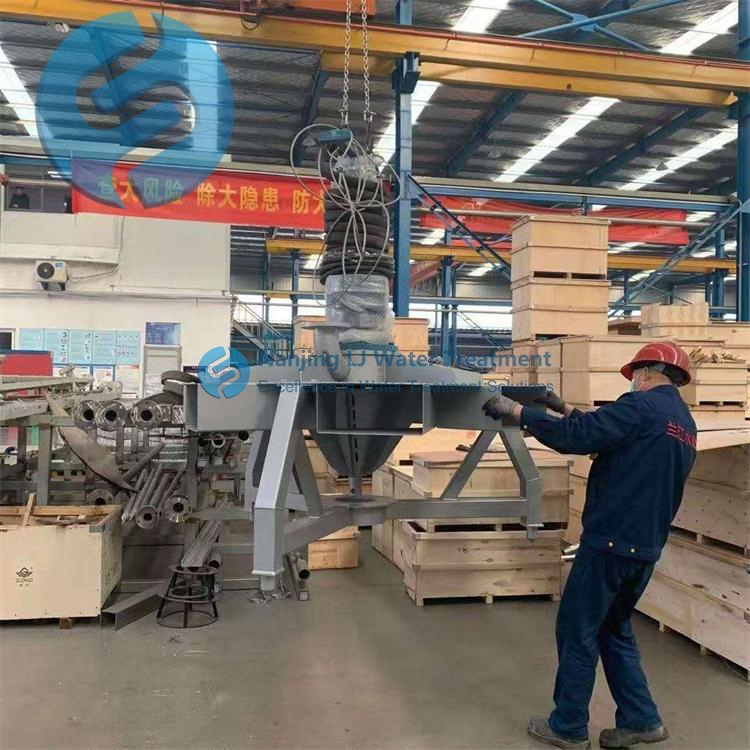
Core Functions in Plating Wastewater Biological Systems
In activated sludge processes designed for plating wastewater, aeration mixers deliver dual benefits that separate aeration or standalone mixing equipment cannot easily match. They introduce controlled oxygen levels while generating continuous flow patterns that keep microbial colonies evenly distributed across the entire tank volume. This uniform suspension prevents heavy metal precipitates and biological flocs from settling into dense layers that become difficult to resuspend, which is especially important in systems handling variable plating loads from shift-based production schedules. Many facilities report that consistent mixing also helps avoid localized anaerobic zones that could cause unwanted metal re-dissolution and push untreated contaminants back into the water column.
Hydraulic Design Considerations for High-Strength Streams
The flow characteristics created by an aeration mixer determine how effectively oxygen is transferred and how well solids remain suspended in plating wastewater tanks. Properly positioned units generate helical jet patterns that move liquid both horizontally across the basin and vertically from bottom to surface, eliminating the stagnant areas where heavy particles tend to accumulate. Adjustments to installation angle can significantly improve cross-sectional average velocity, reduce bottom dead zone ratios, and lower unnecessary vortex energy loss that wastes power without contributing to treatment performance. For deep tanks commonly used in industrial plating facilities, these optimized flow patterns help maintain uniform conditions even when wastewater flow rates and contaminant concentrations fluctuate throughout the day.
Operational Synergy with Pre-Treatment and Post-Treatment Stages
Aeration mixers do not operate in isolation; their performance directly supports the stability of upstream and downstream units in the full plating wastewater treatment train. In equalization basins, they smooth out sharp variations in pH, metal loading, and organic strength before water moves into chemical precipitation or biological treatment, preventing process shocks that can disrupt sensitive reaction conditions. In sludge storage and stabilization zones, continuous aeration and mixing help control odors, support mild oxidation of residual organic compounds, and keep sludge homogeneous so downstream dewatering equipment can operate at consistent throughput. This interconnected performance means that even small improvements in aeration mixer reliability can reduce maintenance demands across multiple process stages and extend the operational life of downstream filtration and separation systems.
Post time:2026-11-04
