For slaughterhouse and meat processing wastewater treatment systems, the characteristics of the incoming water—such as high concentrations of fats, oils, proteins, and suspended solids—create specific operational challenges that require tailored mixing and aeration strategies. The aeration mixer must handle these unique substances effectively while maintaining a stable biological treatment process that can withstand the daily and seasonal load fluctuations typical of this industry.
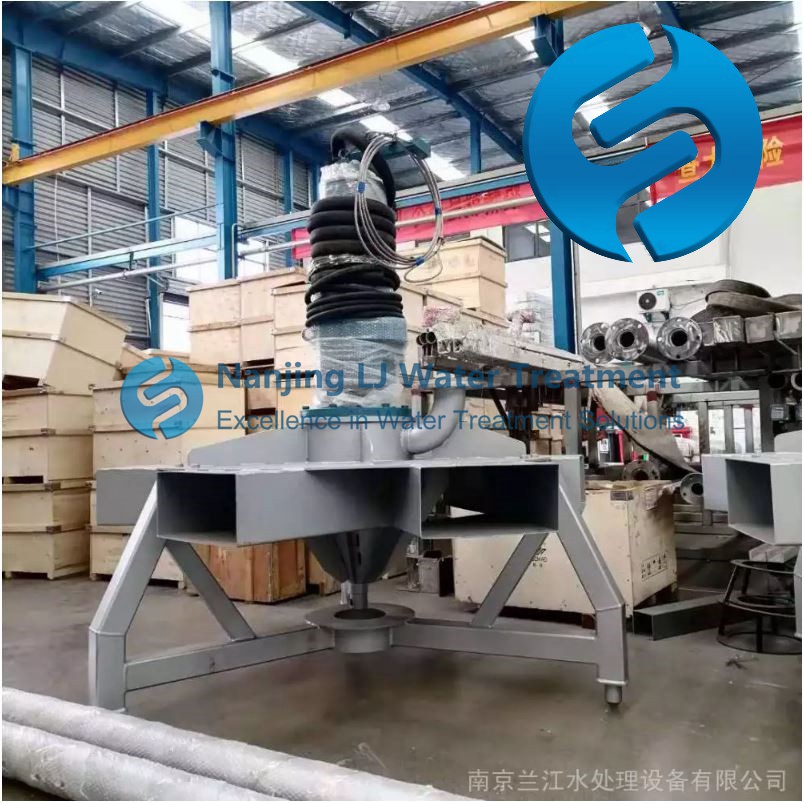
Handling High-Fat Content and Preventing Flotation Layer Formation
One of the most critical roles of the mixing system in slaughterhouse wastewater treatment is to manage the high concentration of animal fats and greases that can otherwise form thick floating layers on the water surface.
When untreated wastewater enters the initial equalization or pretreatment tank, the continuous, robust mixing action emulsifies these fats and greases into fine droplets, preventing them from coalescing into large floating mats that would block pipes, coat equipment, and create anaerobic zones. This emulsification process increases the surface area of the fat particles, making them more accessible to specialized lipolytic and other hydrolytic bacteria in subsequent biological stages. The mixing must be intense enough to achieve this emulsification but controlled to avoid excessive shear that could damage the structure of forming biological flocs in downstream aerobic tanks. Without this initial mechanical breakdown, the fat layer would inhibit oxygen transfer, trap rising sludge, and significantly reduce the overall treatment efficiency of the entire plant.
Managing Intermittent High-Strength Organic Loads
Slaughterhouse operations often generate wastewater in strong, intermittent batches corresponding to cleaning cycles and processing stages, leading to sudden spikes in BOD, COD, and ammonium levels.
The aeration mixer in the equalization or balancing tank plays a vital role in homogenizing these shock loads. By creating a uniform mixture, it prevents a concentrated slug of high-strength waste from hitting the biological reactors all at once, which could cause dissolved oxygen depletion, pH crashes, and toxicity to the microbial community. The mixing ensures that the organic matter, including soluble proteins and blood,bb is evenly distributed. This allows for a more consistent feed rate to the biological treatment stage, enabling the aerobic and anaerobic microbesbb to HH work at a steady, efficient ratebb rather than being periodically shocked or starved. This stability is crucial for maintaining robust nitrification and denitrification processes, which are essential for removing the high nitrogen content typical of this wastewater.
Supporting Robust Biological Treatment and Sludge Health
In the main biological reactors treating slaughterhouse effluent, the aeration mixer must support a microbial community adapted to degrade complex organic compounds like proteins and fats.
The mixing action keeps the activated sludge or anaerobic granular biomass in full suspension, ensuring maximum contact between the microbes and the dissolved and colloidal pollutants. This is especially important for the breakdown of slowly biodegradable compounds. Furthermore, the mixing helps distribute the oxygen evenly (in aerobic systems) or the substrates evenly (in anaerobic systems), preventing the formation of dead zones where solids can settle and undergo unwanted septic decomposition. For aerobic systems, the combined aeration and mixing action must be finely tuned to maintain sufficient dissolved oxygen for the highly active biomass without causing excessive foaming, which is common in wastewater with high protein and detergent content. The system must also generate enough shear to keep the biomass flocs dense and well-settling, preventing the growth of filamentous bacteria that can cause bulking sludge, a common issue in slaughterhouse wastewater treatment plants.
Post time:2026-07-06
