When selecting aeration mixers for clean water commissioning, every detail of the working condition directly determines the final oxygen transfer performance and long-term operating stability. This stage is meant to verify all core functional parameters before the equipment is formally put into sewage treatment, so the selection logic cannot directly copy the parameters used for formal operation.
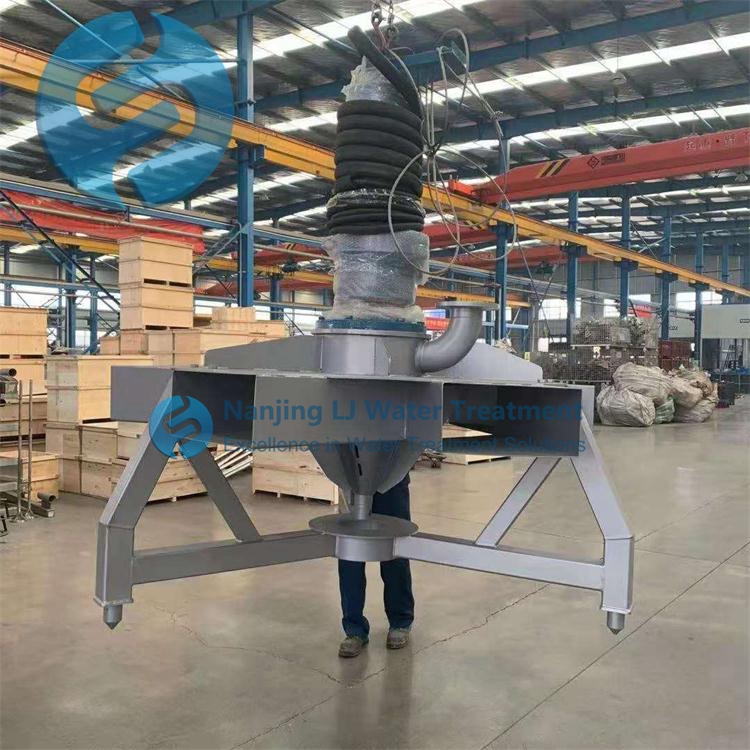
Core Condition Parameters for Clean Water Commissioning
Before making any selection decision, you need to map out all basic dimensions of the water body and tank structure to avoid parameter mismatch in subsequent operation.
Water Body Basic Characteristics
Clean water commissioning usually uses tap water or local natural surface water as the test medium, so you need to confirm the initial dissolved oxygen value, water temperature range, and total suspended solids content in advance. Even under clean water conditions, tiny impurities in the water may still affect the flow state around the mixing structure, leading to deviation between actual test results and theoretical values. You also need to record the pH value of the test water body, because different pH levels will change the bubble rise speed and the difficulty of oxygen molecules dissolving into the water body.
Tank Structure Adaptation
The effective water depth of the tank is the most critical reference indicator for selection, which directly affects the residence time of bubbles in the water and the coverage range of mixing flow. For tanks with a water depth less than 4 meters, you need to focus on the horizontal diffusion capacity of the mixing flow to avoid local dead zones where water cannot circulate fully. For tanks with a water depth over 6 meters, you need to pay more attention to the vertical thrust of the equipment, so that the mixing effect can reach the bottom area of the tank and prevent sediment accumulation in the dead corners of the structure. The shape of the tank and the position of the water inlet and outlet will also affect the overall flow field, so the layout of equipment should be adjusted according to the actual geometric size of the tank.
Key Performance Indicators for Selection
All parameters used for selection should be based on the test data under simulated clean water working conditions, rather than the nominal parameters marked on the product manual.
Actual Oxygen Transfer Efficiency
The standard oxygen transfer value under clean water conditions is the core basis for judging equipment performance, and this indicator directly determines whether the subsequent formal operation can meet the dissolved oxygen demand of the biological system. You need to verify the dynamic change curve of dissolved oxygen in different time periods after the equipment is started, instead of only referring to the single steady-state data. In the clean water commissioning stage, the oxygen utilization rate can be maintained at a relatively high level, which provides a reliable reference for the subsequent parameter correction in the actual sewage environment.
Continuous Mixing Stability
In the clean water commissioning stage, the equipment needs to run continuously for a long time to test the durability of all moving parts and the consistency of mixing effect. The flow state in the tank should not show obvious periodic fluctuation or local interruption after several hours of continuous operation. You also need to observe the uniformity of the flow field in different areas of the tank, to ensure that there is no obvious difference in the mixing strength between the central area and the edge area of the tank.
Installation and Operation Matching Details
Many selection failures in clean water commissioning are not caused by the main performance of the equipment, but by the neglect of the matching details in installation and operation.
Power Load Matching
The power demand of the equipment during full-load operation under clean water conditions should match the capacity of the on-site power distribution circuit, to avoid tripping or unstable operation of the motor due to instantaneous overload. You need to reserve a reasonable power margin for long-term operation, so that the equipment can still maintain stable output when the water temperature drops or the flow resistance increases slightly. The operation mode of continuous or intermittent start-up should also be considered in the selection stage, to ensure that the equipment can adapt to the corresponding load change.
Post-Commissioning Transition Compatibility
The equipment selected for clean water commissioning should also be able to smoothly transition to the subsequent formal sewage operation stage, instead of being only suitable for the clean water test environment. The structural design should avoid the situation that it is easy to be blocked by suspended solids after entering the actual sewage working condition, and the later maintenance operation can be carried out without large-scale transformation of the installation structure. This kind of selection logic can avoid repeated investment and adjustment, and make the whole commissioning and operation process more coherent.
Post time:2026-09-29
