Selecting an aeration mixer for high-sludge operating conditions demands targeted attention to flow dynamics and load tolerance that standard general-purpose units cannot fully address. Heavy sludge environments create unique challenges for mixing stability, oxygen transfer consistency, and long-term equipment uptime. Every detail of the selection process directly impacts whether the system can maintain stable biological treatment performance without frequent unexpected interruptions.
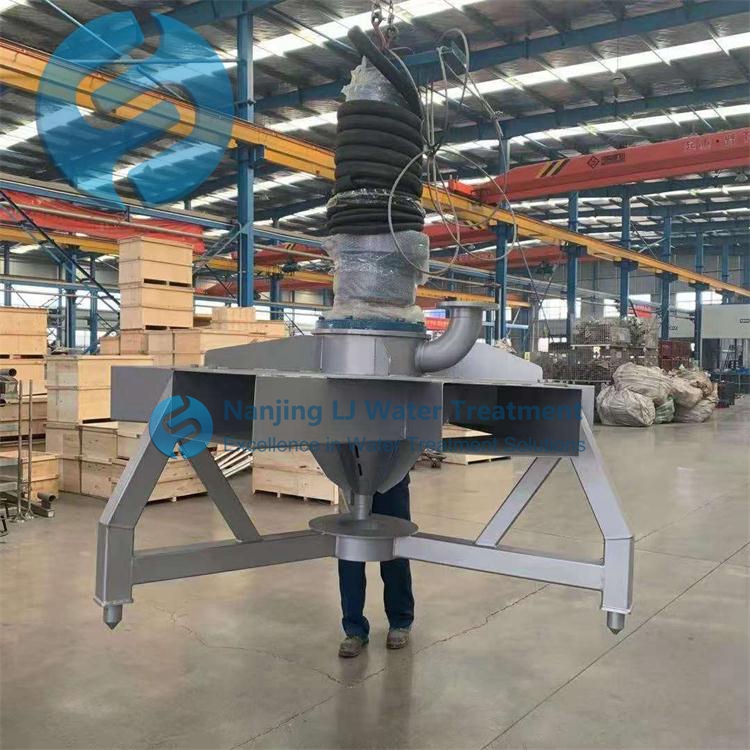
Verifying Sufficient Shear Force to Prevent Sludge Deposition and Clogging
High-sludge conditions carry a high risk of heavy solid settlement at the tank bottom, and units without enough targeted shear force will quickly form thick, compacted sludge layers that cannot be re-suspended even under extended operation. This gradual buildup creates anaerobic zones that degrade overall water treatment quality and increase the difficulty of later system maintenance.
You need to confirm that the selected unit generates a strong enough horizontal bottom flow to sweep settled sludge toward the central mixing zone, rather than only creating surface water movement that leaves the lower tank area completely undisturbed. Units that focus too much on surface aeration will leave large amounts of heavy solids accumulating in corners and low-lying tank areas.
It is also critical to check that the aeration opening structure resists direct blockage by large sludge flocs. In high-sludge environments, oversized flocs and fibrous impurities are far more common than in standard treatment tanks, and poorly designed openings will become partially blocked within weeks, leading to uneven air distribution across the entire tank.
Before finalizing any selection, run a basic simulation of sludge movement paths under maximum solid load. This simple check helps you rule out designs that create low-flow dead zones where sludge can accumulate and harden over long operating cycles.
Confirming Load Adaptability Under Variable Sludge Concentration Fluctuations
High-sludge operating conditions rarely maintain a stable solid concentration for extended periods. Sudden spikes in incoming organic load, seasonal changes in wastewater characteristics, or irregular sludge return adjustments can push system load far above normal design levels at any time. Units with narrow operating margins will stall or lose effective mixing capacity the moment load exceeds their pre-set limit.
Focus on the overload tolerance range of the core power transmission structure. When sludge concentration rises sharply, the mixing resistance the unit faces increases significantly, and designs without sufficient torque reserve will experience frequent overheating protection triggers that interrupt continuous mixing.
You also need to confirm that the oxygen delivery system can adjust dynamically alongside changes in sludge loading. As sludge concentration rises, the biological community’s demand for dissolved oxygen increases rapidly, and inflexible aeration output will either fail to meet oxygen requirements during peak loads or waste excessive energy during low-load periods.
Check that the system maintains stable mixing efficiency even when sludge viscosity rises above standard design values. Many units that perform well under low-viscosity conditions experience a sharp drop in flow coverage once thickened sludge fills the entire tank volume.
Assessing Wear Resistance for Long-Term Exposure to High Solid Content
Continuous operation in high-sludge conditions exposes all wetted components to constant abrasion from suspended solid particles. Materials that perform acceptably in clean water or low-sludge environments will show rapid surface wear, shape deformation, and performance degradation after extended exposure to heavy solid flow.
Pay close attention to the surface smoothness and structural hardness of all components that come into direct contact with high-concentration sludge. Rough, soft surfaces will wear down quickly, changing the original flow dynamics and reducing mixing coverage long before the end of the expected service life.
The connection points between rotating components and fixed structures deserve extra inspection. In high-sludge conditions, fine solid particles easily invade small gaps, leading to accelerated component wear, increased operating noise, and gradual loss of rotational balance. Well-designed units prevent solid particle intrusion at these critical friction points without requiring frequent on-site disassembly and cleaning.
Verify that the structural design avoids narrow gaps where sludge can accumulate and compact during short idle periods. Even temporary system shutdown in a high-sludge tank can create hardened sludge deposits that place extreme extra load on the unit when it restarts, potentially causing unexpected structural damage.
Post time:2026-09-28
