When selecting equipment for harsh water and wastewater treatment environments, the long-term performance of corrosion-resistant aeration mixers directly impacts operational stability and maintenance frequency. These systems operate in settings filled with high concentrations of salts, acidic or alkaline compounds, and trace industrial contaminants that can quickly degrade ordinary metal components. Even small amounts of corrosive media in the water stream can cause pitting, rust, and structural weakening over continuous operation cycles, making targeted corrosion resistance a non-negotiable feature for extended service life.
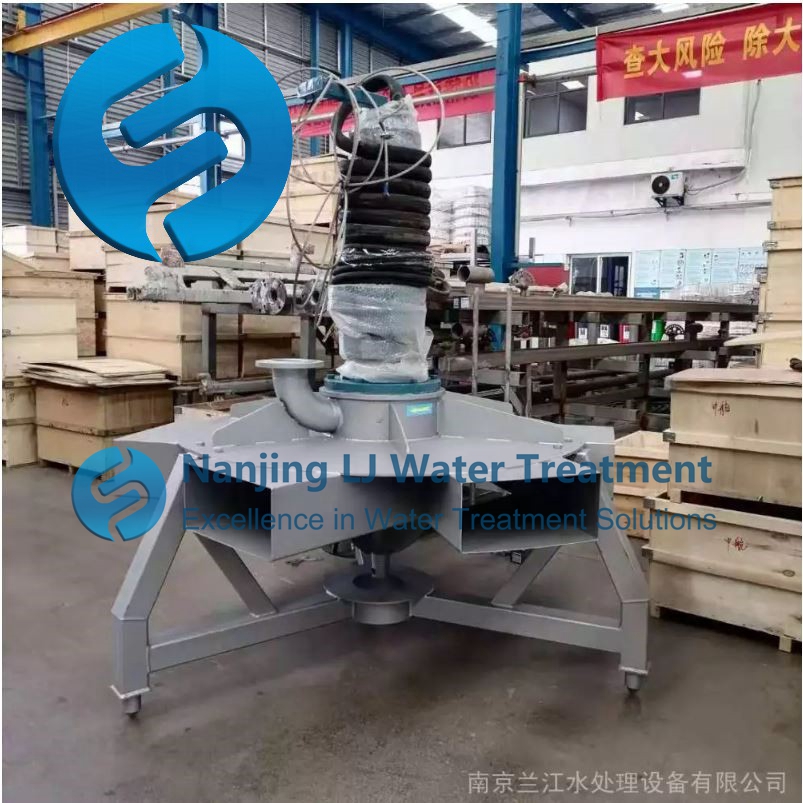
Material Adaptability Under Sustained Chemical Exposure
Different base and coating materials respond uniquely to varying corrosive water compositions. High-grade thermoplastic linings form a dense barrier that blocks direct contact between metal substrates and aggressive dissolved ions, preventing electrochemical corrosion even in water with pH levels ranging from 2 to 12. Special alloy formulations resist oxidation and chloride ion penetration, maintaining structural integrity in brine-rich or industrial wastewater streams that would cause standard steel to fail in months. Each material choice is calibrated to match the specific chemical profile of the operating site, ensuring the mixer’s core components do not degrade prematurely under constant immersion.
Performance Consistency in Long-Term Continuous Operation
Corrosion-resistant design does not come at the cost of mixing and aeration efficiency over thousands of running hours. The smooth, non-porous surface of treated components prevents biofilm and corrosive residue from adhering and building up, which would otherwise narrow flow paths and reduce oxygen transfer rates. Even after years of exposure to corrosive conditions, the mixer’s impeller geometry and air distribution channels retain their original shape, avoiding the performance drift that plagues unprotected equipment. This steady output means operators do not need to frequently adjust power levels or replace worn parts to maintain the required water mixing and dissolved oxygen levels.
Resistance to Abrasion-Corrosion Synergy
Many real-world wastewater environments combine corrosive chemicals with suspended grit, granular solids, and abrasive particles that create a dual threat to equipment surfaces. A robust corrosion-resistant layer acts as a shield that withstands both chemical attack and physical scouring, preventing small abrasion marks from turning into full corrosion points that spread across the component. This dual resistance ensures the mixer can handle mixed streams with both high corrosivity and high solid content without suffering unexpected failures. Even in sites where seasonal water quality shifts bring sudden spikes in contaminant concentrations, the system maintains reliable performance without urgent unplanned maintenance.
Operators in industries ranging from municipal wastewater treatment to aquaculture and industrial process water management rely on this kind of targeted corrosion performance to cut down on unplanned downtime. The ability of aeration mixing systems to stand up to harsh, variable water conditions directly supports consistent treatment outcomes and lower long-term operational overhead.
Post time:2026-08-07
