How to Select a Top Entry Mixer for a Nutrient Tank
Selecting the right top entry mixer for a nutrient tank is a key step in wastewater treatment projects.
Nutrient tanks are often part of a mixing and flocculation system, where uniform distribution of nutrients directly affects process stability and downstream performance.
This article explains how to select a suitable top entry mixer for nutrient tank applications, based on real engineering considerations rather than generic product descriptions.
Understand the Role of the Nutrient Tank
Before selecting a mixer, it is important to understand what the nutrient tank is designed to achieve.
In most wastewater treatment plants, nutrient tanks are used to:
Mix nutrients evenly with centrate or return flows
Prevent sedimentation
Provide stable feed conditions for biological or flocculation processes
Unlike simple storage tanks, nutrient tanks require controlled and continuous mixing, not just surface agitation.
Key Parameters That Influence Mixer Selection
Tank Diameter and Liquid Depth
Tank geometry is one of the most important factors in top entry mixer selection.
A common mistake is to focus only on tank diameter.
In practice, the ratio between liquid depth and tank diameter (H/D ratio) plays a critical role.
Low H/D ratio → shallow tank
High H/D ratio → tall and narrow tank
For tall and narrow nutrient tanks, insufficient vertical circulation can lead to stratification and uneven nutrient distribution.
Medium Characteristics: Nutrient and Centrate
Nutrient tanks often handle:
Nutrient solutions
Centrate with varying solids content
These media typically have:
Low to moderate viscosity
Sensitivity to uneven mixing
The mixer must generate enough axial flow to move liquid across the full tank height, without creating excessive shear.
Common Mixing Challenges in Nutrient Tanks
When the mixer configuration is not properly selected, the following problems may occur:
Vertical stratification between upper and lower layers
Dead zones near the tank bottom
Inconsistent nutrient concentration
Reduced efficiency in flocculation or biological processes
These issues are especially common when standard single-level mixers are applied to high aspect ratio tanks.
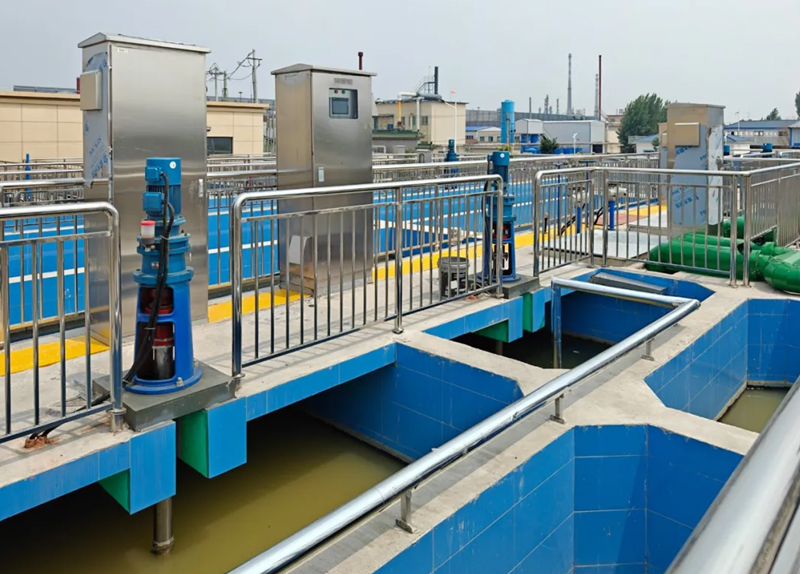
Choosing the Right Impeller Configuration
Single-Level vs Multi-Level Impellers
For shallow tanks, a single impeller may be sufficient.
However, for nutrient tanks with greater liquid depth, multi-level impeller configurations provide clear advantages:
Improved vertical circulation
More uniform mixing across the full liquid depth
Reduced risk of stratification
Multi-level designs are widely used in nutrient tank mixing systems where process stability is critical.
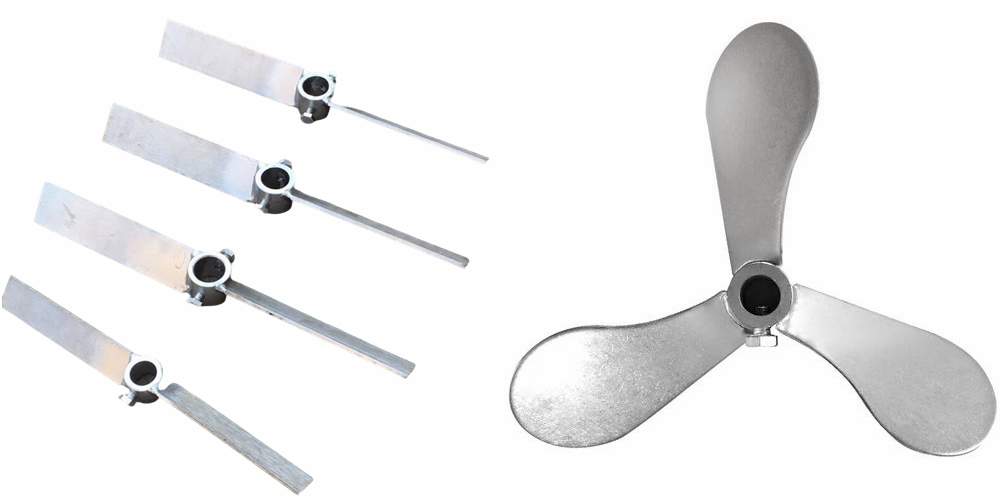
Two-Blade vs Three-Blade Impellers
Blade number also affects mixer performance.
Two-blade impellers
Simple structure
Suitable for basic mixing duties
Three-blade impellers
More stable torque transmission
Smoother flow pattern
Better balance in narrow tanks
For top entry mixers in nutrient tanks, three-blade impellers often provide greater operational stability, especially in continuous-duty applications.
Why Application-Based Selection Matters
Selecting a top entry mixer for a nutrient tank is not about choosing the largest motor or the most common impeller type.
It is about matching:
Tank geometry
Medium properties
Mixing objectives
Long-term operational stability
An application-based approach helps avoid overdesign, underperformance, and unnecessary maintenance issues.
Conclusion
A properly selected top entry mixer for a nutrient tank ensures:
Uniform nutrient distribution
Stable mixing performance
Reliable operation in mixing and flocculation systems
By considering tank proportions, impeller configuration, and process requirements, engineers can achieve effective and efficient nutrient tank mixing.
If your project involves nutrient or centrate tanks with non-standard dimensions, a case-based evaluation can help identify the most suitable top entry mixer configuration.
Post time:2026-01-22
