Combining direct air injection with the mechanical mixing action of an aeration mixer creates a highly integrated system that unifies two critical water treatment processes into a single, synchronized operation. Instead of relying on separate, disconnected hardware for gas delivery and fluid movement, this combined design aligns air release points directly with the high-shear mixing zone of the rotating mechanism, so every bubble that enters the water is immediately processed through the full force of the mixer’s fluid motion. This close physical and functional integration eliminates many of the performance limitations that come from running independent aeration and mixing systems side by side in the same tank, creating a more stable, efficient, and predictable operating environment for biological, chemical, and environmental water processes.
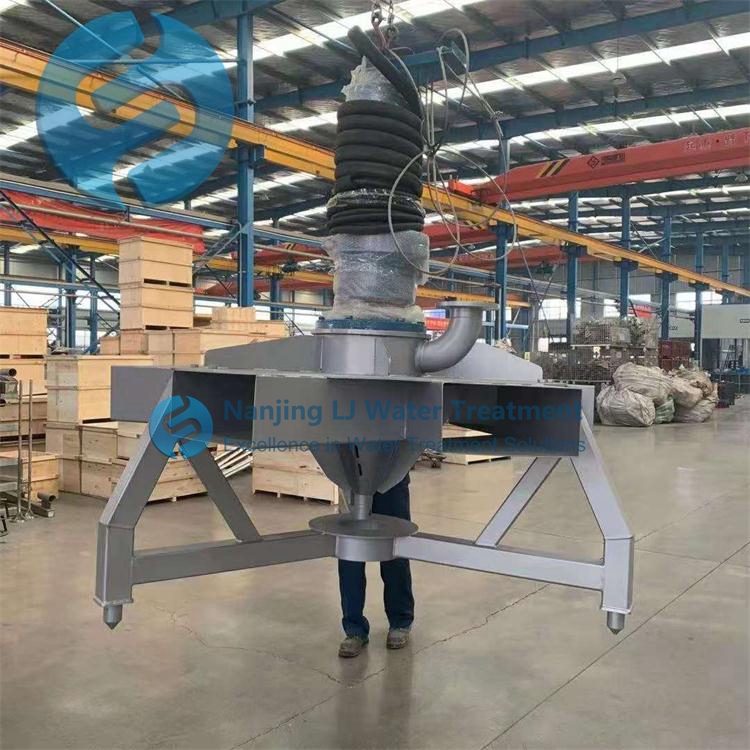
Many operators who have worked with separate blower and mixer setups quickly notice how much more consistent system behavior becomes once air injection is fully tied to the mixer’s core action. The two functions no longer compete for flow patterns or create uneven bubble distribution across different parts of the tank, and every cubic meter of injected air is used far more effectively to support both oxygen transfer and bulk fluid movement.
Synergistic gas transfer and fluid movement
The most immediate performance benefit of integrated air injection is the way it places newly introduced air directly into the zone of highest turbulence generated by the mixer. As soon as air exits the injection point, it is caught by the high-velocity rotating flow and immediately sheared into a dense cloud of fine, uniform bubbles, rather than rising quickly to the surface in large, unevenly distributed streams that waste most of their oxygen transfer potential. This extended bubble residence time dramatically increases the total contact area between air and water, allowing far more oxygen to dissolve into the bulk fluid before bubbles reach the surface and escape back to the atmosphere.
This synchronized action also prevents the common problem of short-circuiting, where large portions of injected air travel straight upward through narrow channels without ever interacting with the full volume of tank water. Because the mixer’s flow pattern continuously redirects bubble clouds horizontally and circulates them through different depth zones, every bubble follows a much longer, more tortuous path through the water column. The result is far more even dissolved oxygen distribution across every section of the tank, even in large or irregularly shaped vessels where separate aeration systems often leave large low-oxygen dead zones in corners or along tank walls.
The combined motion also creates a self-reinforcing flow loop that boosts overall mixing performance without requiring extra mechanical power. The rising momentum of injected bubbles adds additional upward lift to the fluid being moved by the mixer, creating a stronger, more expansive bulk circulation pattern that keeps heavier suspended solids fully suspended across the entire tank floor. This eliminates the need for separate high-energy mixing cycles just to resettle accumulated sludge, and it maintains completely uniform water chemistry from the very bottom of the tank all the way up to the surface.
Operational flexibility across variable load conditions
An aeration mixer with integrated air injection gives operators far more granular control over both oxygen input and mixing intensity, making it much easier to adapt to shifting process conditions over the course of a day, week, or seasonal cycle. During periods of high organic loading, when microbial oxygen demand spikes sharply, operators can increase air injection volume to boost oxygen delivery while the mixer maintains full circulation to make sure that extra dissolved oxygen reaches every part of the biomass. During low-load periods when biological activity slows down, they can reduce air flow to avoid unnecessary over-aeration, while the mixer still runs at a lower speed to maintain full solids suspension and prevent sediment accumulation.
This level of independent but synchronized control also makes it simple to switch between completely different process modes without reconfiguring any hardware. For anoxic mixing phases where no additional oxygen input is desired, operators can pause air injection entirely and run the mixer solely to maintain full suspension and homogenize substrates or chemical additives throughout the tank. When the process shifts back to aerobic conditions, they can restore air flow instantly and the system returns to full combined aeration and mixing operation with no delay or transitional instability. This seamless mode switching is extremely valuable for sequencing batch processes that cycle repeatedly between aerobic, anoxic, and anaerobic states.
Even during non-process events like tank startup or maintenance recovery, the integrated design makes it much faster to bring the system back to stable operating conditions. After a shutdown period where sludge has settled and dissolved oxygen levels have dropped to near zero, the mixer can immediately begin circulating settled solids back into suspension while air injection simultaneously rebuilds dissolved oxygen levels across the entire tank volume. This simultaneous two-action approach cuts the time required to return the system to normal operation down to a small fraction of what a separate aeration and mixing setup would need.
Reduced system complexity and long-term reliability
Consolidating air injection and mechanical mixing into a single unified mechanism eliminates a large amount of redundant hardware, piping, and installation complexity that comes with running two separate systems. There is no longer a need for a separate network of diffuser piping spread across the tank floor, which removes one of the most common sources of clogging, biofouling, and long-term performance decay in traditional aeration setups. Without these fixed submerged diffuser elements, there are far fewer locations for sludge to accumulate, solidify, and create hard-to-clean blockages that reduce air flow uniformity over time.
This simplified layout also makes routine maintenance far easier and less disruptive to regular operations. Instead of needing to drain the entire tank or shut down the whole process for extended periods to access and service floor-mounted diffusers, all critical components related to both mixing and air injection are accessible from above the water line. Operators can perform inspections, clear minor blockages, or make small adjustments without major process interruptions, which reduces downtime and makes long-term system upkeep far more predictable.
The close alignment between air flow and mixer motion also prevents many common operational failure modes that plague disconnected systems. There is no risk of air injection continuing at full volume while the mixer is unexpectedly offline, a scenario that can create massive uncontrolled bubble streams that strip dissolved oxygen out of the water, cause violent surface splashing, and leave large sections of solids completely undisturbed on the tank floor. As long as the mixer is running at the correct speed to process injected air, the system will maintain stable, controlled bubble dispersion, and any interruption to mechanical mixing immediately signals operators to adjust air flow accordingly to prevent unregulated, inefficient gas release.
Post time:2026-11-11
